
Reconfigurable Mould
Modular system for producing ceramic moulds for kiln casting crushed container glass. The project combines parametric modelling, FDM printing and refractory-paste testing.
THESISREAD FULL THESISUndergraduate thesis on a modular matrix for producing reconfigurable ceramic moulds for kiln casting crushed container glass.
Model
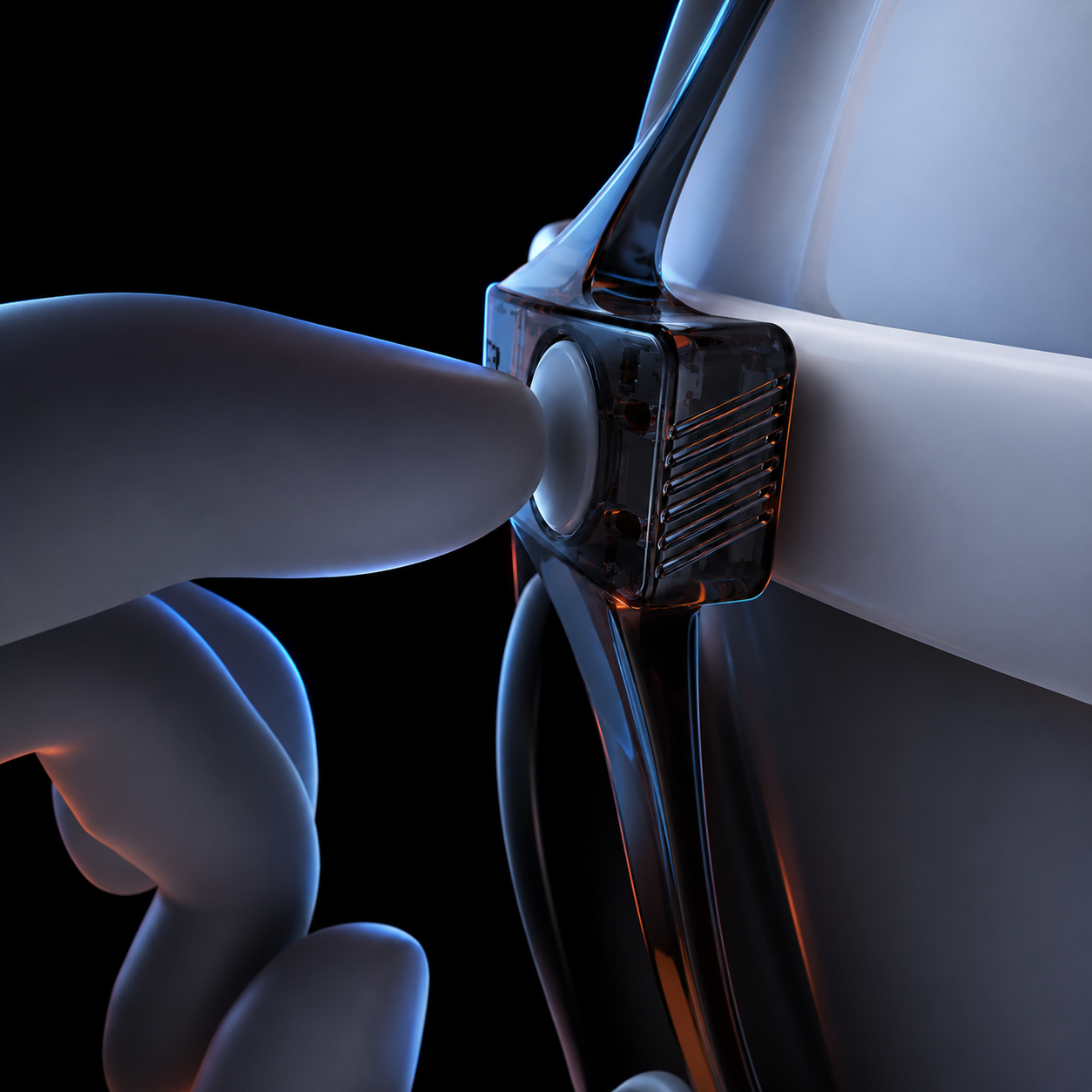
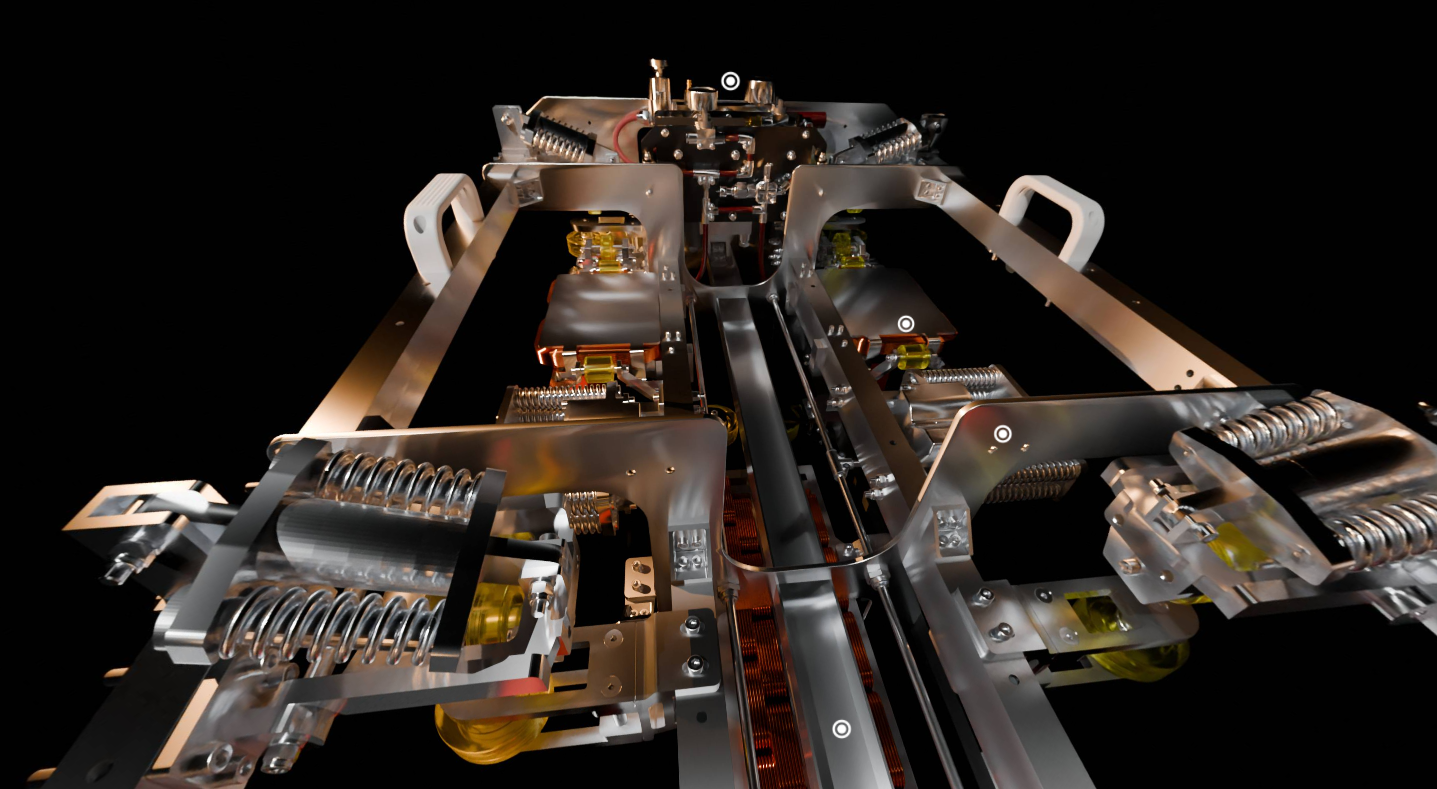
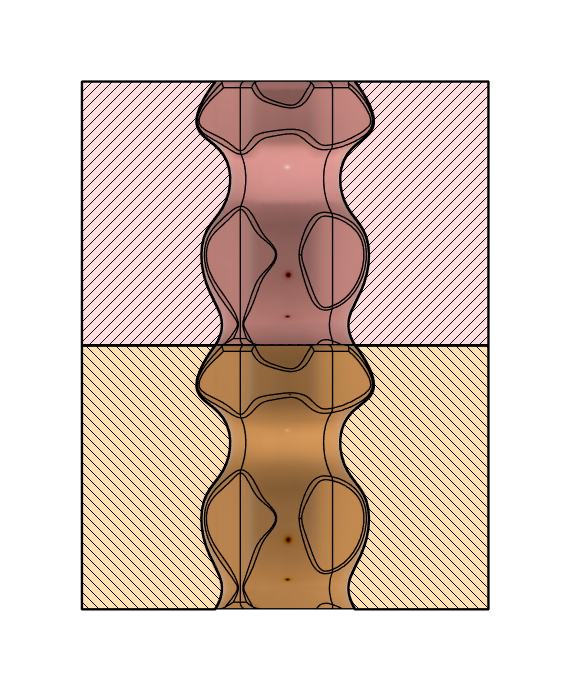
Matrix system. Procedural model based on Fusion 360 renders.
My role
I developed the project as an individual final thesis for the Industrial Design degree, Product Design pathway, at EUCD/FADU, Universidad de la República, under the supervision of Mag. Beatriz Amorín.
My work covered literature research, system definition, parametric modelling in Fusion 360, FDM prototyping, preparation of the refractory paste, drying and firing tests, glass casting in the university's Glass Laboratory, and documentation of the results.
Summary
Glass casting commonly uses refractory moulds that must be broken to release the finished piece. This requires a new mould for each casting and restricts the repetition of geometries.
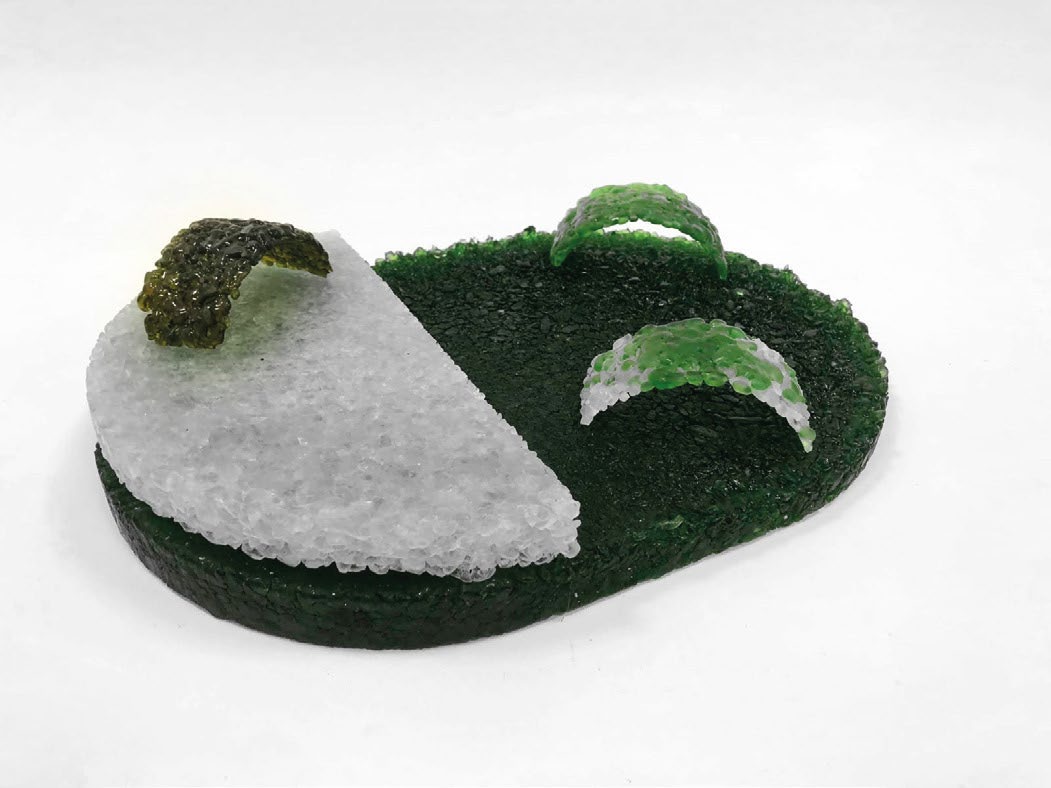
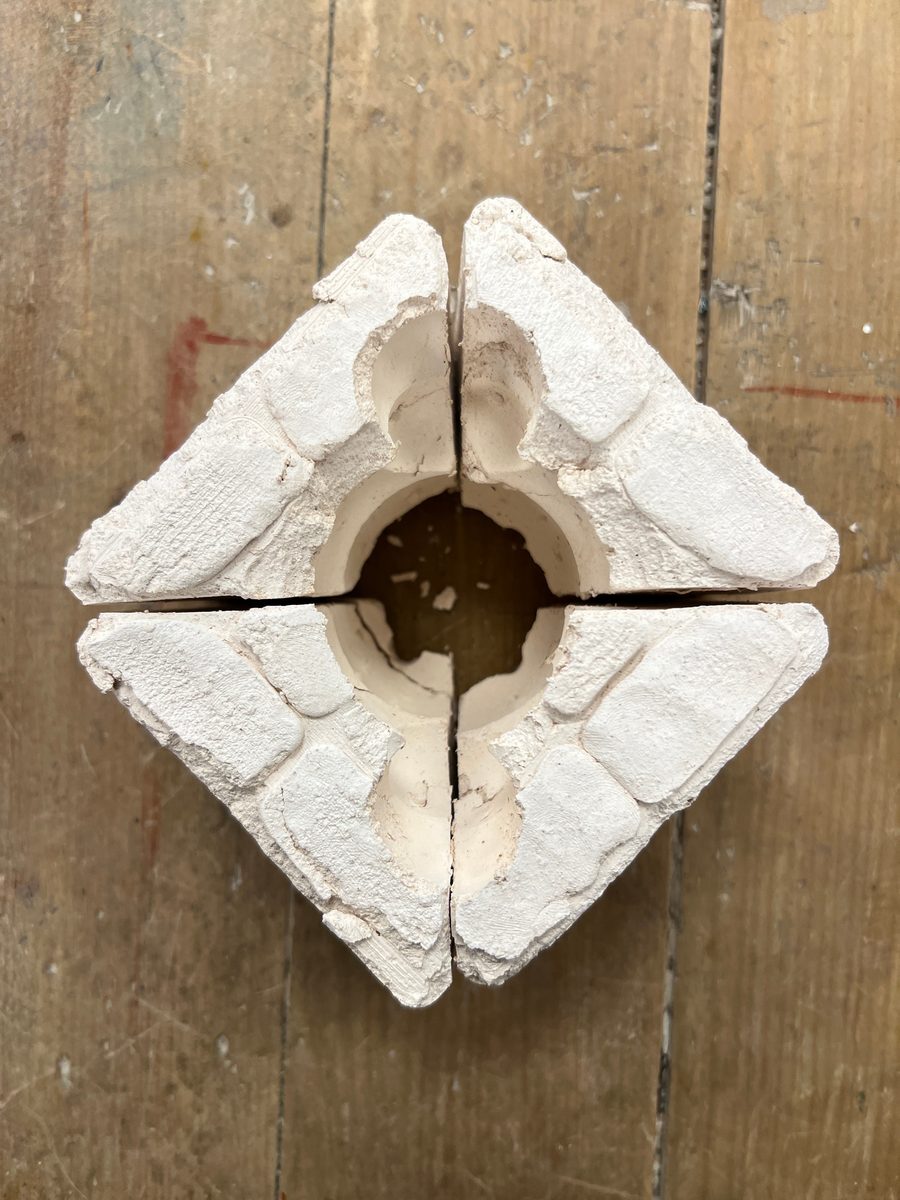
The thesis examined an alternative based on a demountable PLA 850 matrix. The matrix forms a ceramic mould divided into quadrants, while interchangeable patterns define different cavities. The system was developed through digital iterations and eight material tests. The prototype completed one mould-production cycle and one casting with recycled glass.
Problem and objectives
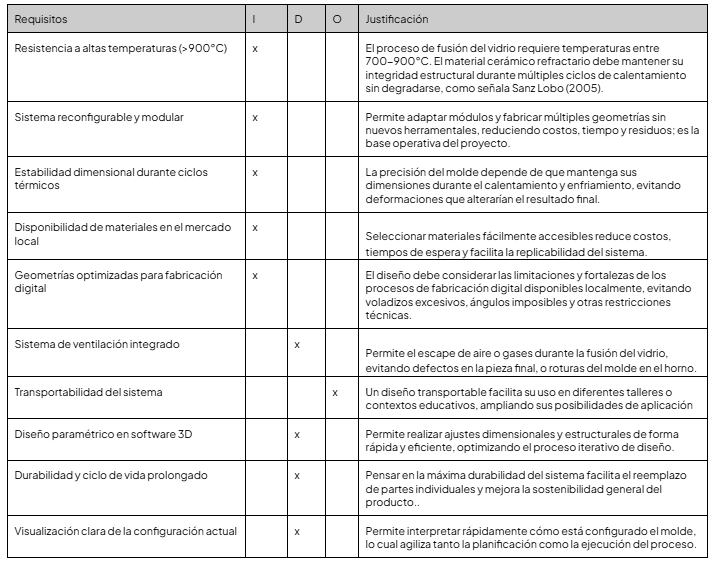
The main objective was to develop a reconfigurable mould for producing volumes by casting crushed container glass. The system needed to support geometric variation without rebuilding the entire device and to use materials and technologies available locally.
The specific objectives were to:
- incorporate parametric modelling and 3D printing into the development of the matrix;
- manufacture and refine a prototype through laboratory testing;
- replace the lost-mould process with demountable, potentially reusable components.
System and design decisions
The device consists of three elements:
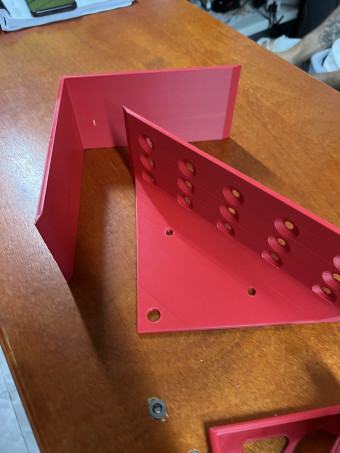
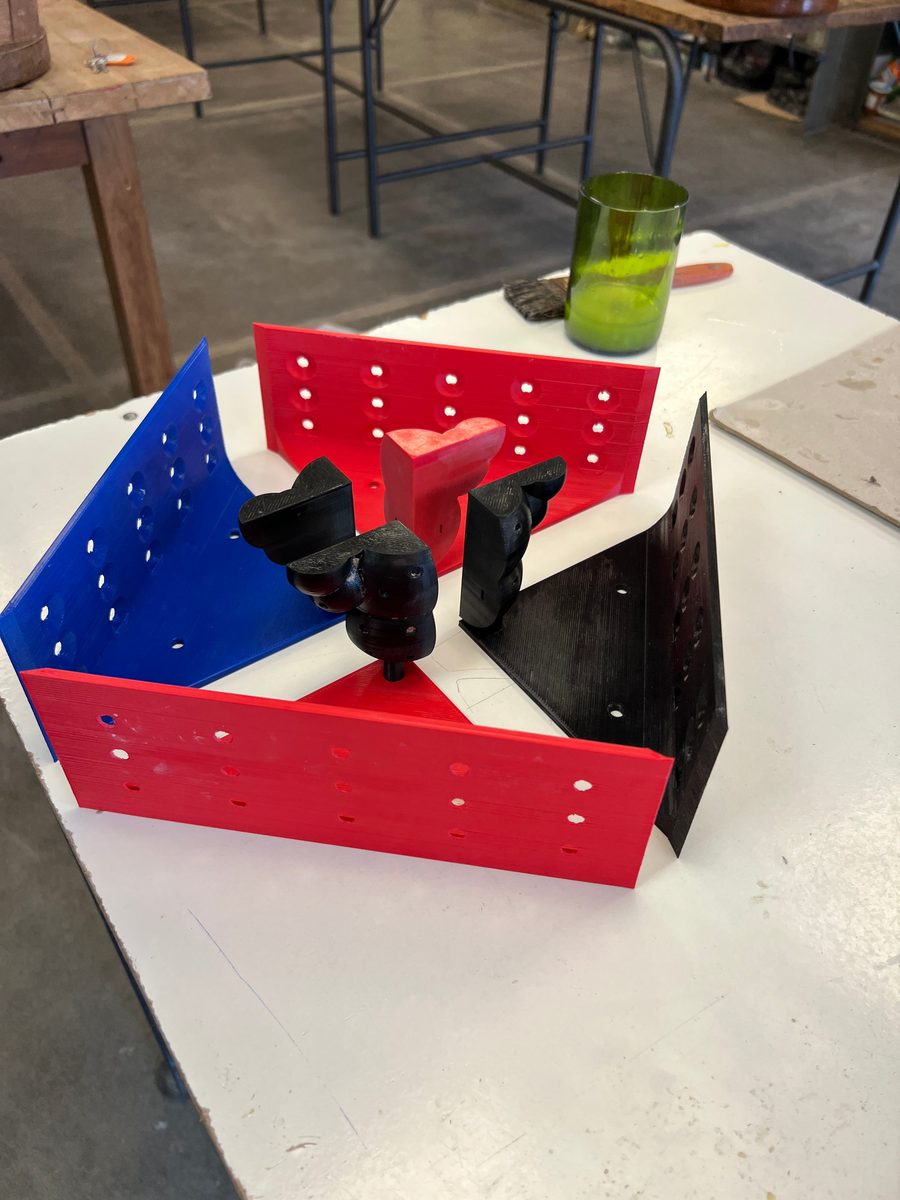
- Matrix. A demountable base, walls, lid and separator printed in PLA 850. It defines the outer volume of the ceramic mould and allows its configuration to be adjusted.
- Pattern. An interchangeable geometry placed within the matrix during forming. Its division into quadrants allows different variants to be combined.
- Mould. A refractory ceramic component formed from the matrix and pattern. After firing, it receives the crushed glass for kiln casting.
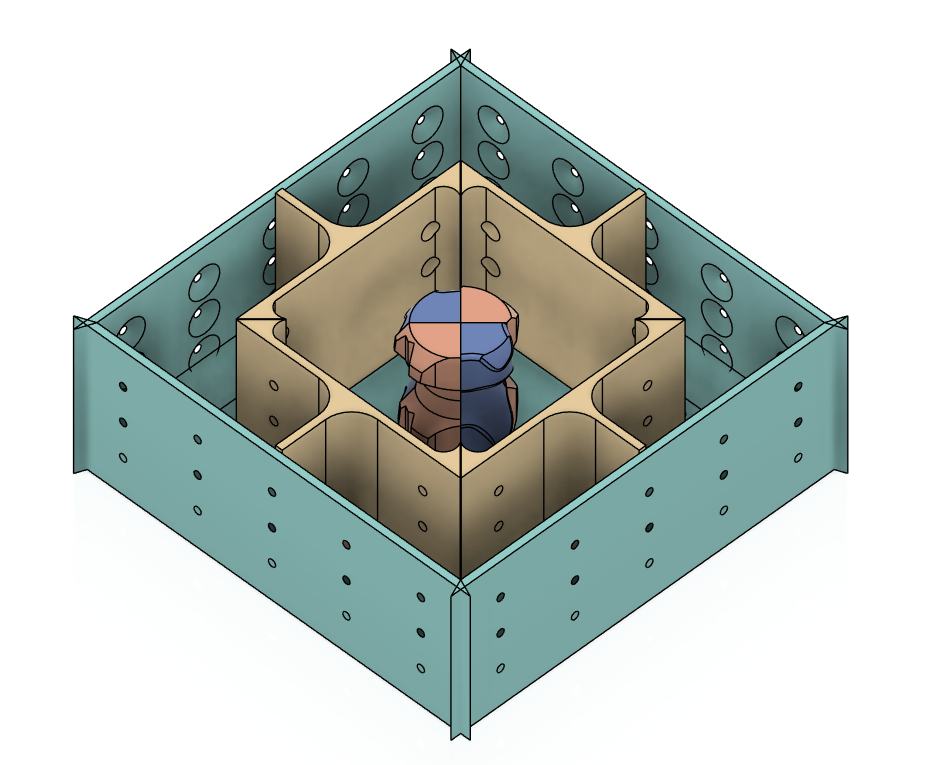
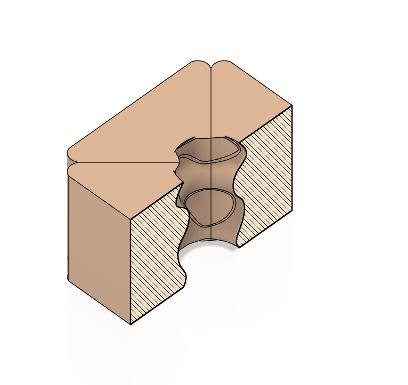
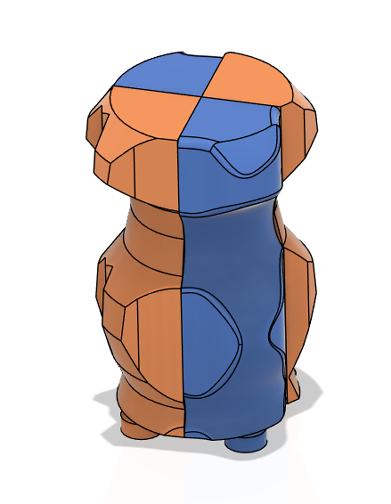
The first proposal used six hexagonal components and an articulated metal frame. Digital analysis identified demoulding problems and fixed component positions that conflicted with the intended interchangeability. The second version reduced the number of joints and organised the system around demountable quadrants.
Every printed component has at least one flat face to avoid support material during FDM production. Perforations reduce material and printing time; joints, ties and guides control the assembly before the paste is introduced.
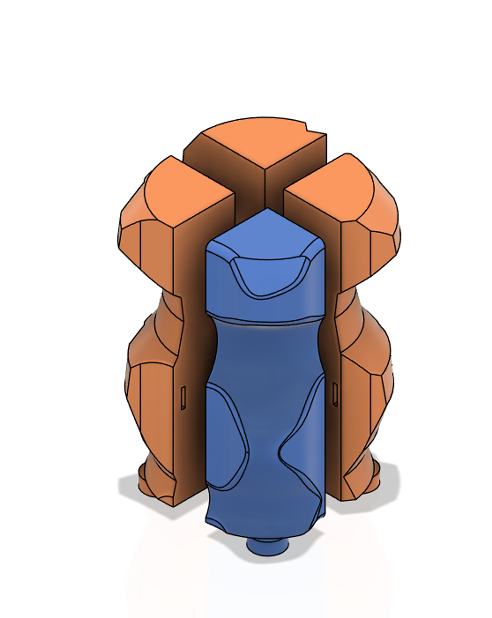
Development and validation
The matrix was modelled parametrically in Fusion 360 and printed in PLA 850. The editable feature history supported revisions to dimensions, joints and draft angles before manufacture.
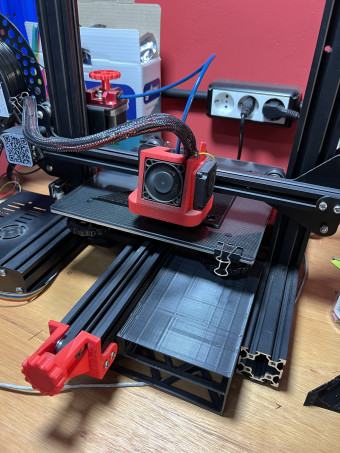
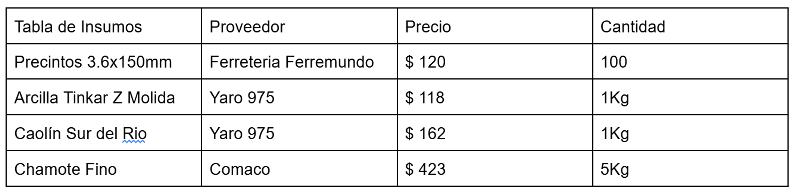
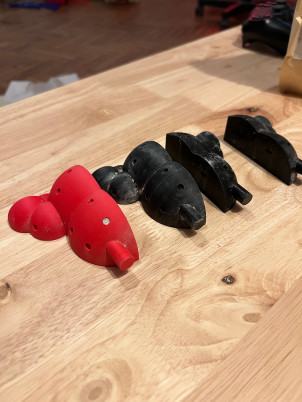
The mould material used a refractory paste containing 30% Tinkar plastic clay, 30% kaolin and 40% fine grog, with 16–18% water. Its pseudoplastic behaviour required manual compaction to reproduce the details of the matrix.
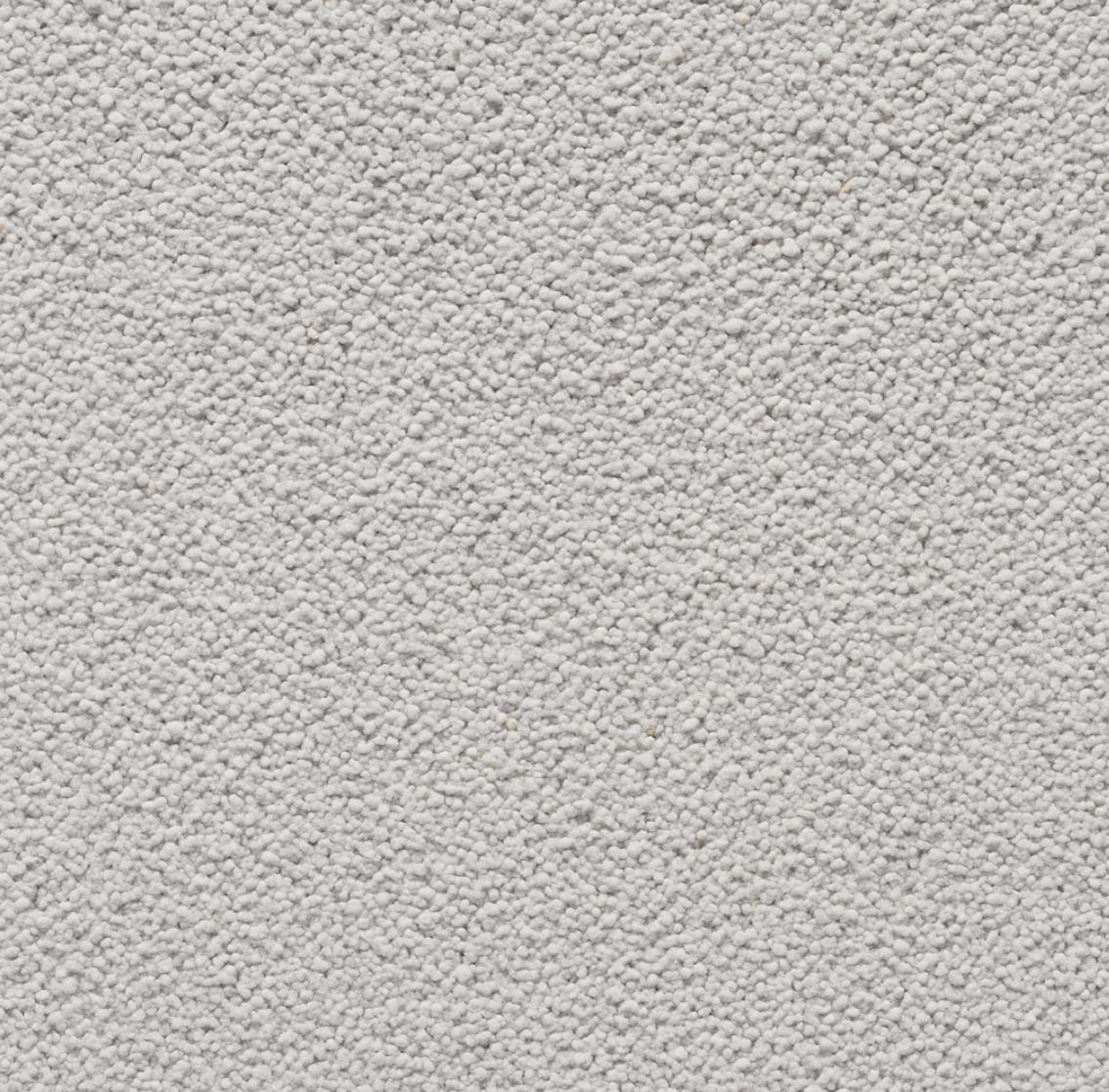
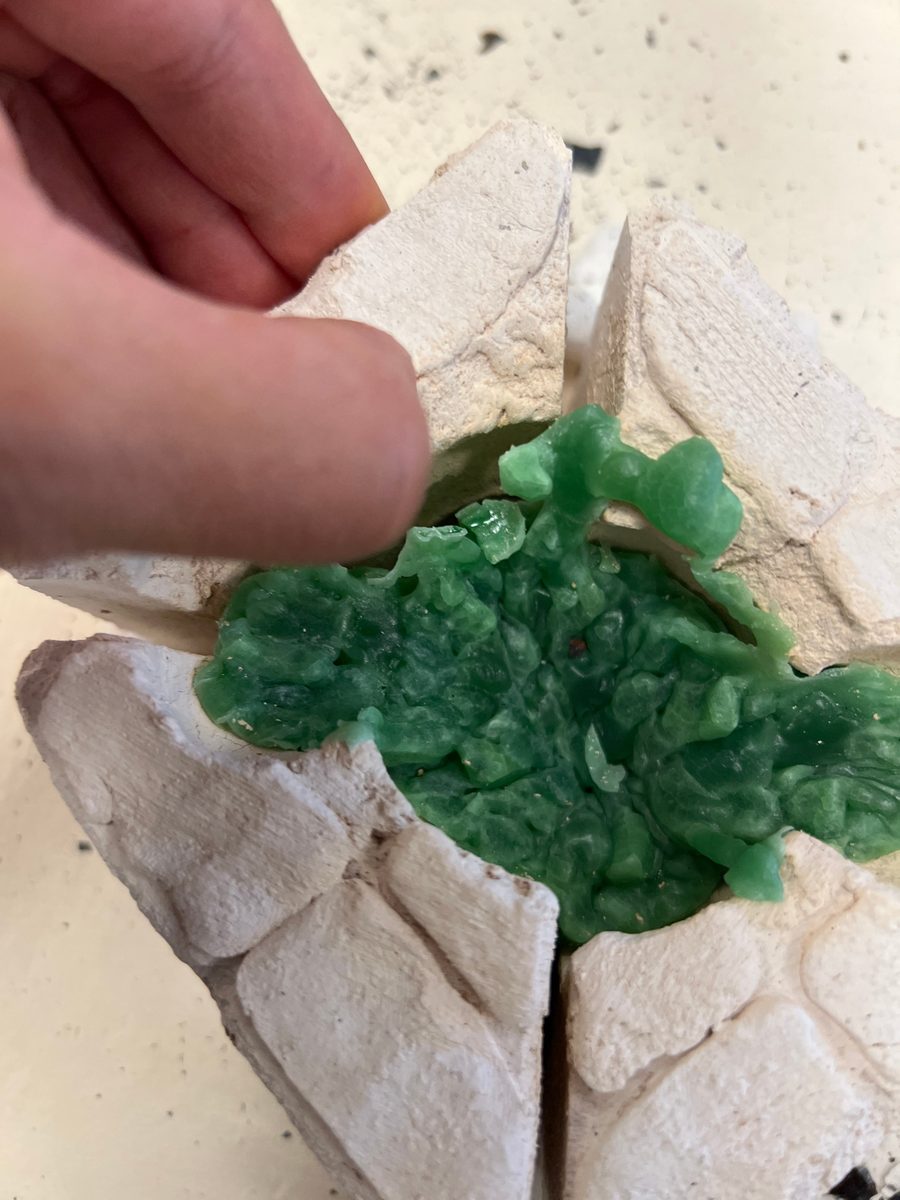
Eight tests were documented. The initial tests refined the formulation, compaction and demoulding procedure. The non-porous PLA walls retained moisture and caused adhesion; adding a nylon film and partially removing the matrix after two days improved drying while preserving the form.
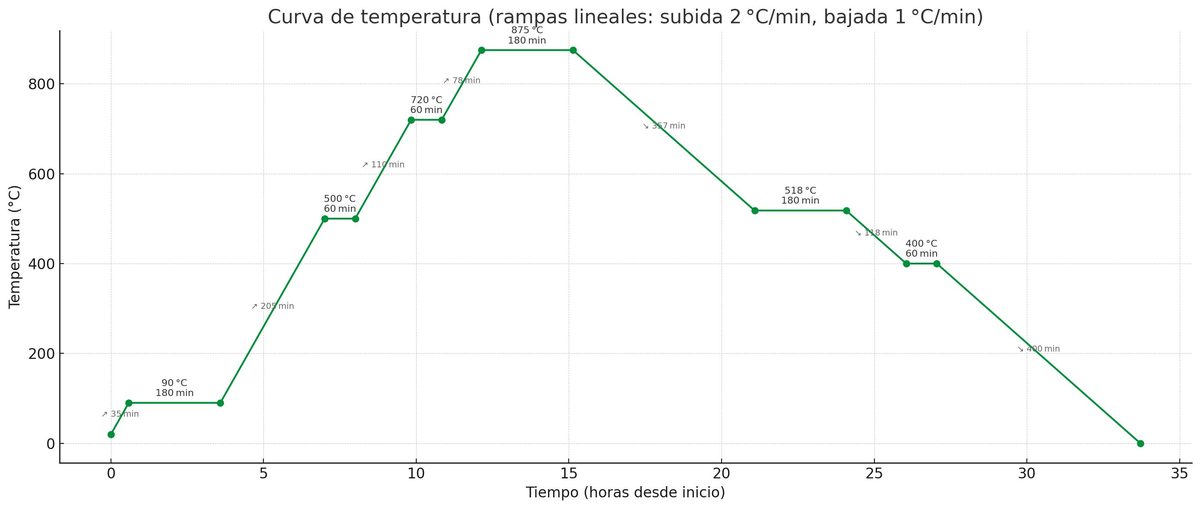
The process uses two thermal cycles: firing the ceramic mould at 1190°C and casting the glass at a peak of 875°C, followed by controlled annealing. The complete sequence covers matrix assembly, paste placement and drying, mould firing, glass charging, kiln casting and release of the finished piece.
Results and limitations
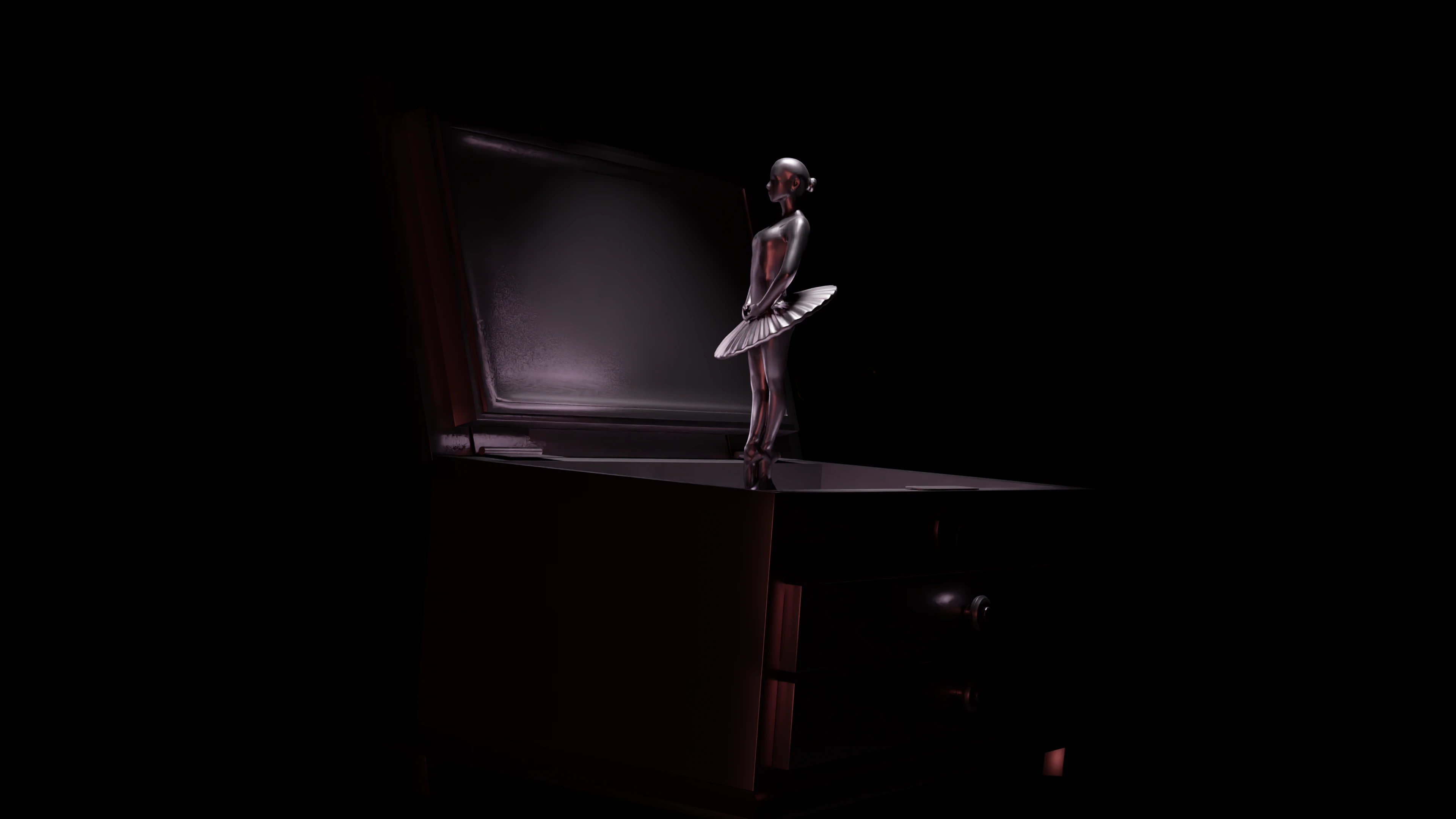
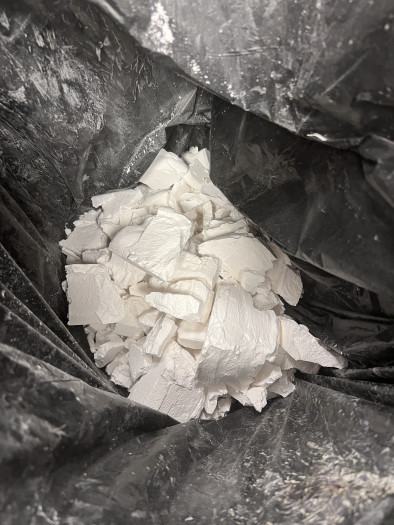
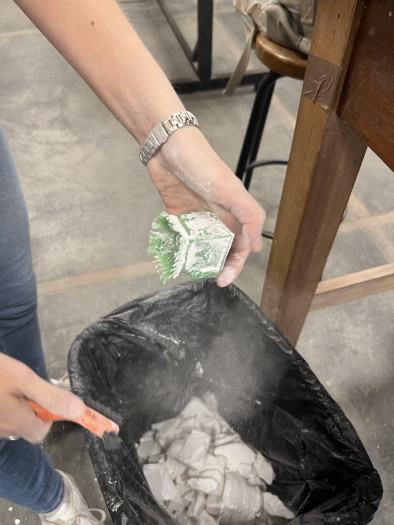
The prototype verified the fit of the printed components, the forming of the refractory mould and the separation of its quadrants. The eighth test completed one casting with crushed glass: it produced a solid volume, and the mould remained intact after the thermal cycle.
This result validates the system's basic operation in a laboratory test. The documentation does not yet establish the number of reuse cycles each mould can withstand, dimensional stability across repeated firings, or a quantified reduction in waste or cost.
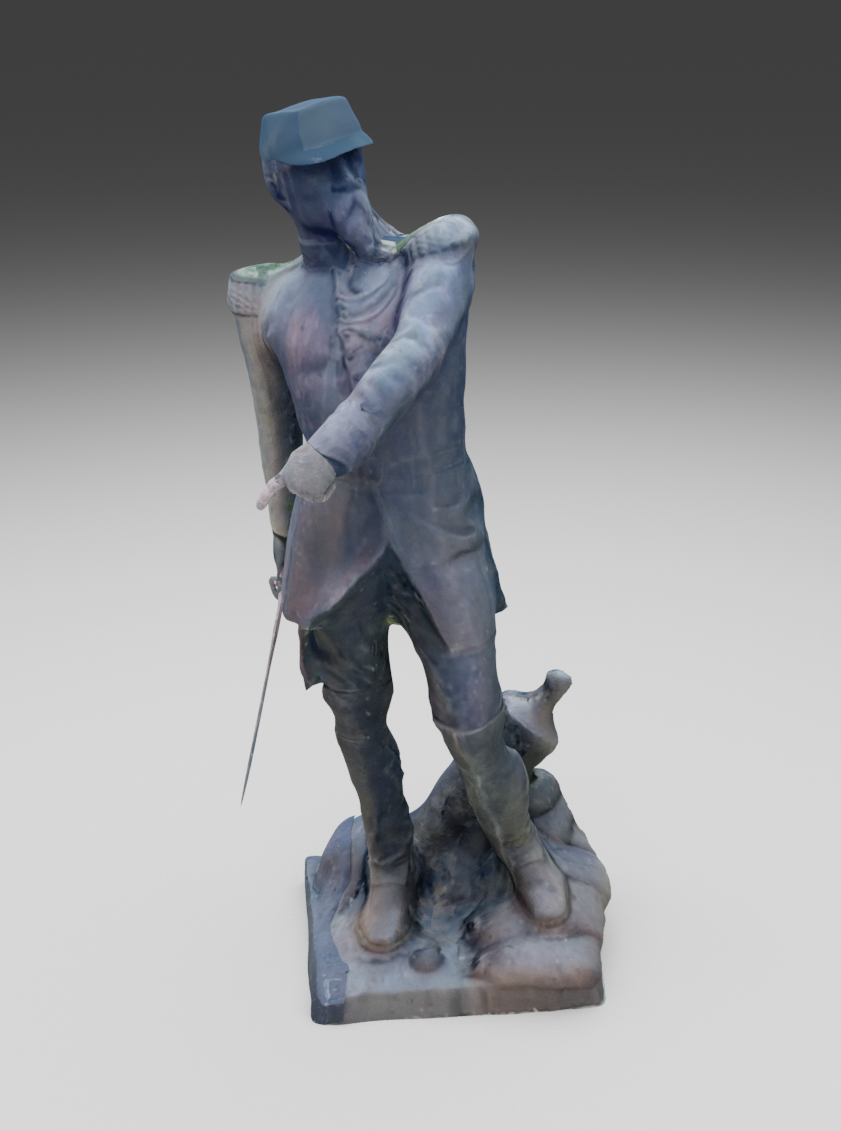
Proposed next steps include adding a glass reservoir to compensate for volume reduction during fusion, validating guided stacking within the kiln, and investigating patterns produced through manual modelling, 3D scanning and parametric segmentation.
Publication and documentation
-
Academic title: Diseño de molde reconfigurable para el desarrollo de volúmenes con molienda de vidrio hueco.
-
Author: Santiago Abásolo Montes de Oca.
-
Supervisor: Beatriz Amorín.
-
Institution: Universidad de la República, FADU, Escuela Universitaria Centro de Diseño.
-
Year: 2025.
-
Official record and full thesis — Colibrí Repository, Universidad de la República