TOCLER
Speculative sensory re-education system for a 2050 scenario shaped by intensive virtual-reality use. Developed through trend analysis, scenario building and product-service design.
Speculative design project addressing the loss of tactile and olfactory experiences in a future scenario dominated by virtual reality.
My role
I co-designed TOCLER with Sebastián Varela between April and June 2022 at EUCD/FADU, Universidad de la República.
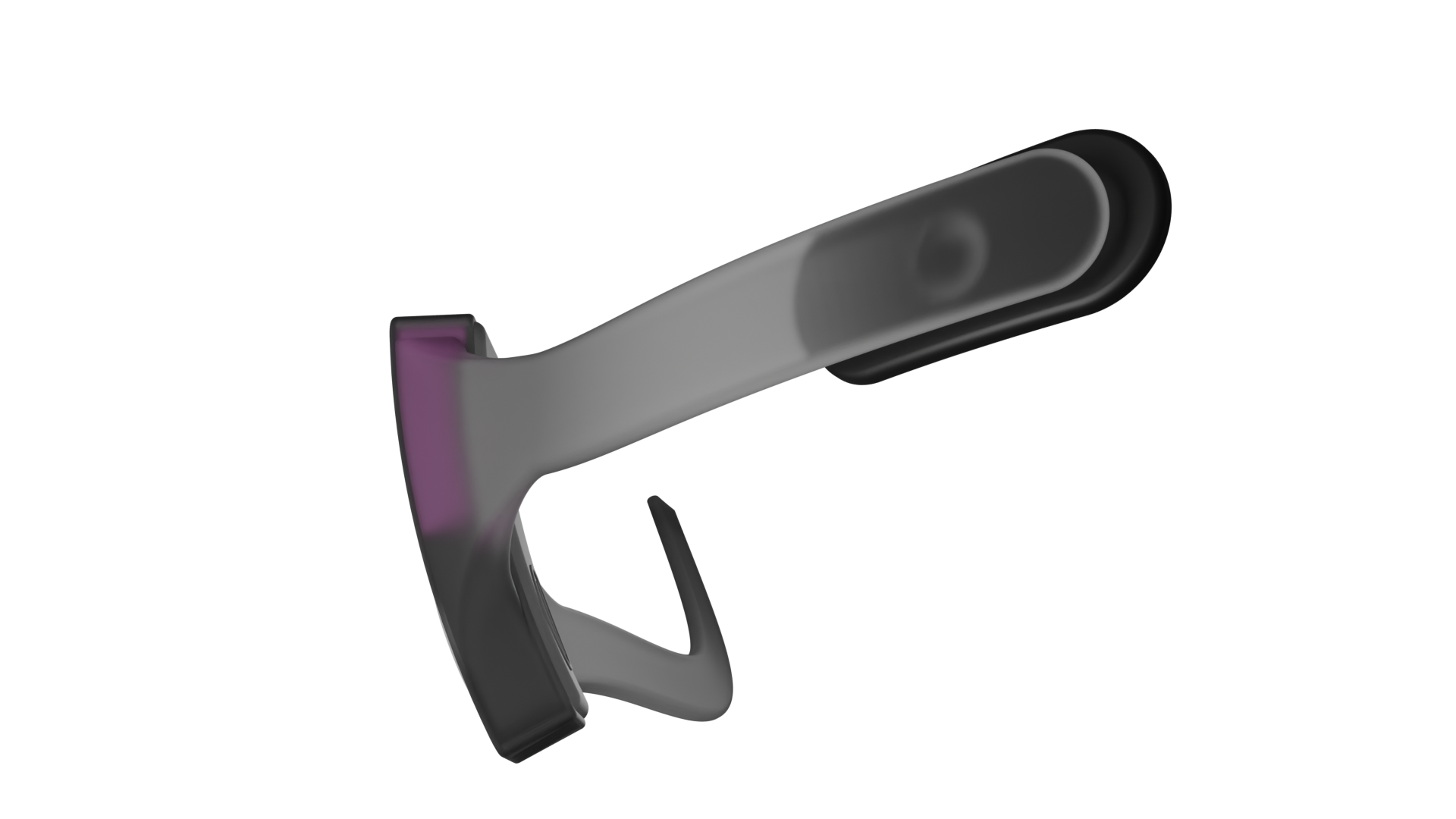
The work covered trend analysis, construction of a 2050 scenario, generation and evaluation of alternatives, definition of the service system, and formal development of the device.
Summary
The exercise responded to the brief Horizonte 2050: proyectando soluciones a problemas emergentes. Starting from the themes of transport and education, we examined changes in the relationship between people and digital technologies and built a scenario in which work, leisure and education take place mainly in virtual environments.
TOCLER addresses a hypothetical consequence of this scenario: reduced tactile and olfactory stimulation in everyday life. The proposal combines an accessory for virtual-reality headsets, scent cartridges and a temporary programme of sensory experiences.
Scenario construction
The analysis combined two perspectives. The diachronic study reviewed the development of remote education, virtual environments and human-machine interaction. The synchronic study organised twelve phenomena observed in 2022, including remote work, connected homes, persistent virtual worlds, automation and the physical effects of prolonged screen use.
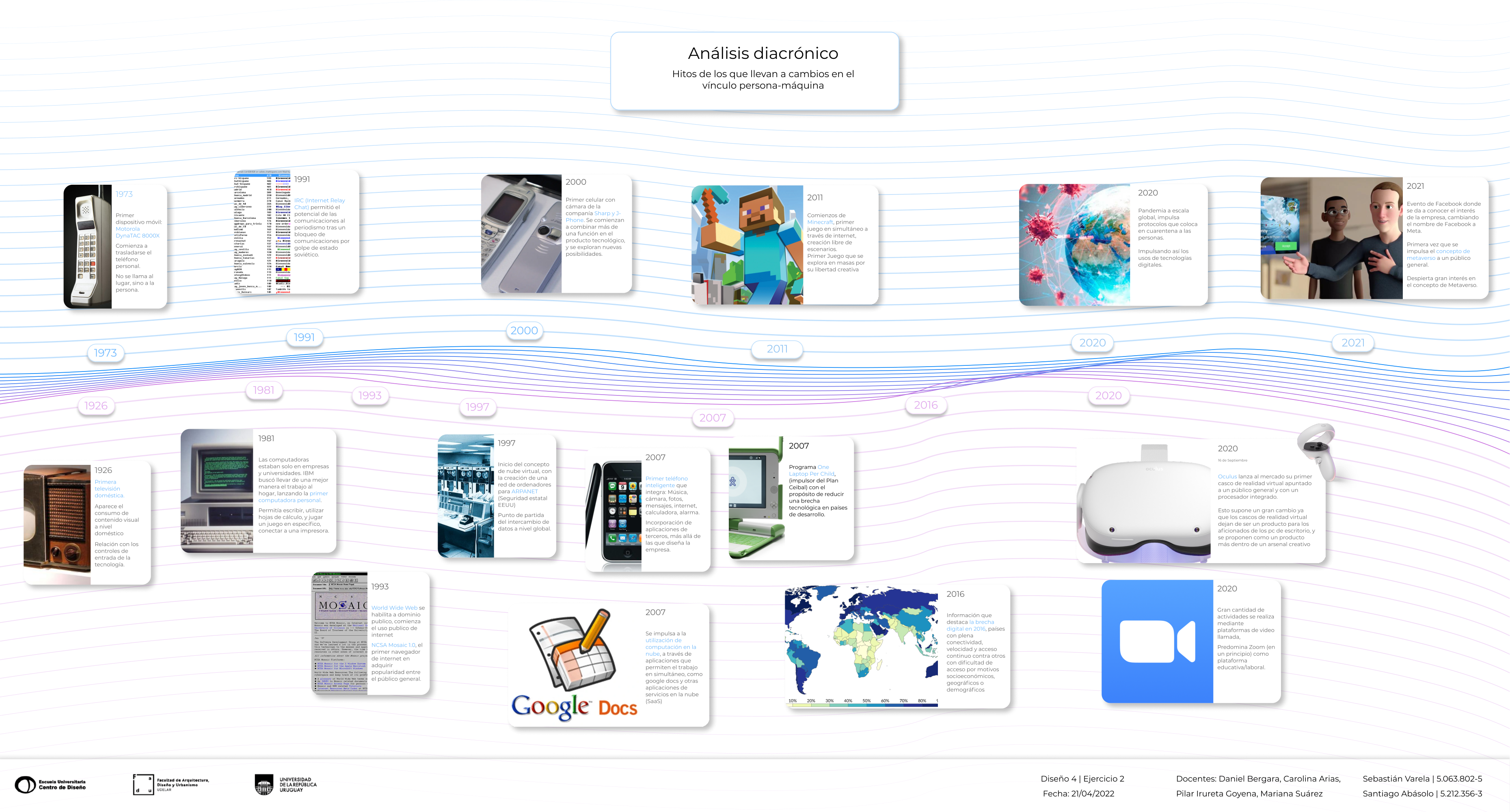
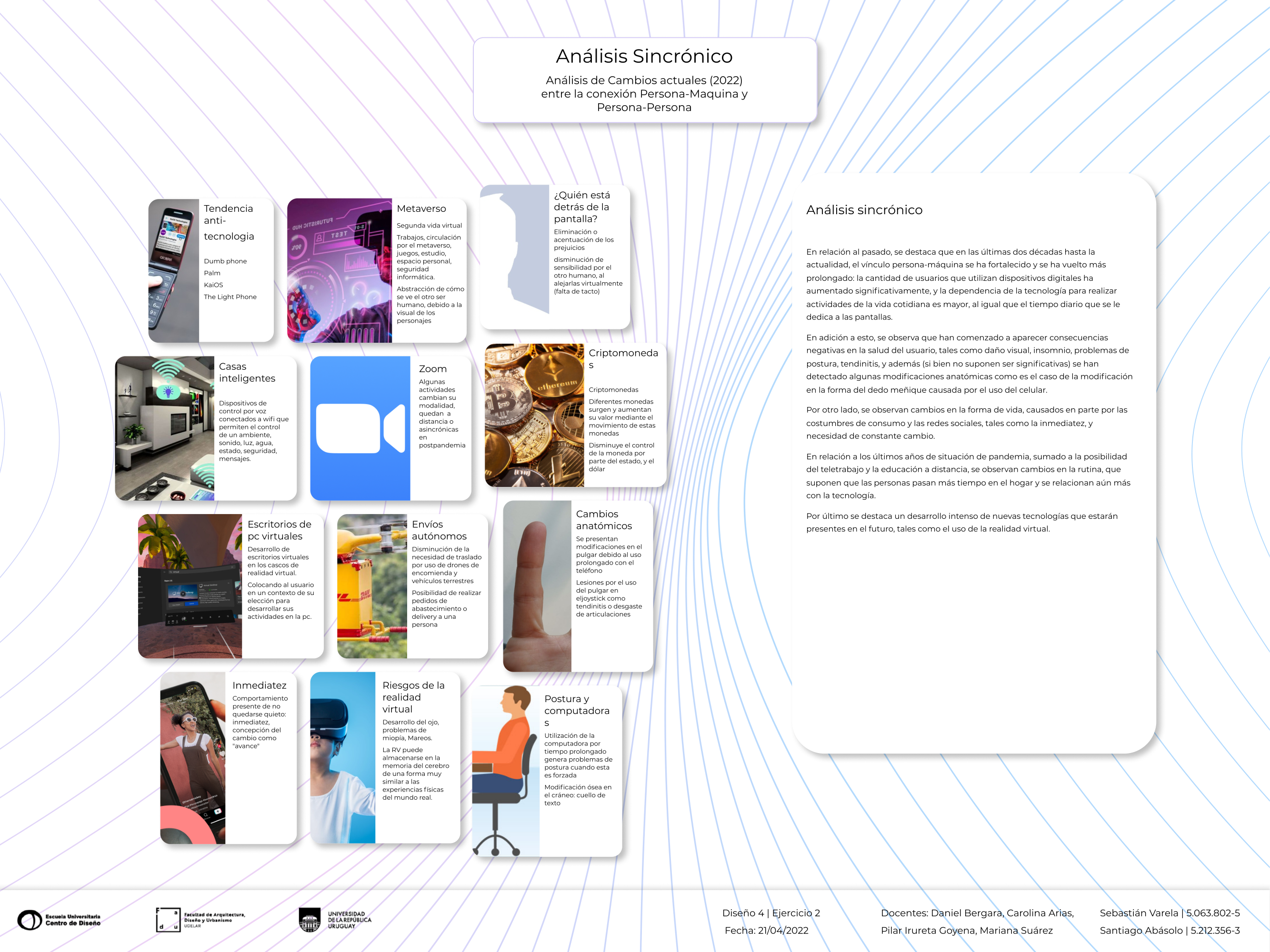
The projection was not presented as a prediction. It provided a design framework for examining one question: how might sensory learning be sustained if much of everyday experience were mediated by virtual systems?
Proposal development
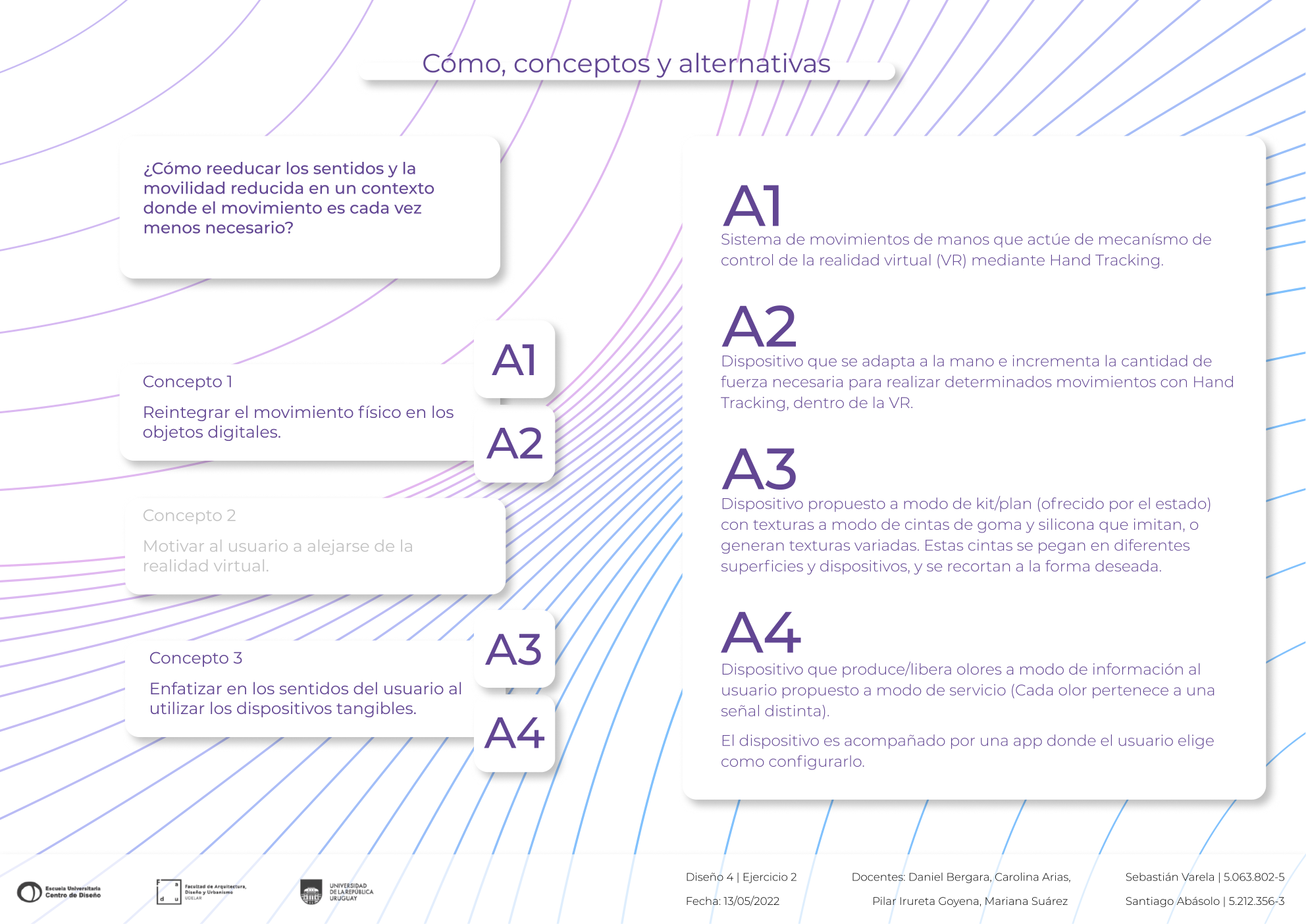
The team developed three concepts and four alternatives related to movement, temporary disconnection from virtual reality, tactile stimulation and scent release. A survey of students and tutors supported comparison of the options. The final proposal combined the most highly rated aspects within one system.
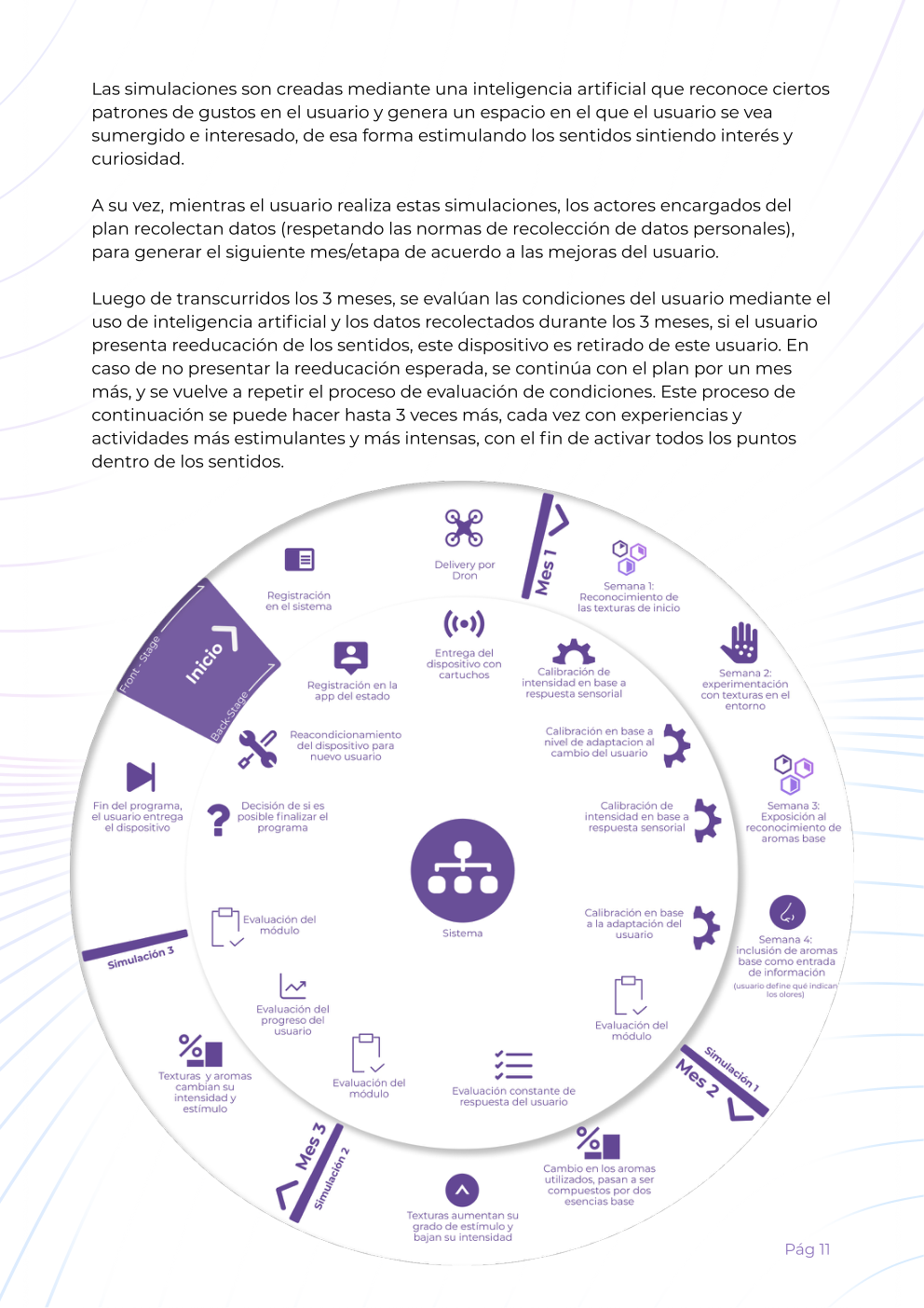
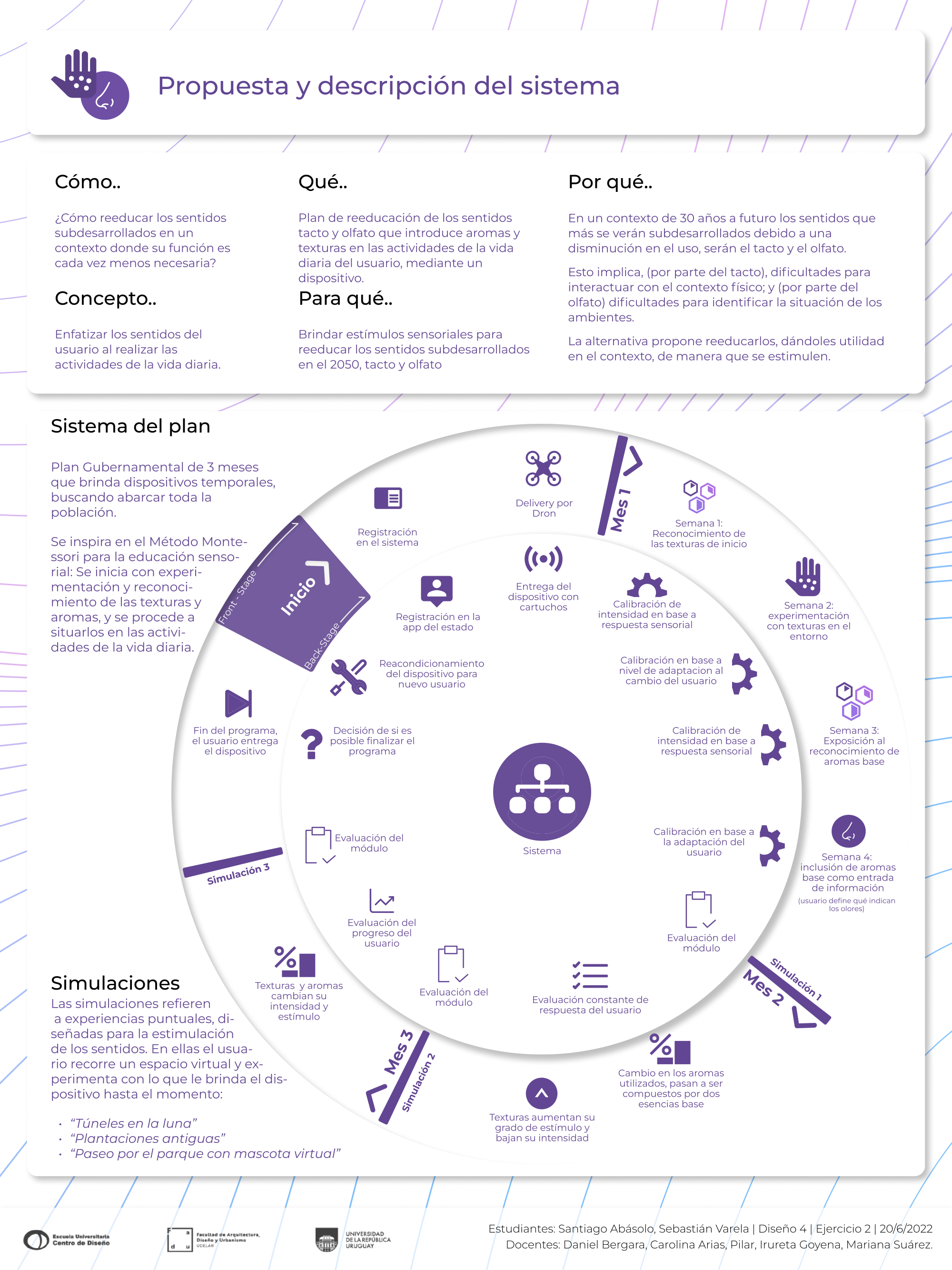
The service was organised as a three-month programme inspired by the sensory progression of the Montessori method:
- Recognition. Introduction of low-intensity stimuli and initial calibration.
- Adaptation. Integration of tactile and olfactory experiences into simulated everyday situations.
- Reduction and evaluation. Gradual reduction of the stimuli and review of the process.
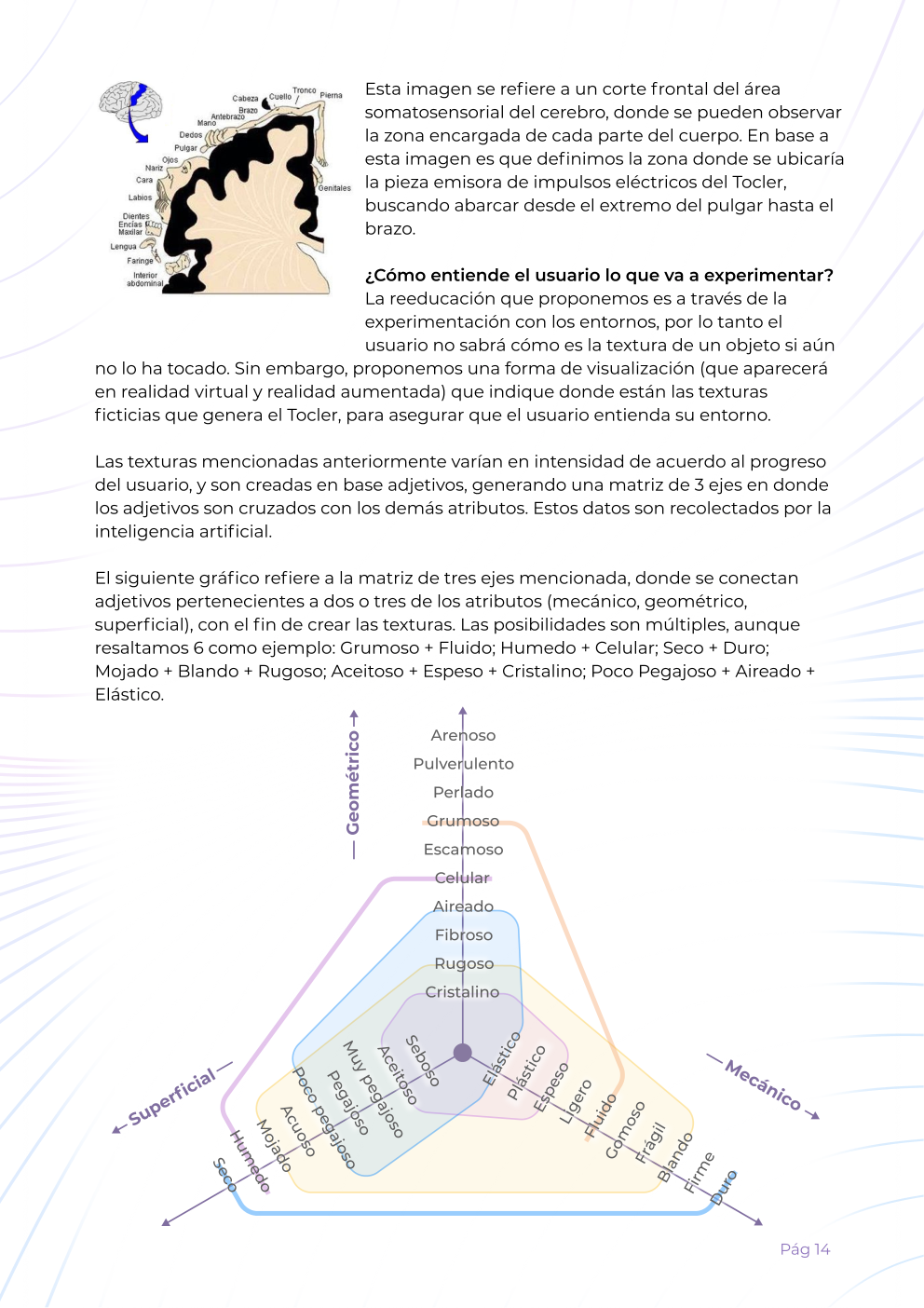
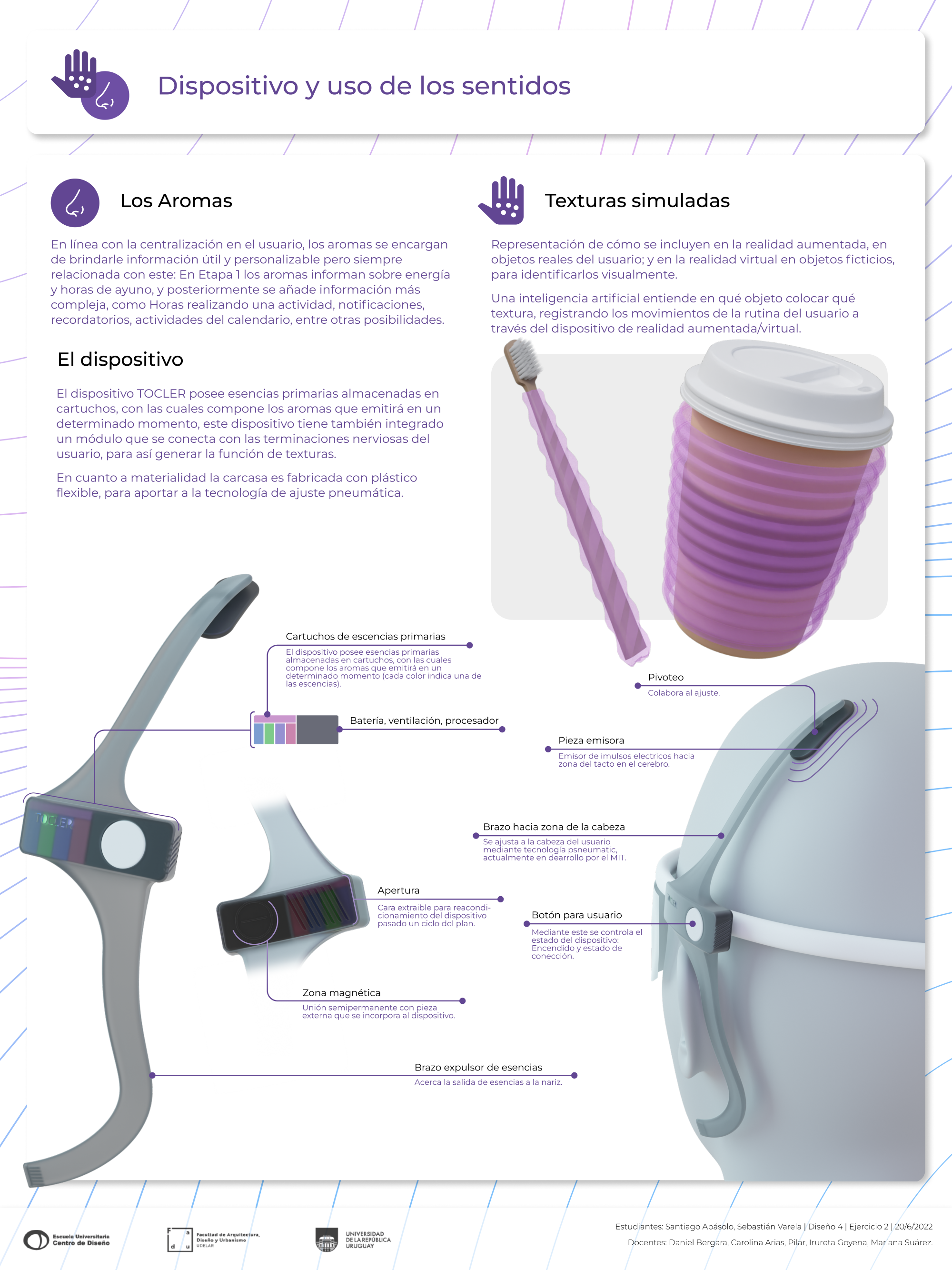
The tactile dimension was organised through a matrix of surface, temperature and malleability. The olfactory dimension used interchangeable cartridges containing basic scents that could be activated or combined during the simulations.
Device design
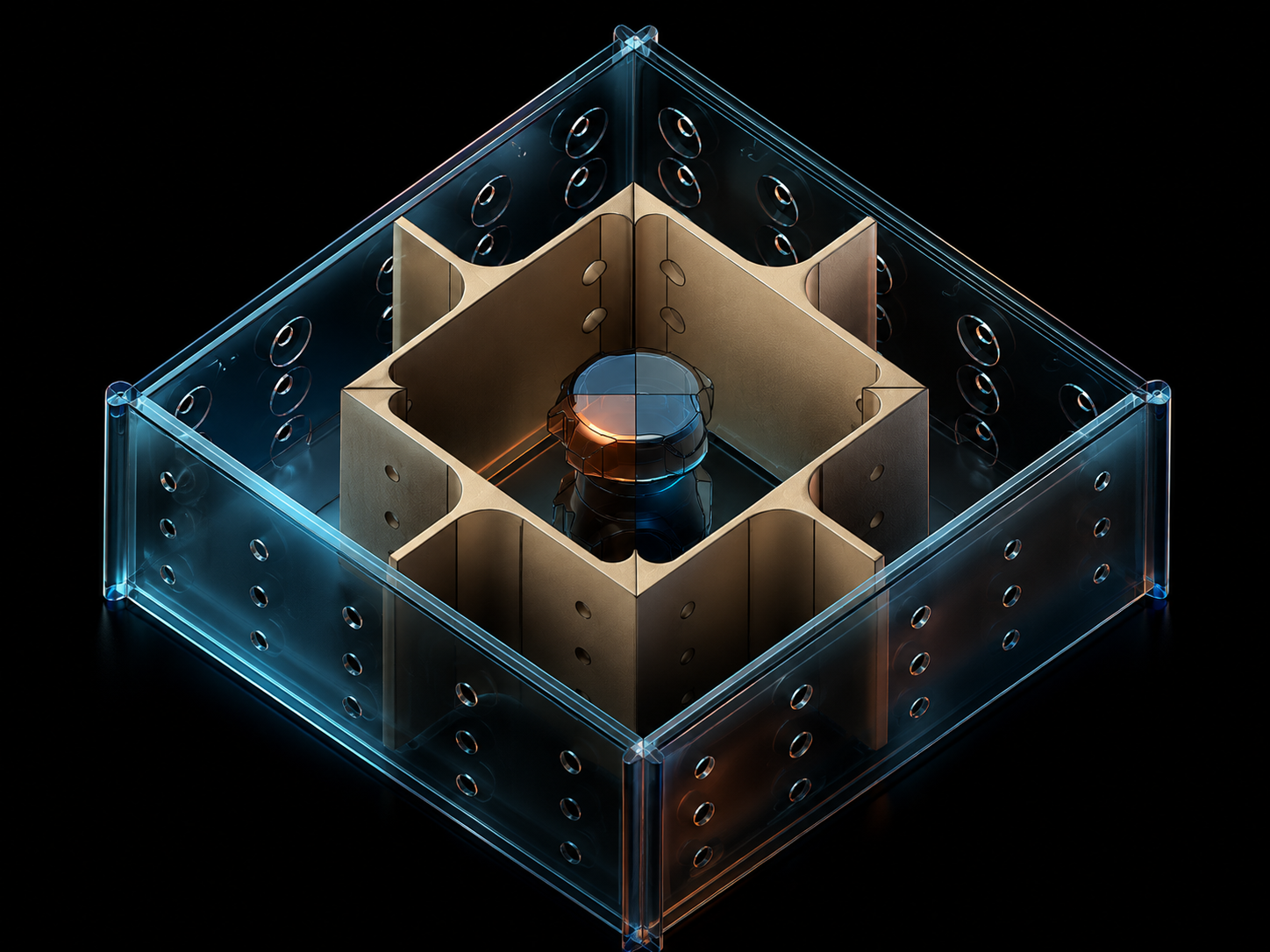
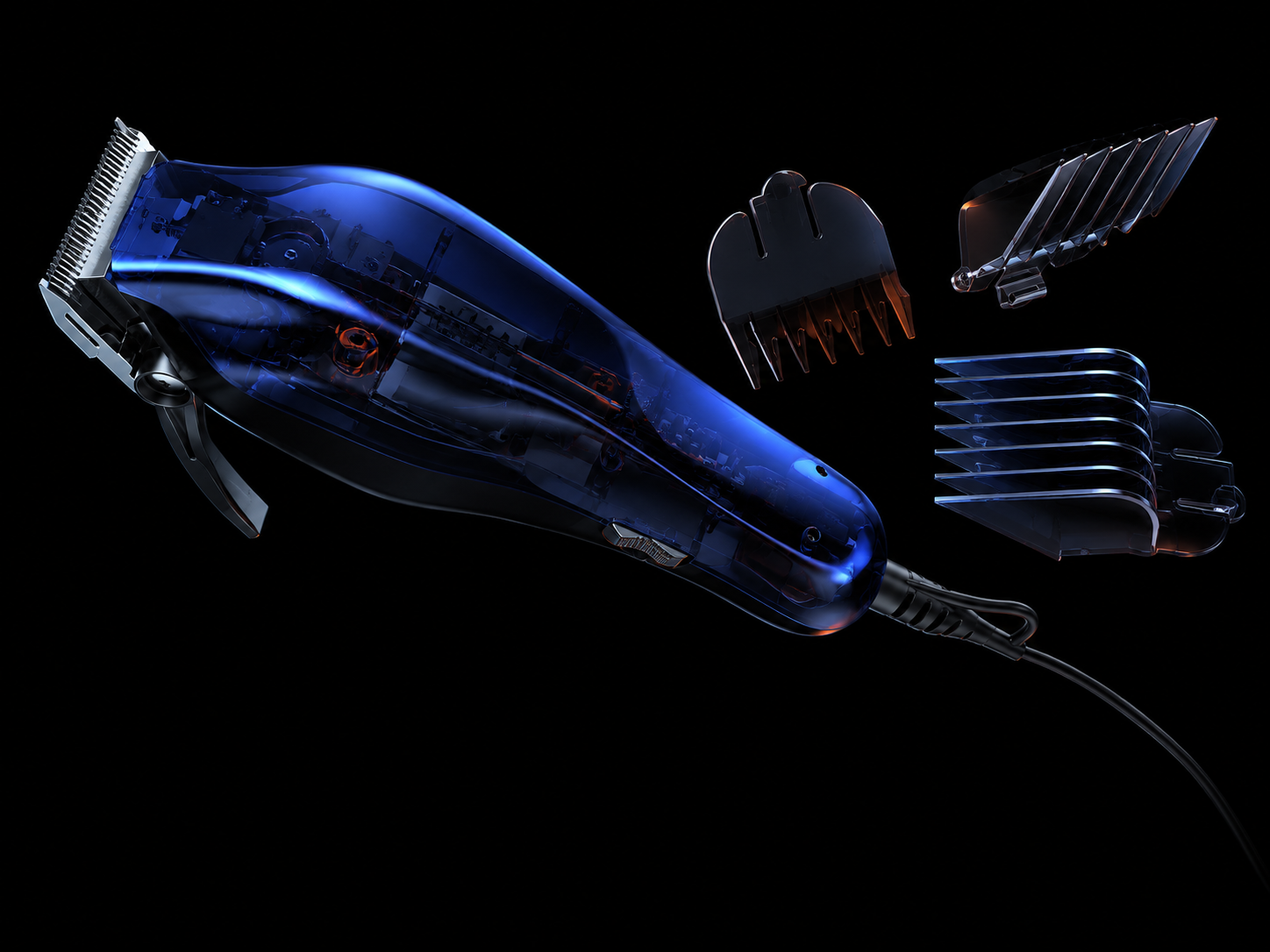
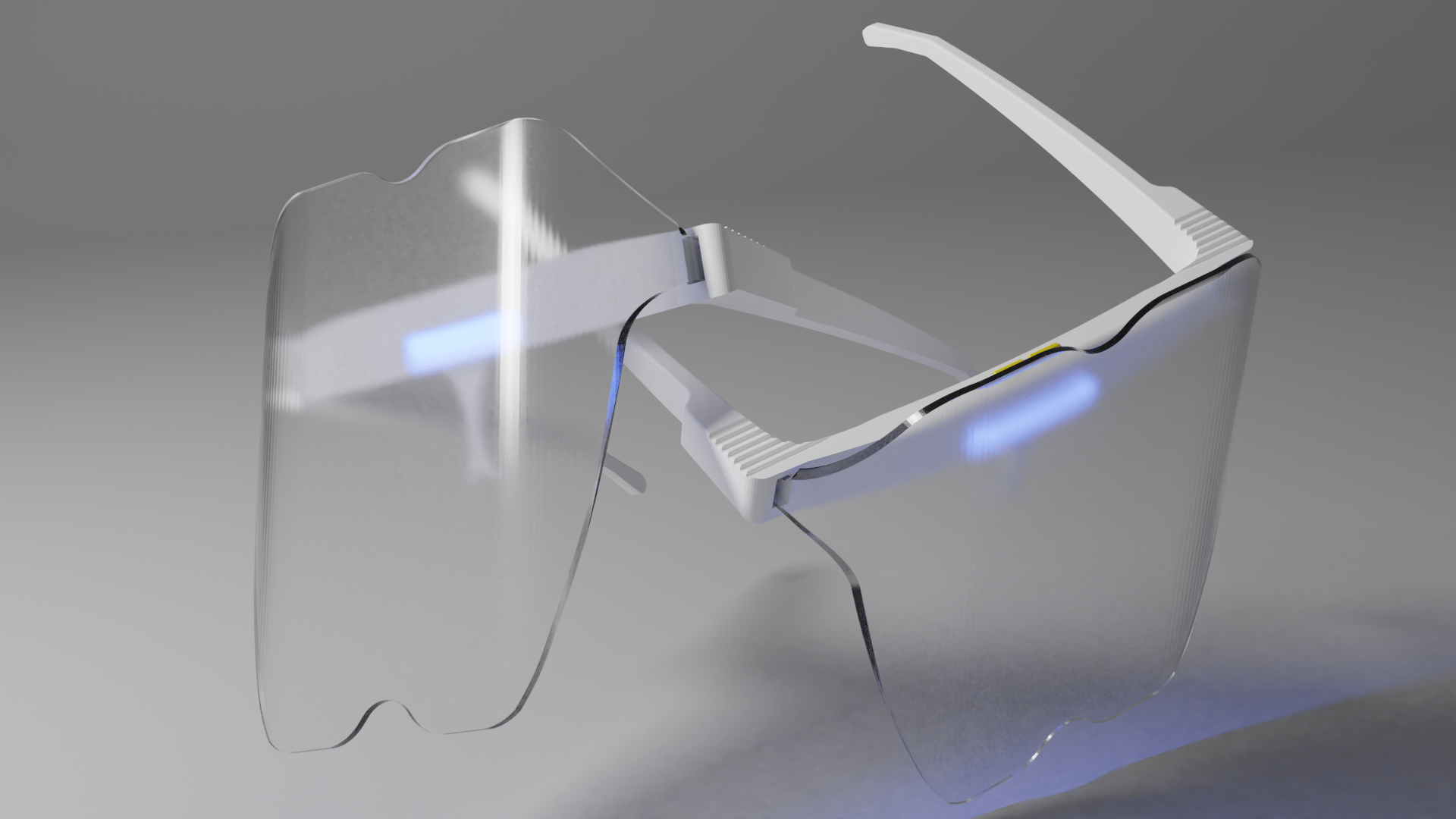
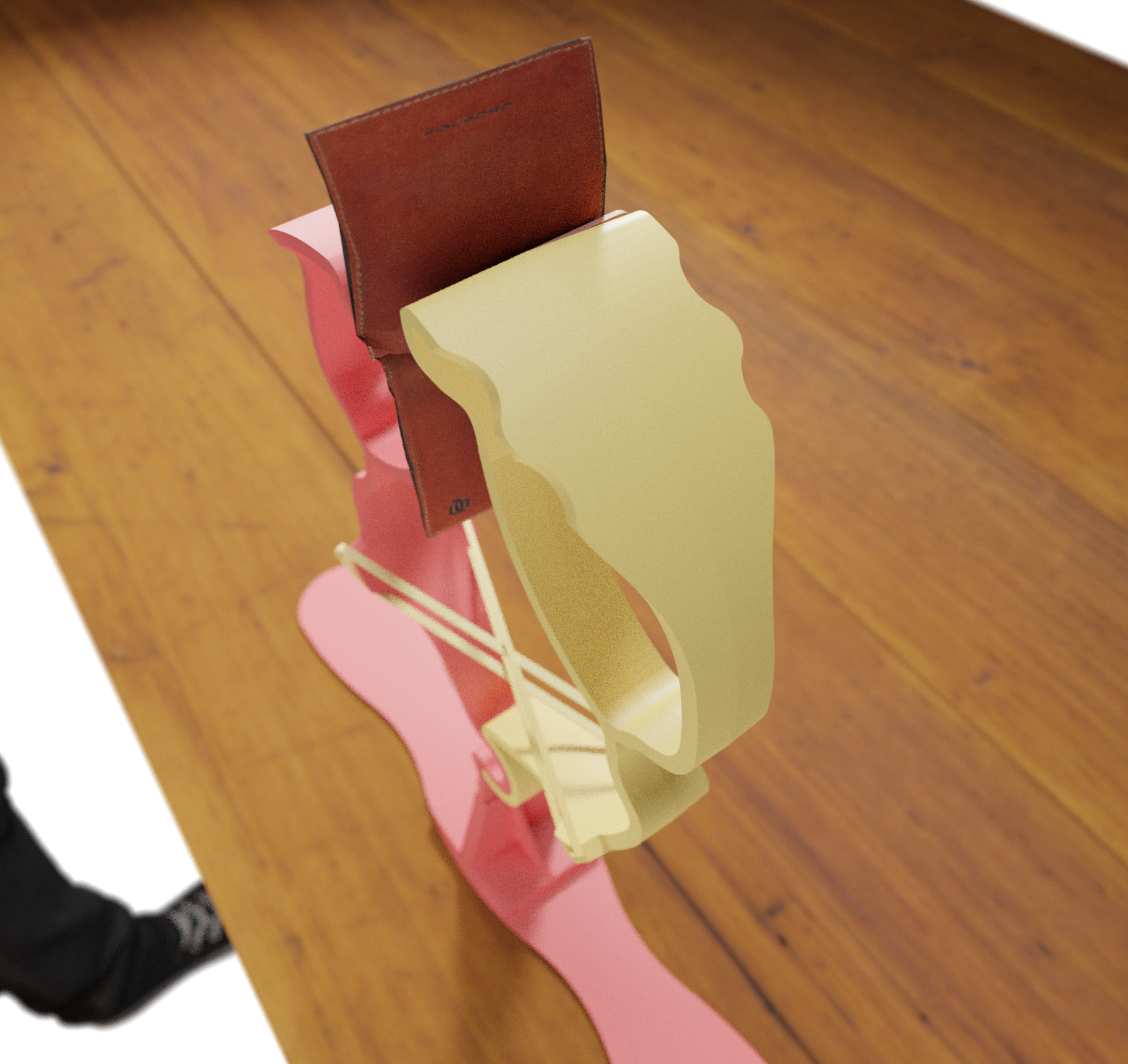
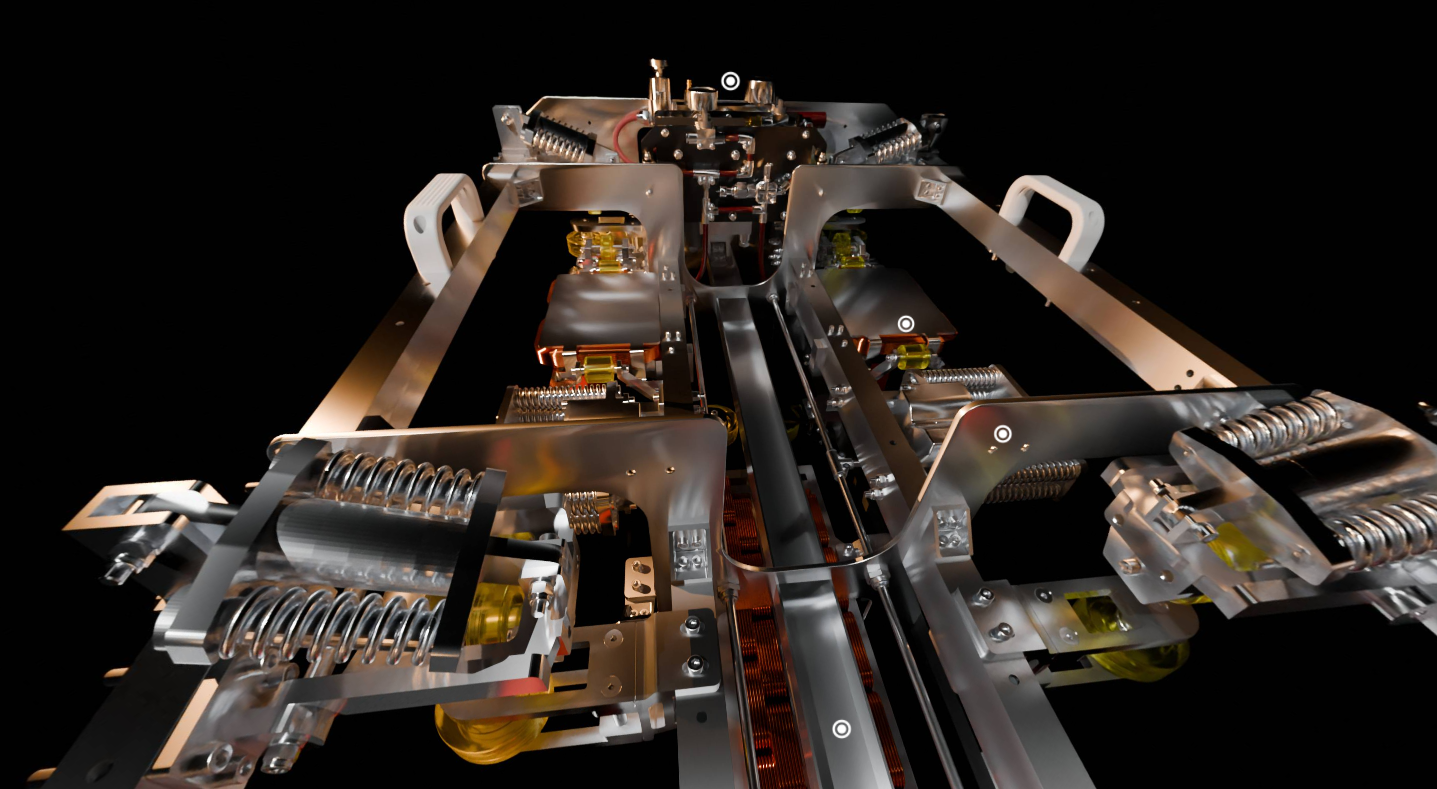
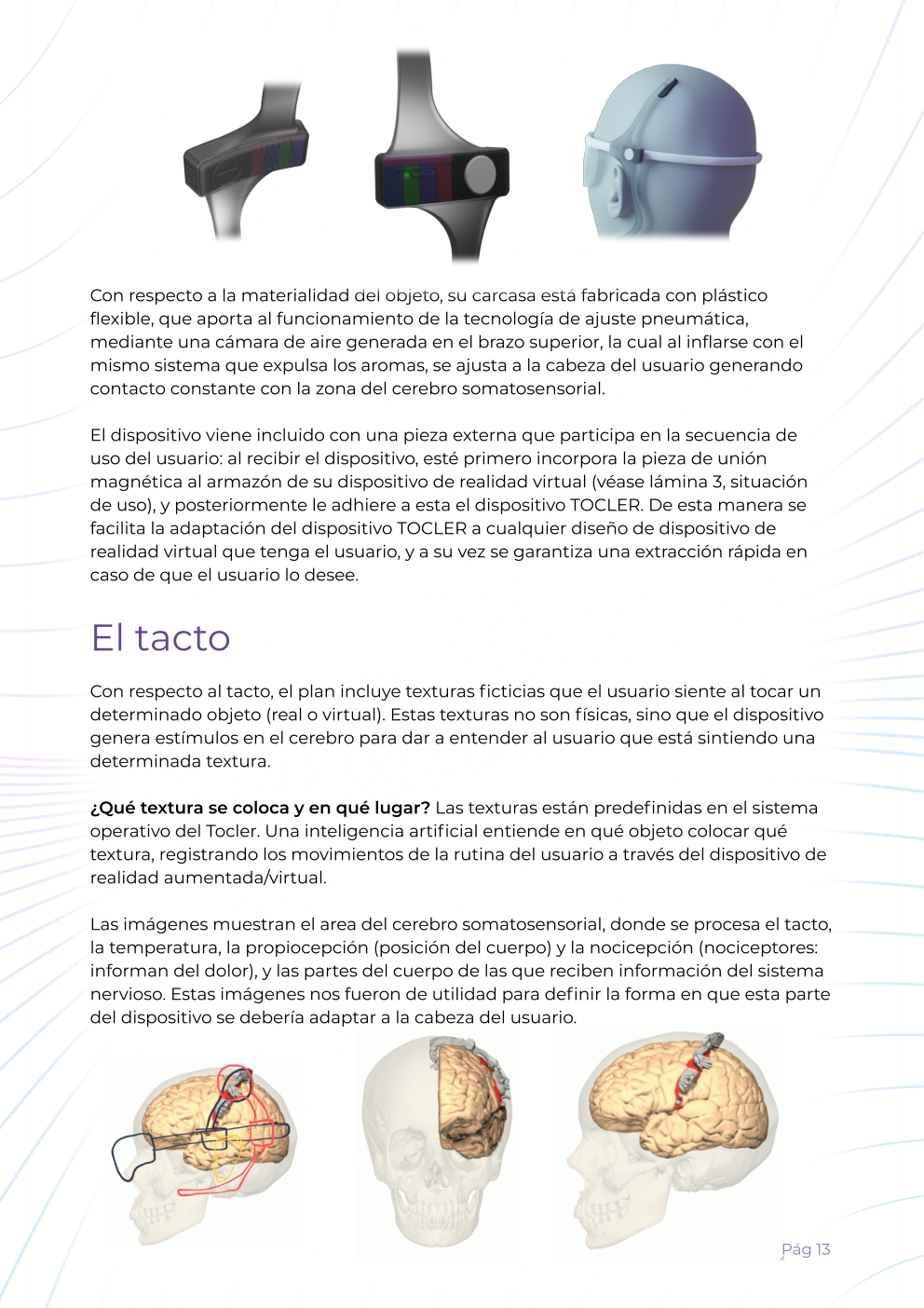
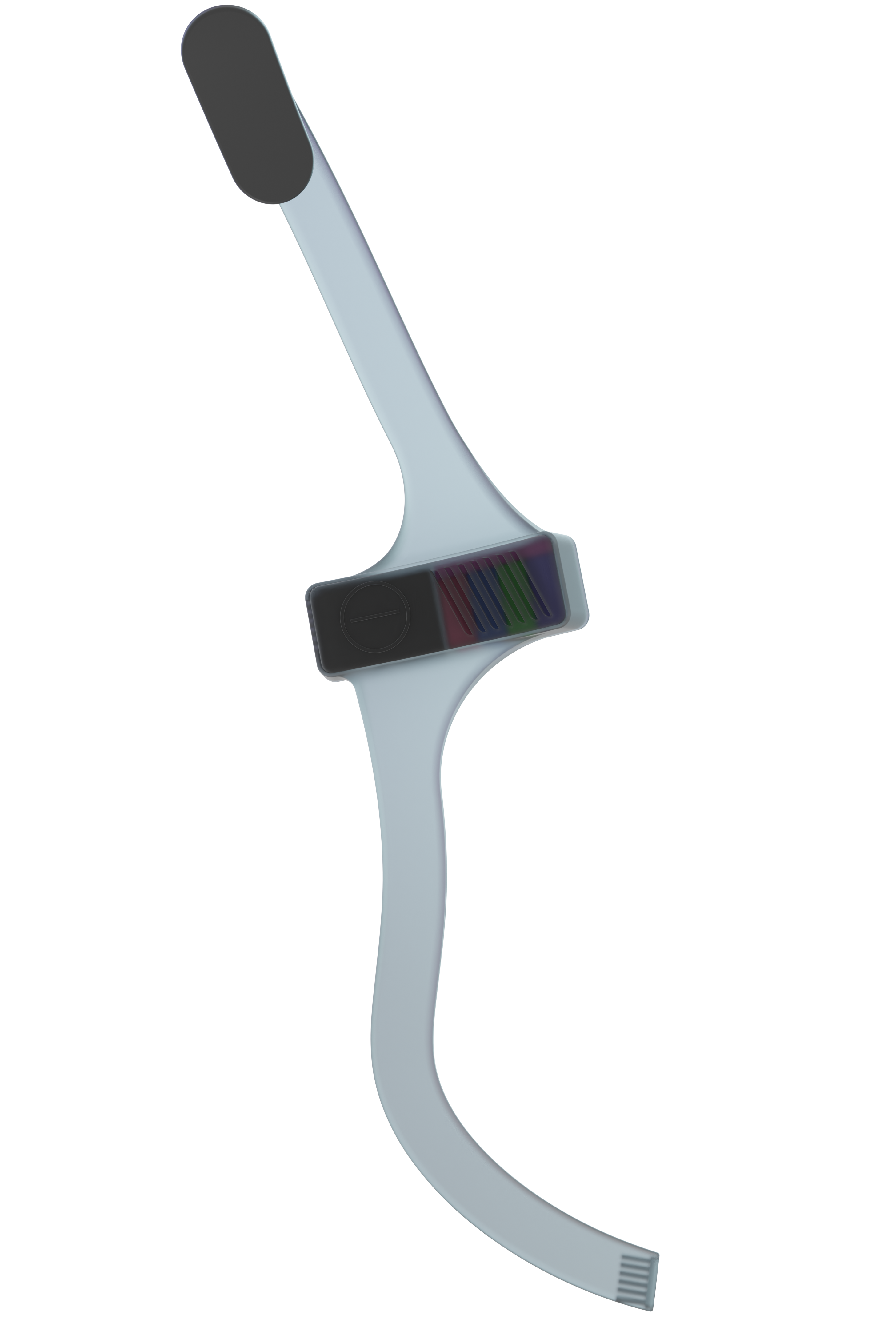
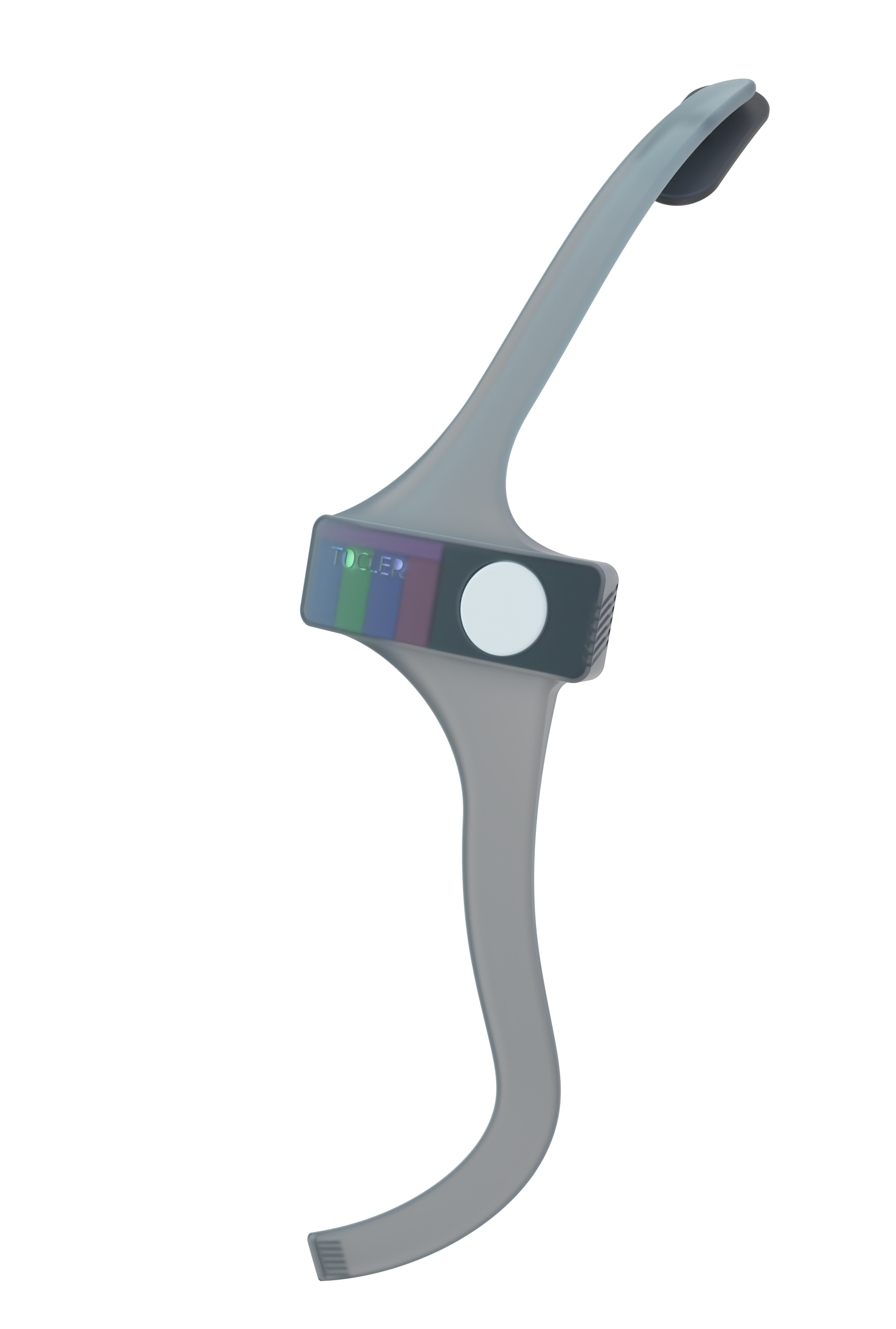
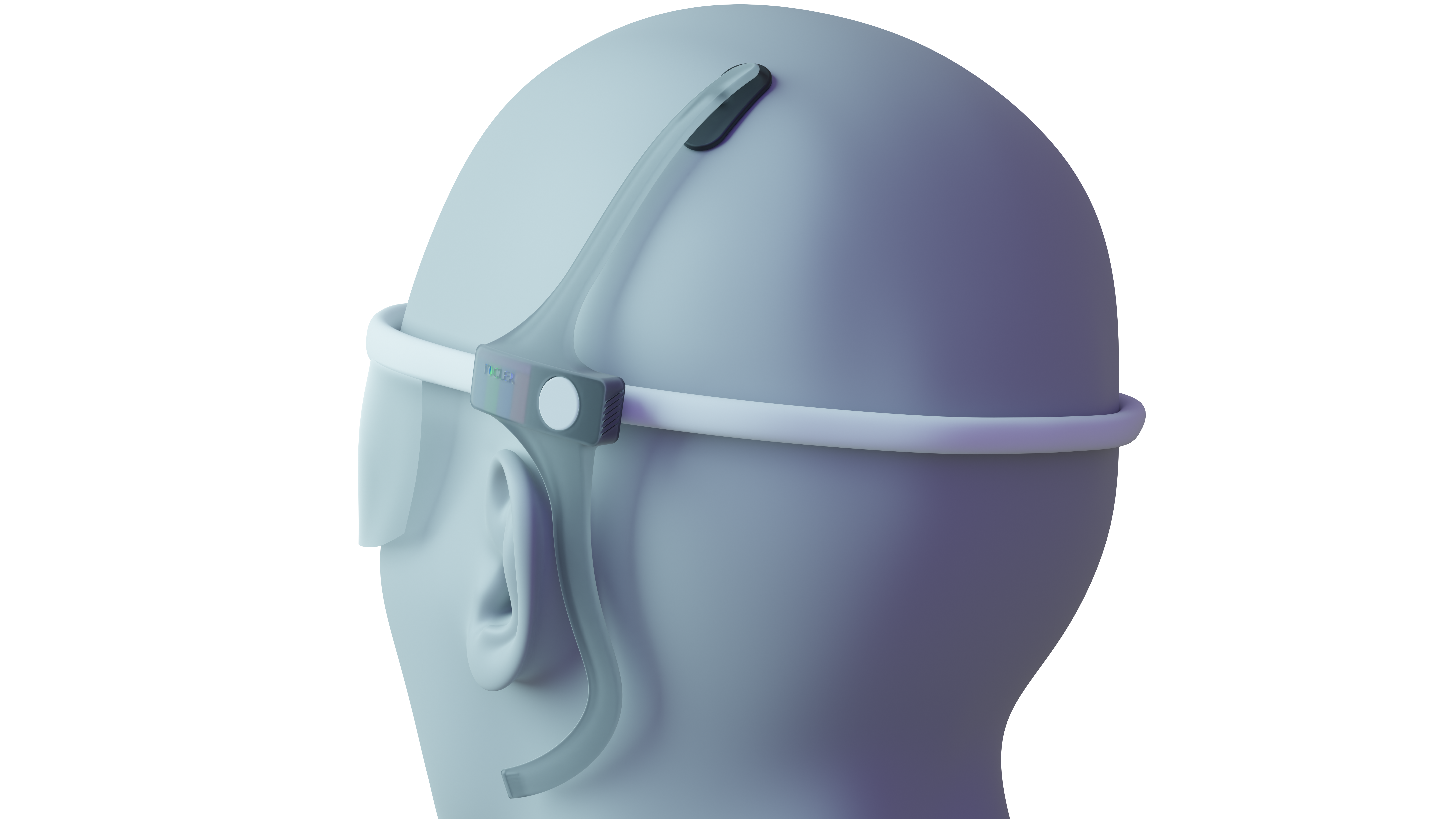
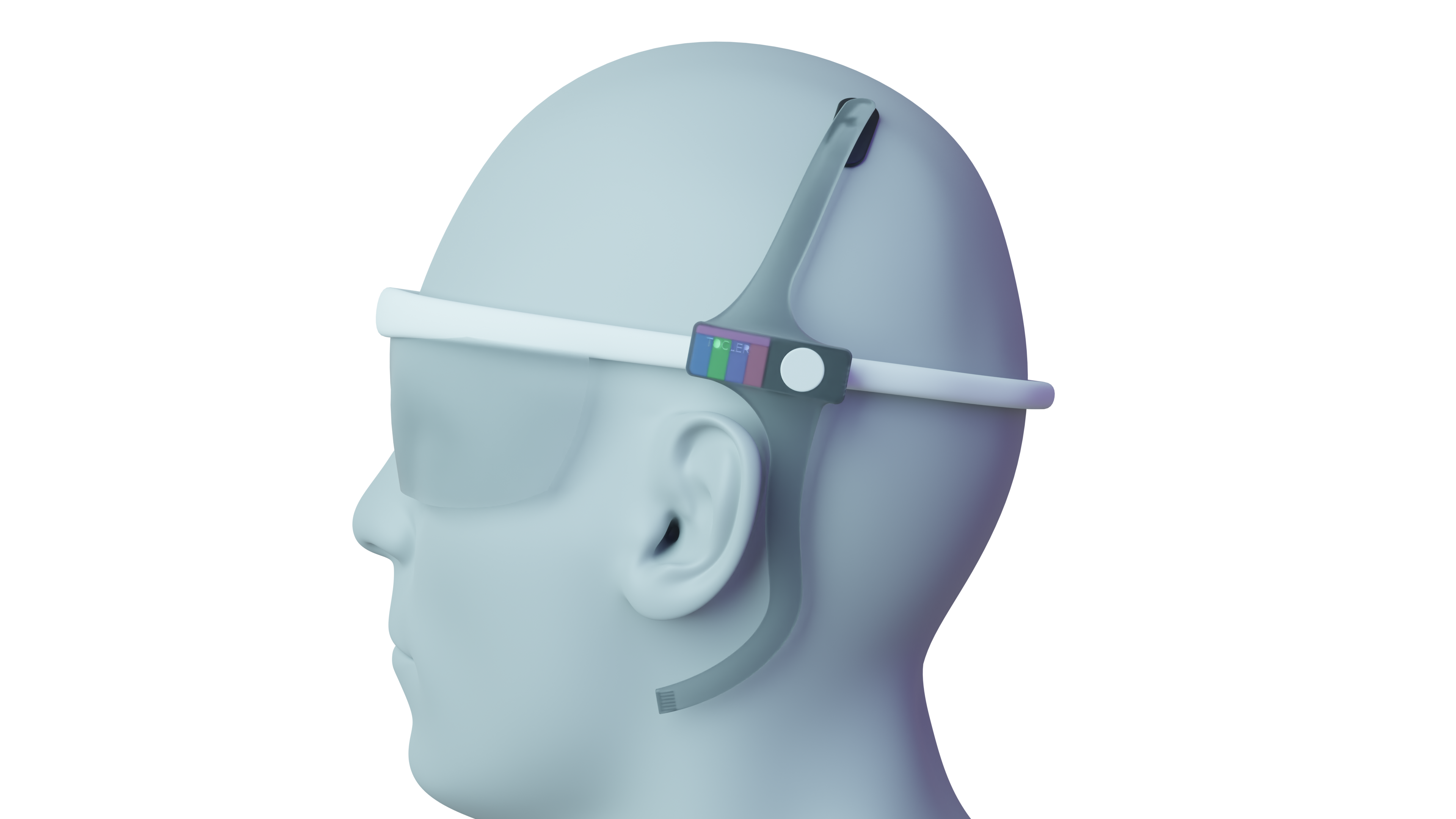
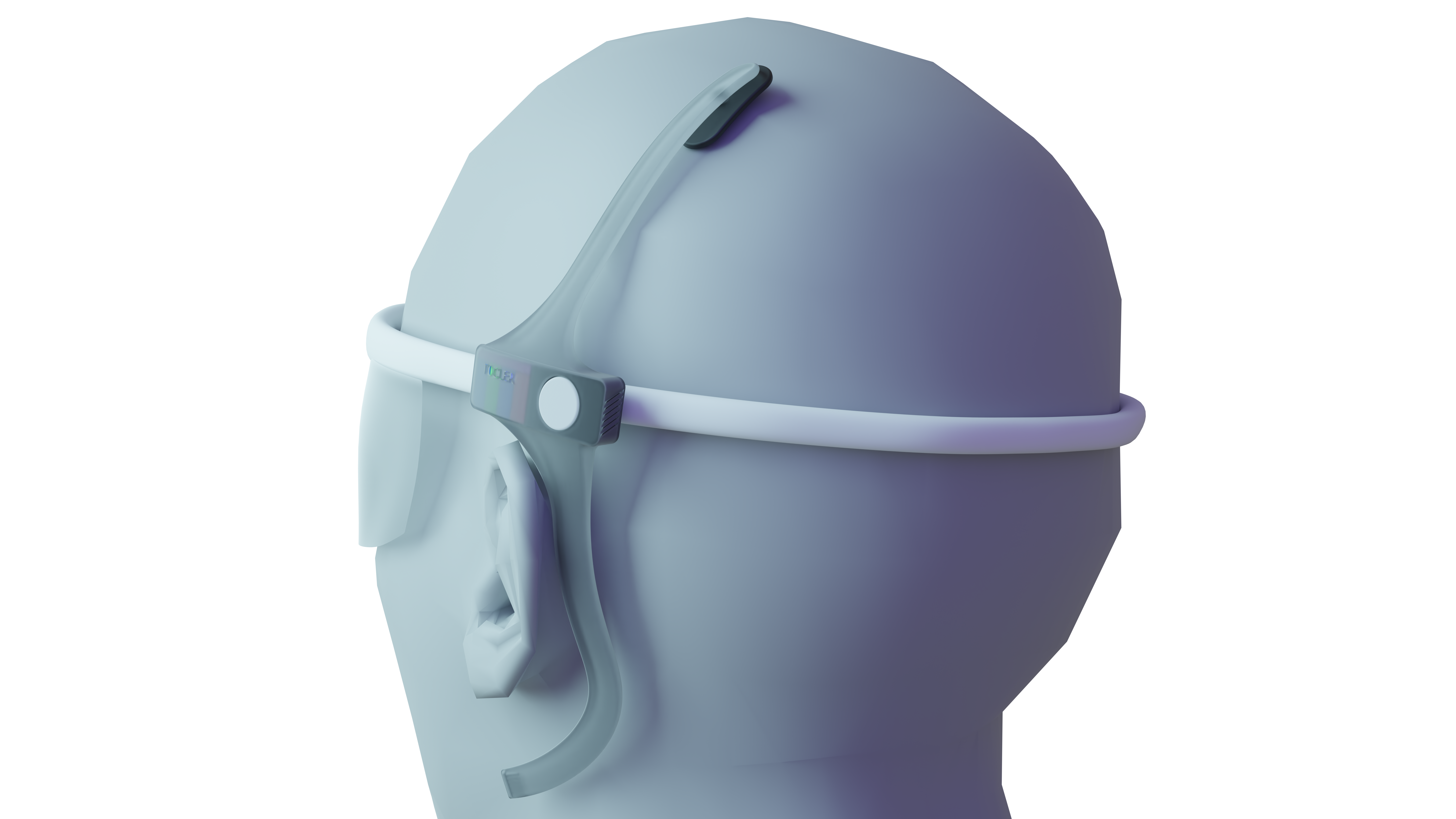
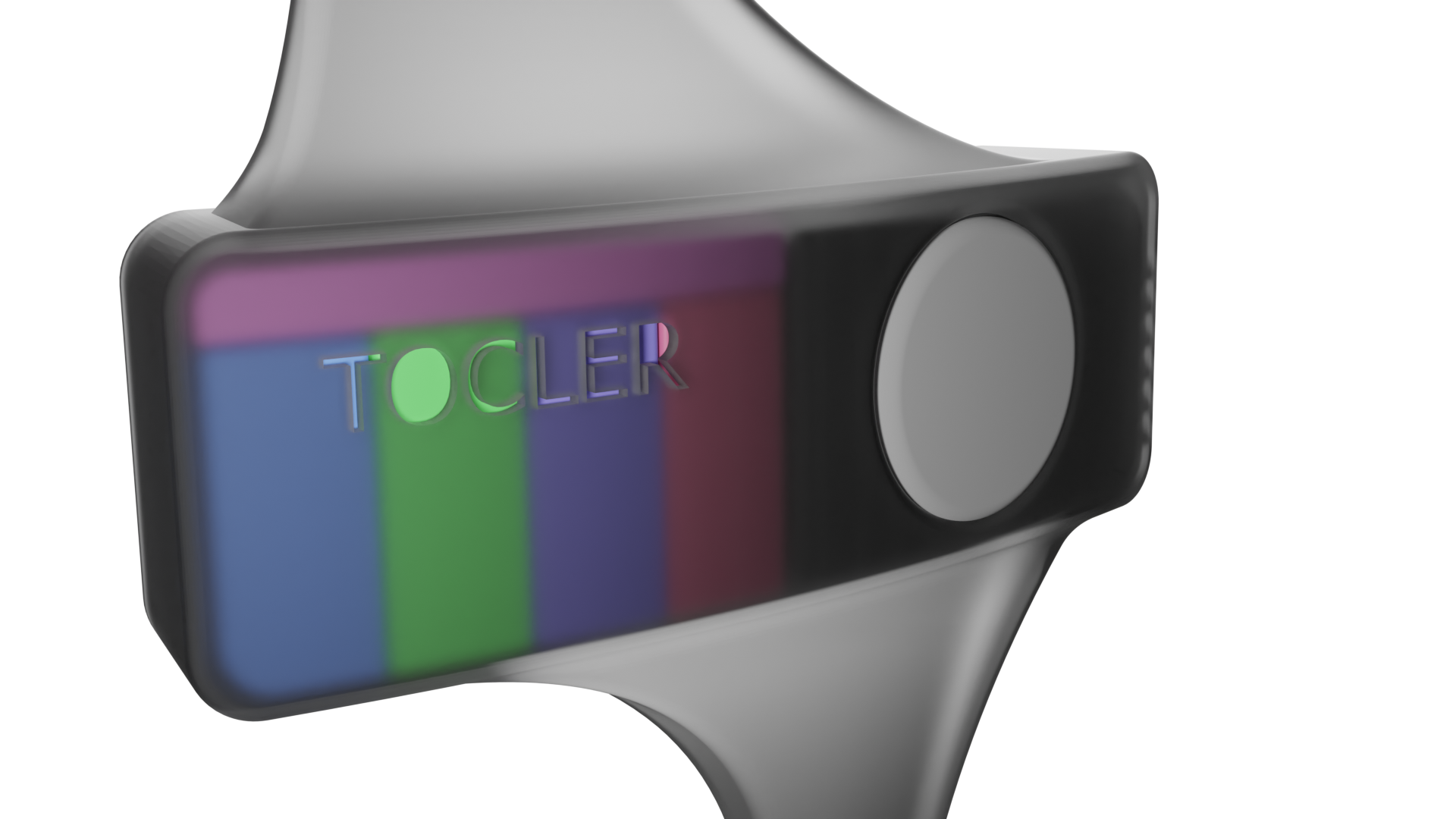
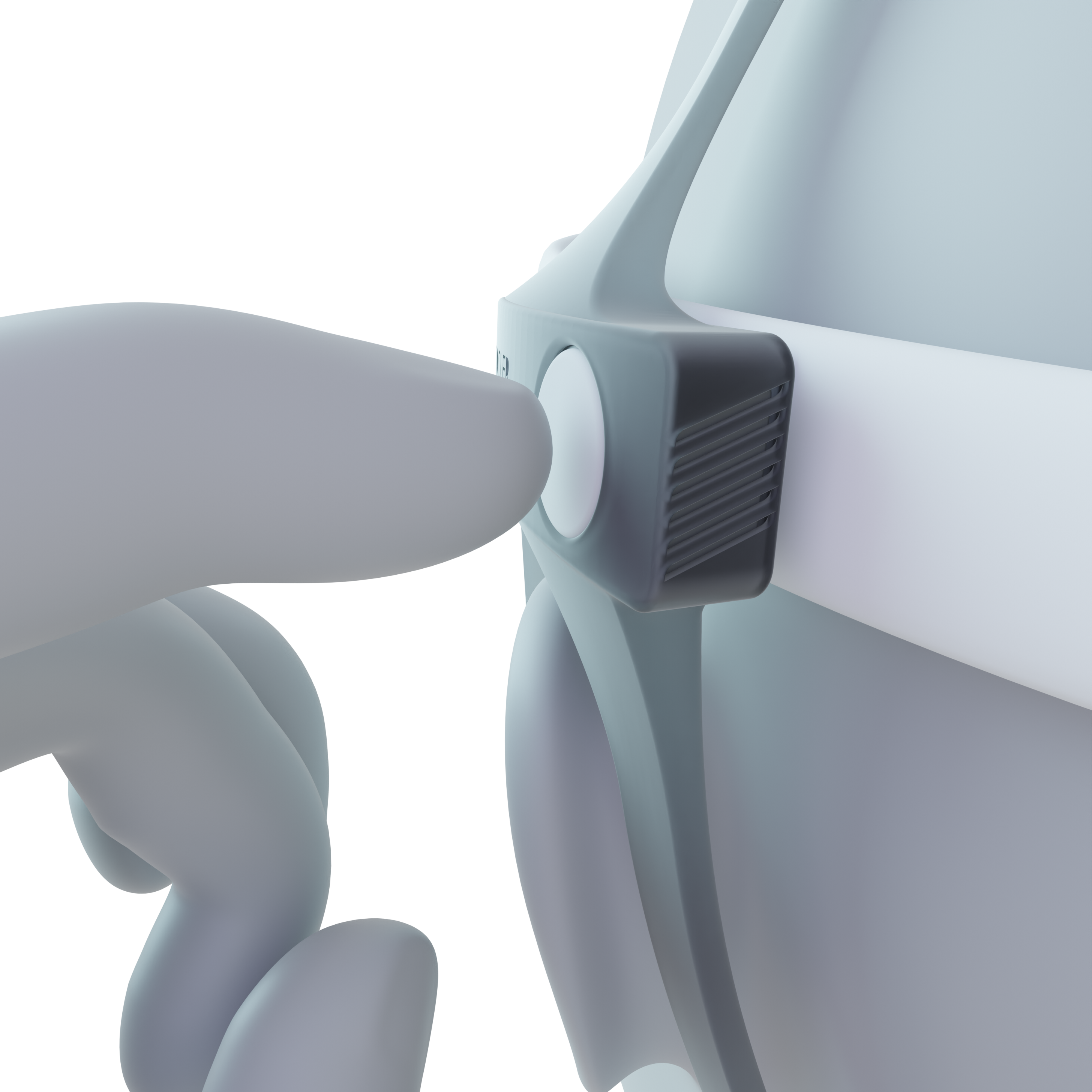
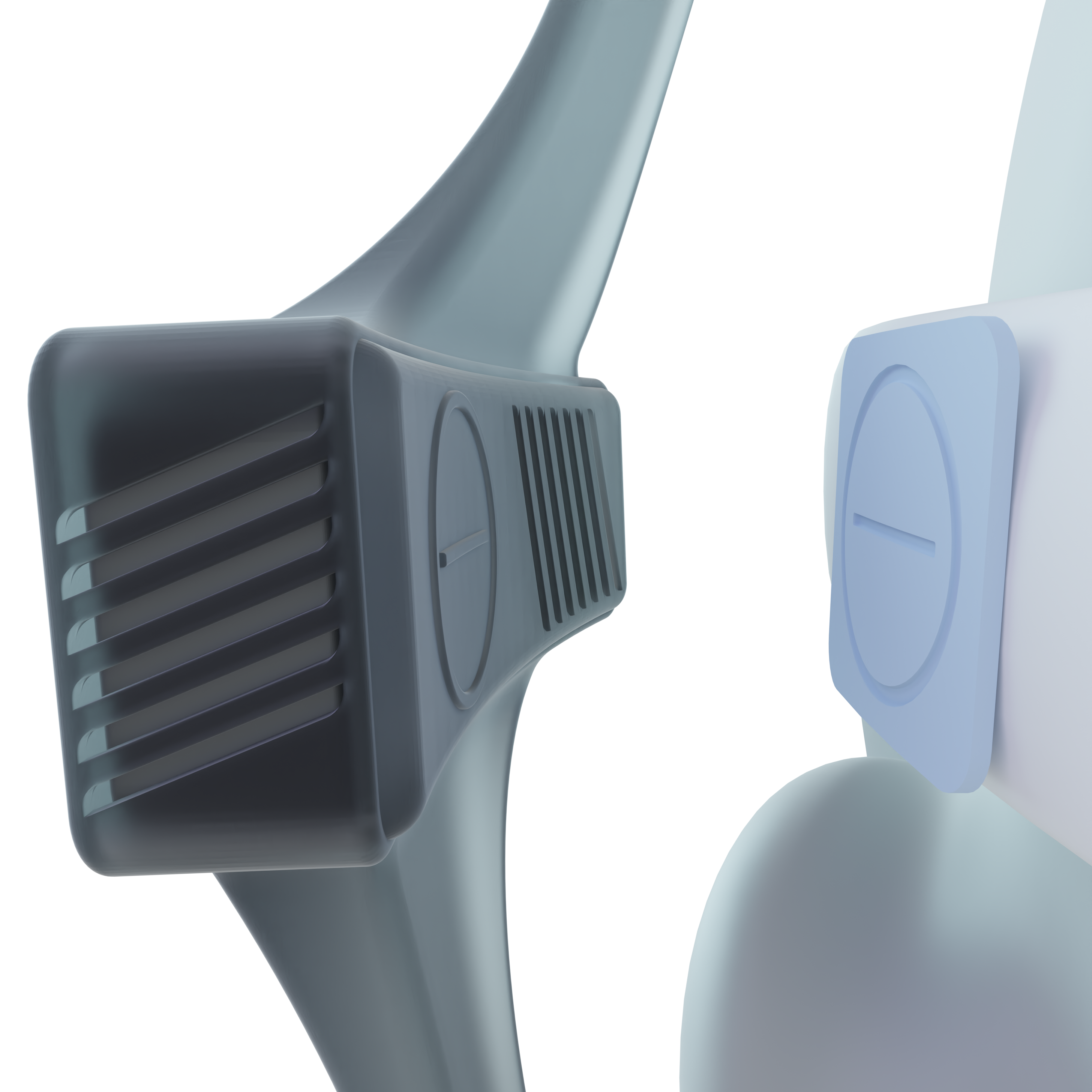
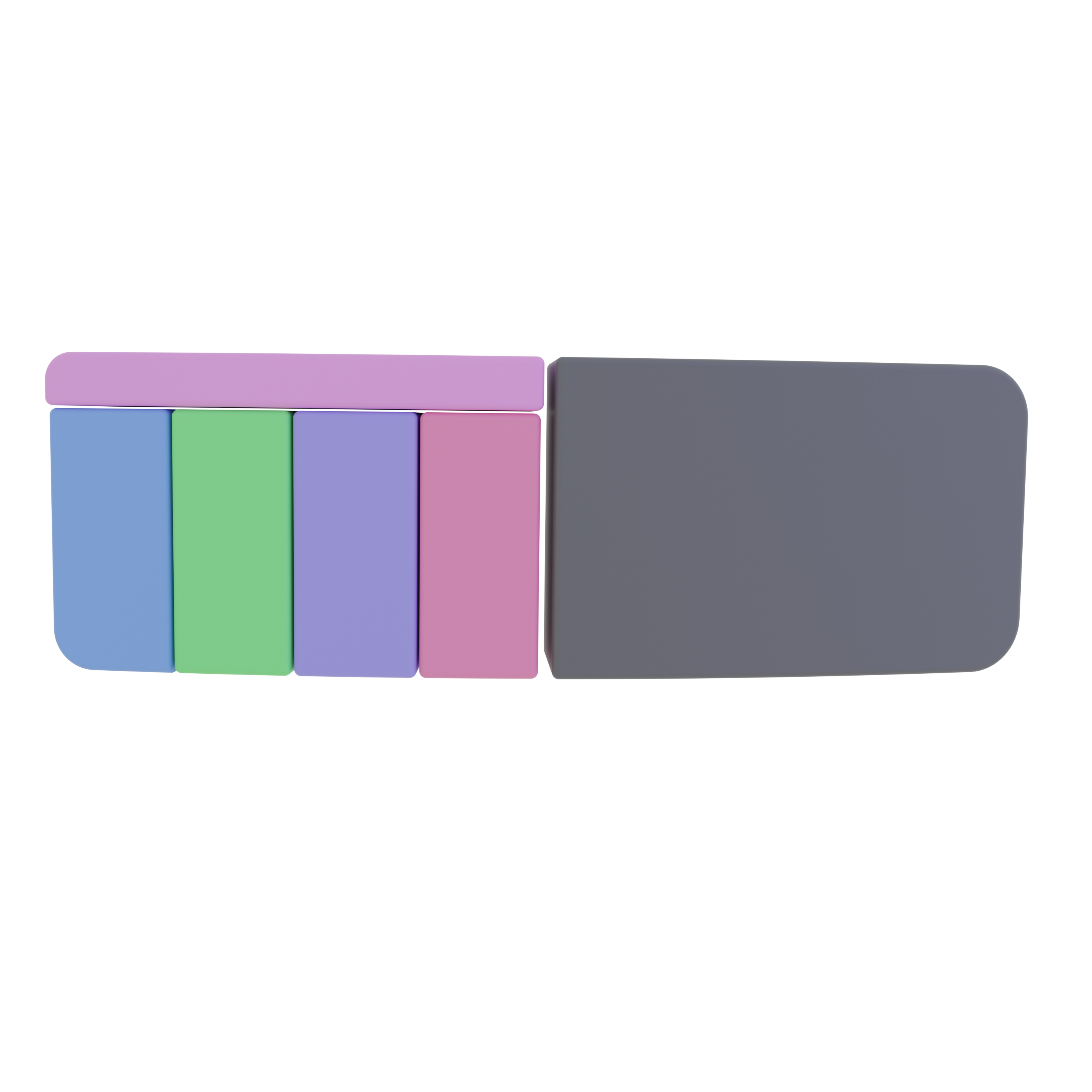
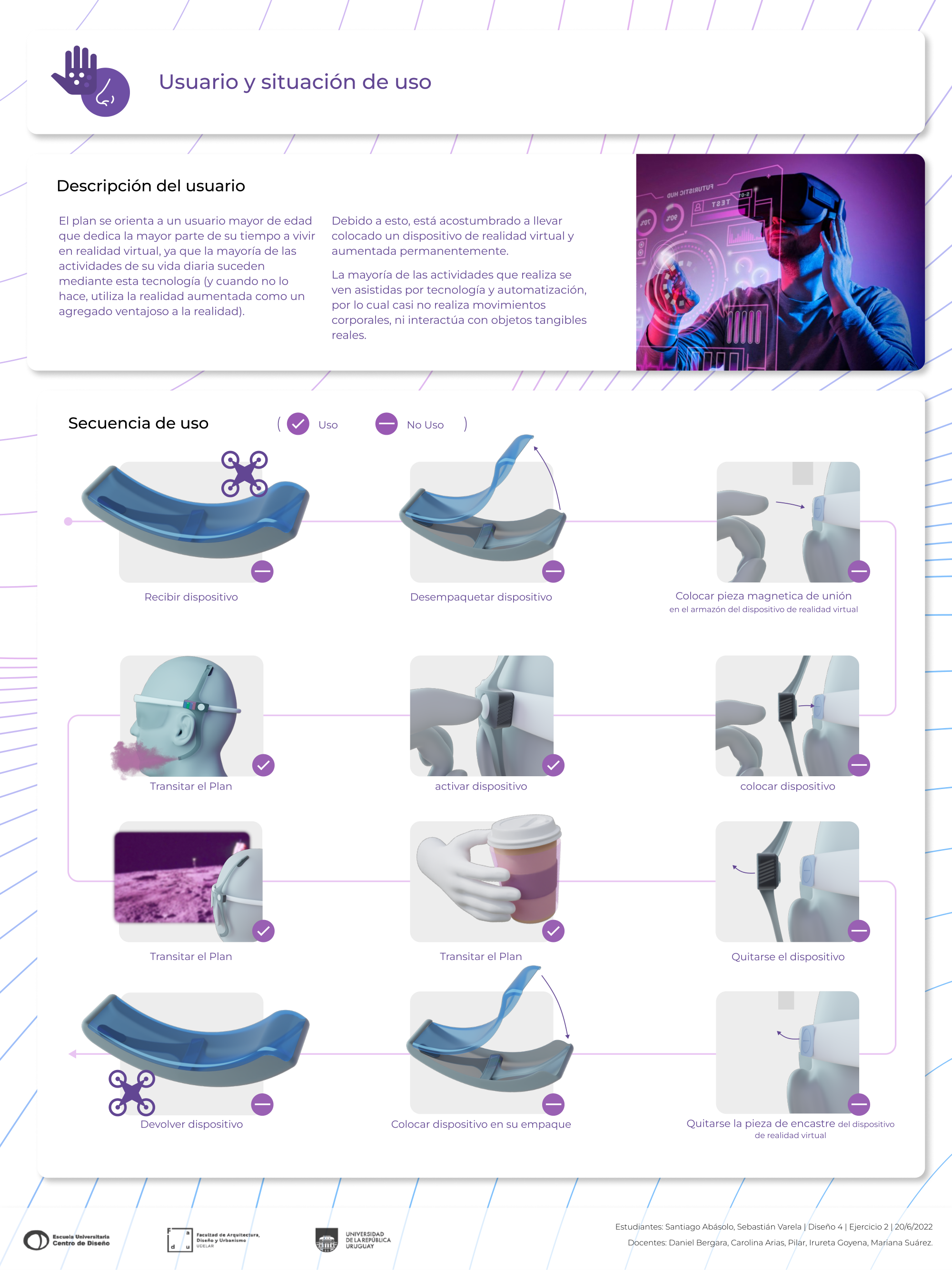
The accessory was designed to attach magnetically to the side of a virtual-reality headset. A curved arm distributes its weight across the head, while the main body houses the battery, fan, processor and scent cartridges. The proposal includes manual activation and a front module that directs airflow towards the user.
Outcome and limitations
The outcome was a product-service proposal documented through a scenario, a use sequence, a device architecture and three final presentation boards.
TOCLER is a design-fiction exercise, not a validated medical device. The project did not resolve the technical mechanism for tactile stimulation or assess safety, clinical efficacy or ethical implications. These uncertainties are part of the scenario and define the limits of any subsequent development.