

Wooden stool
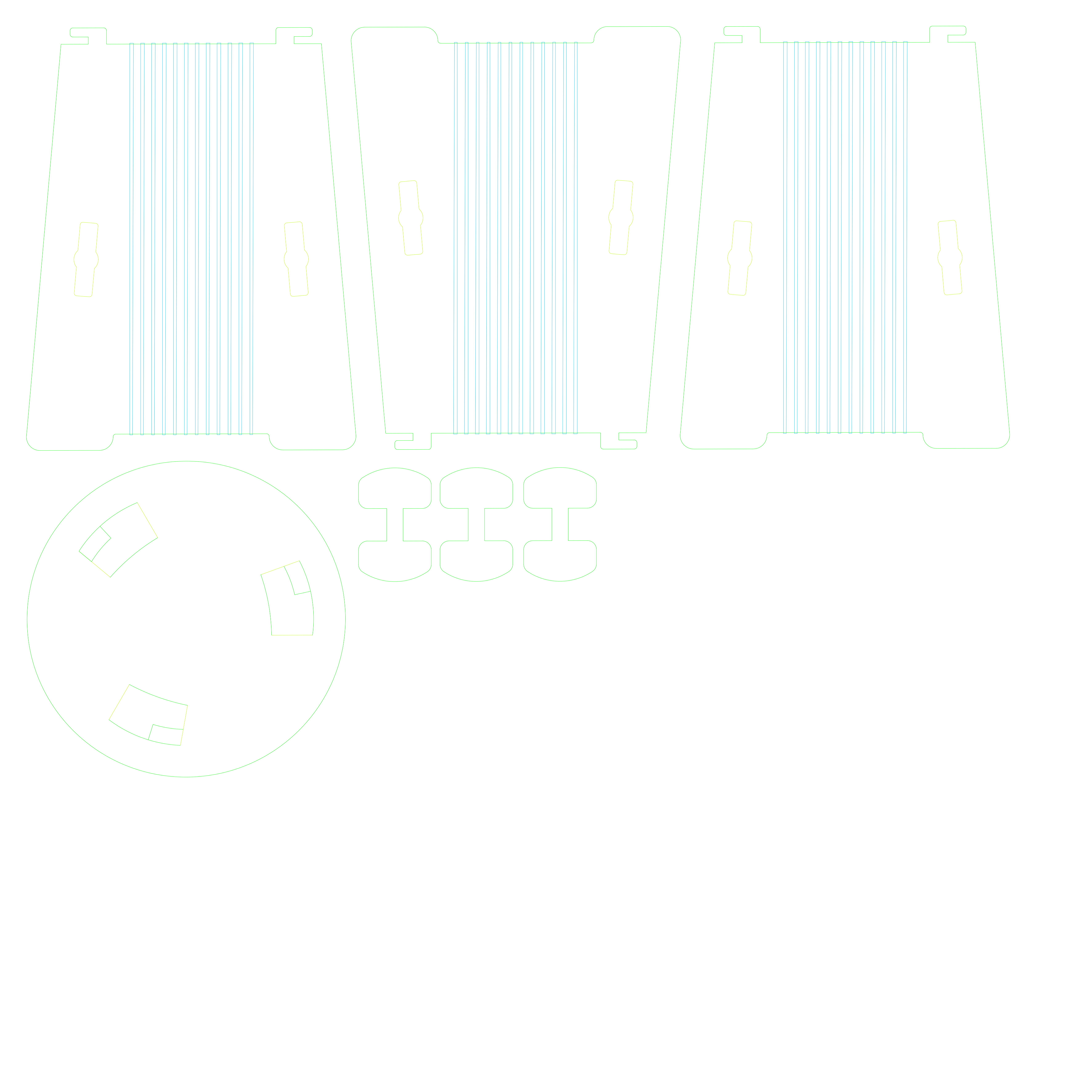
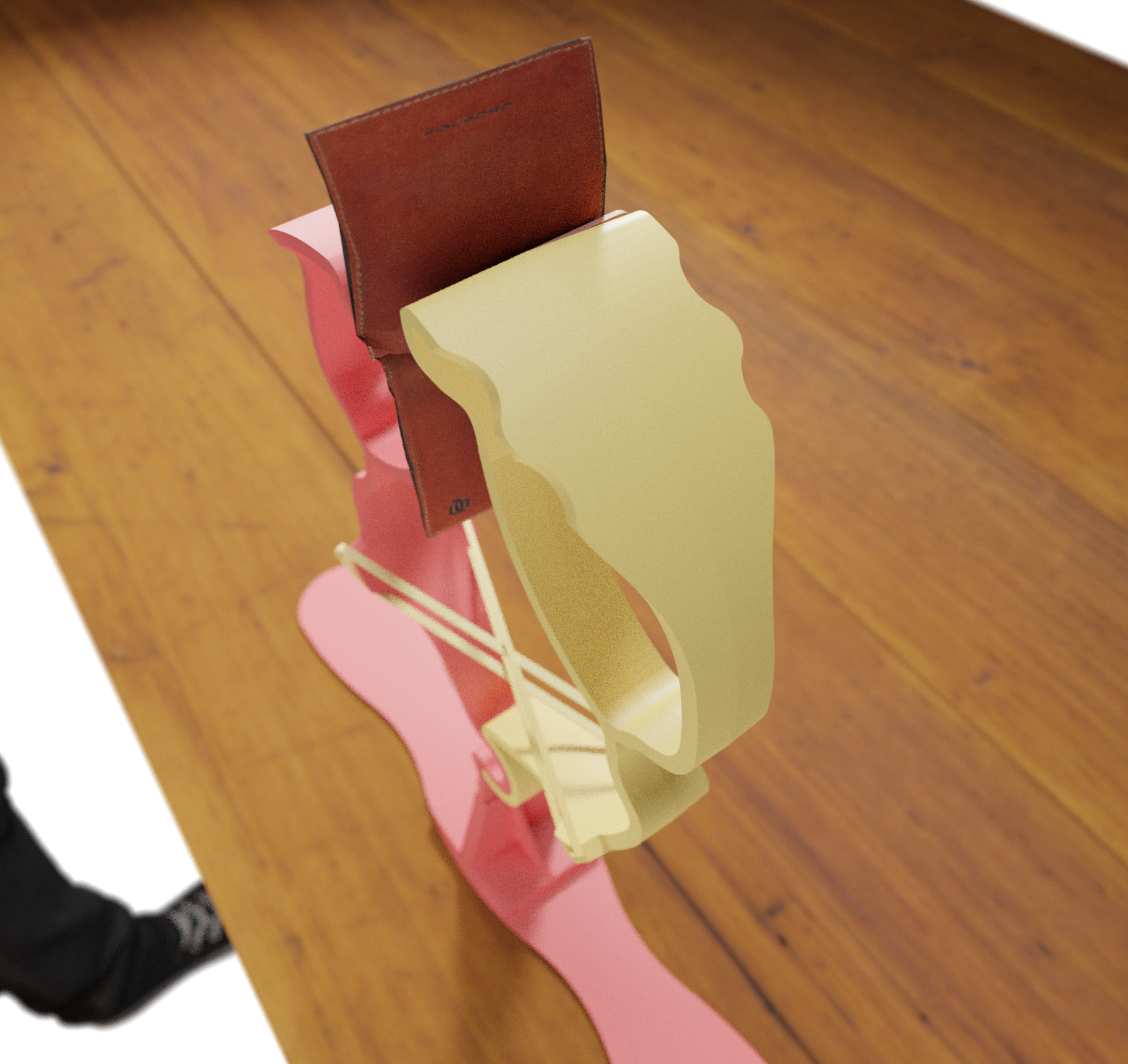
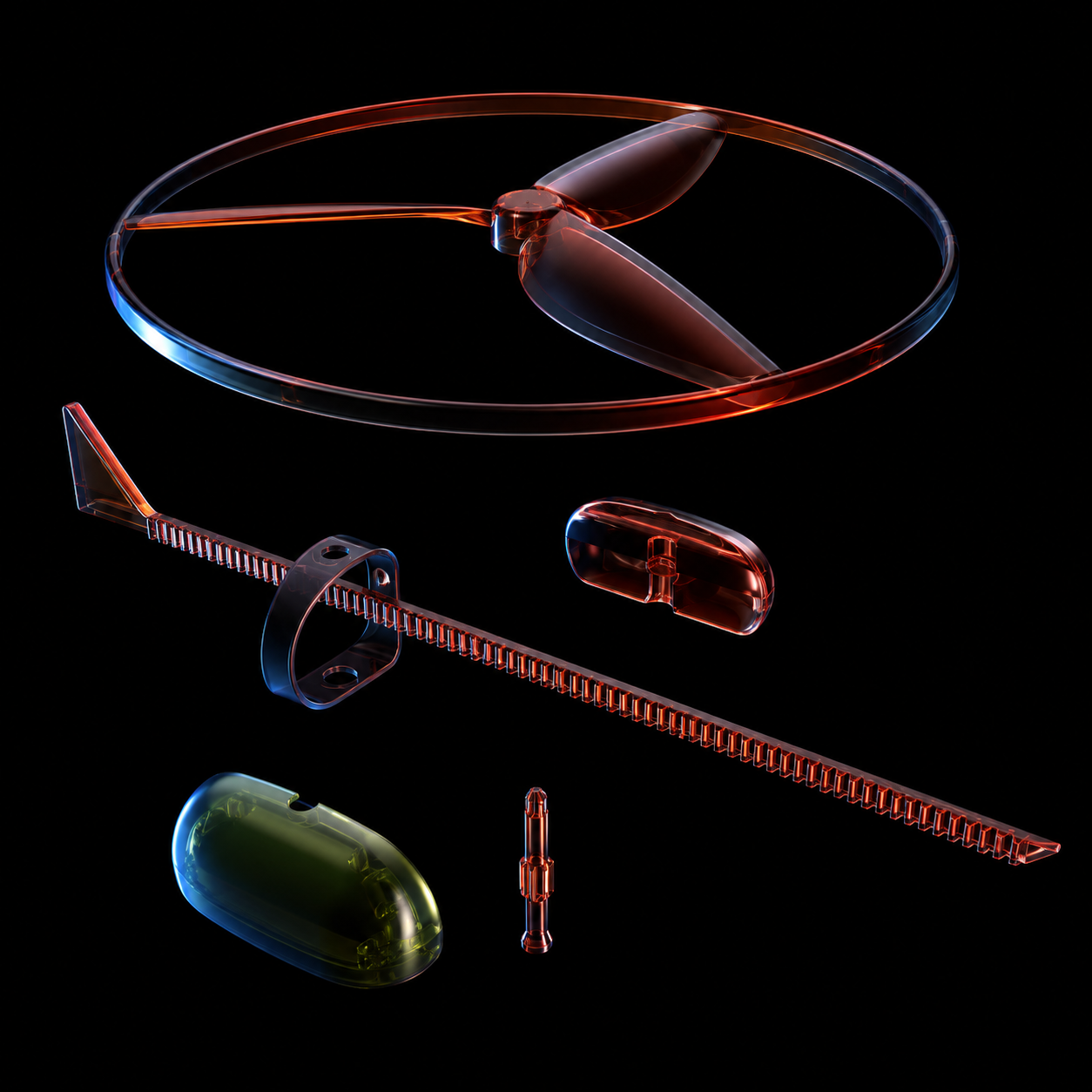
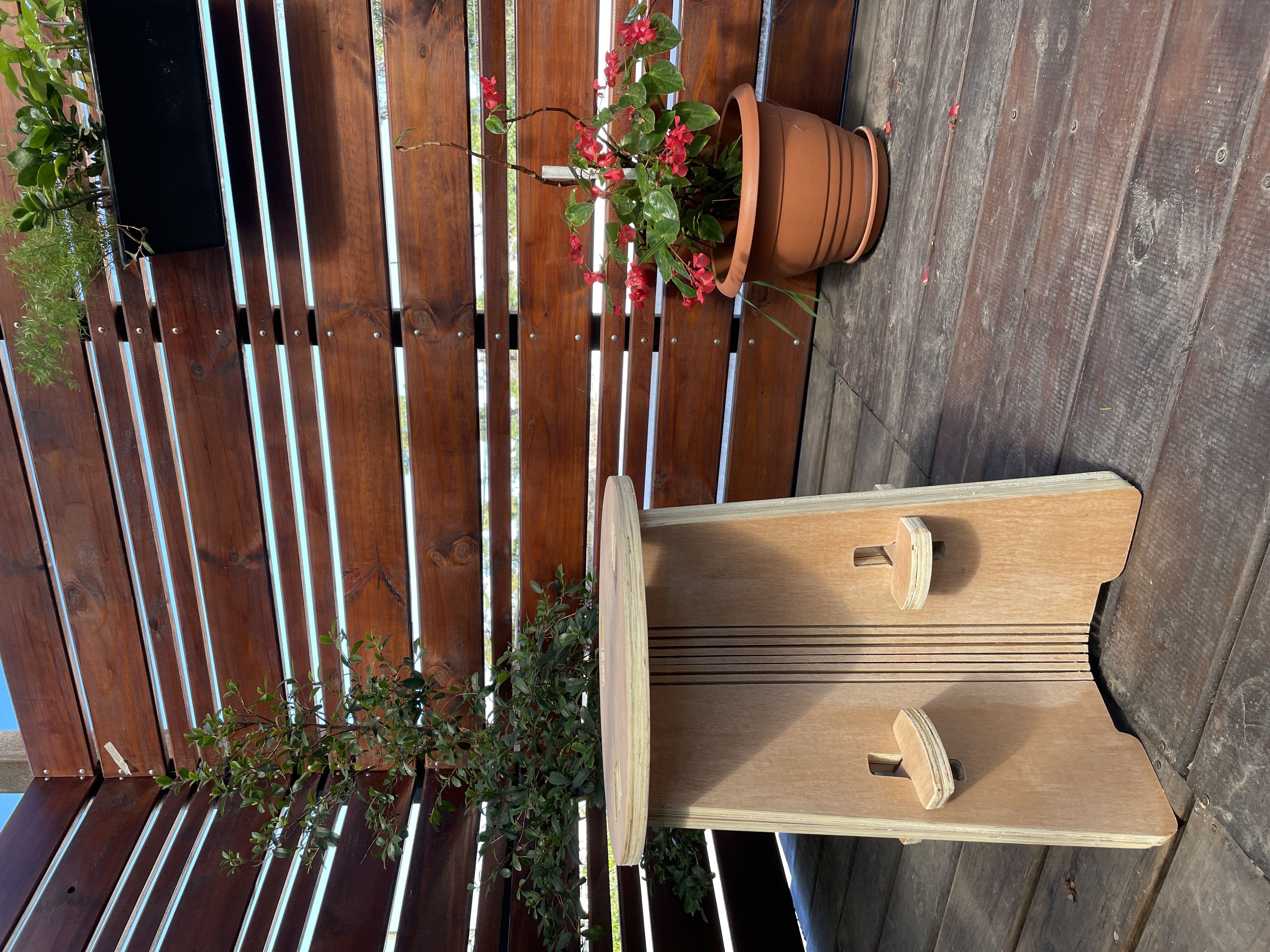
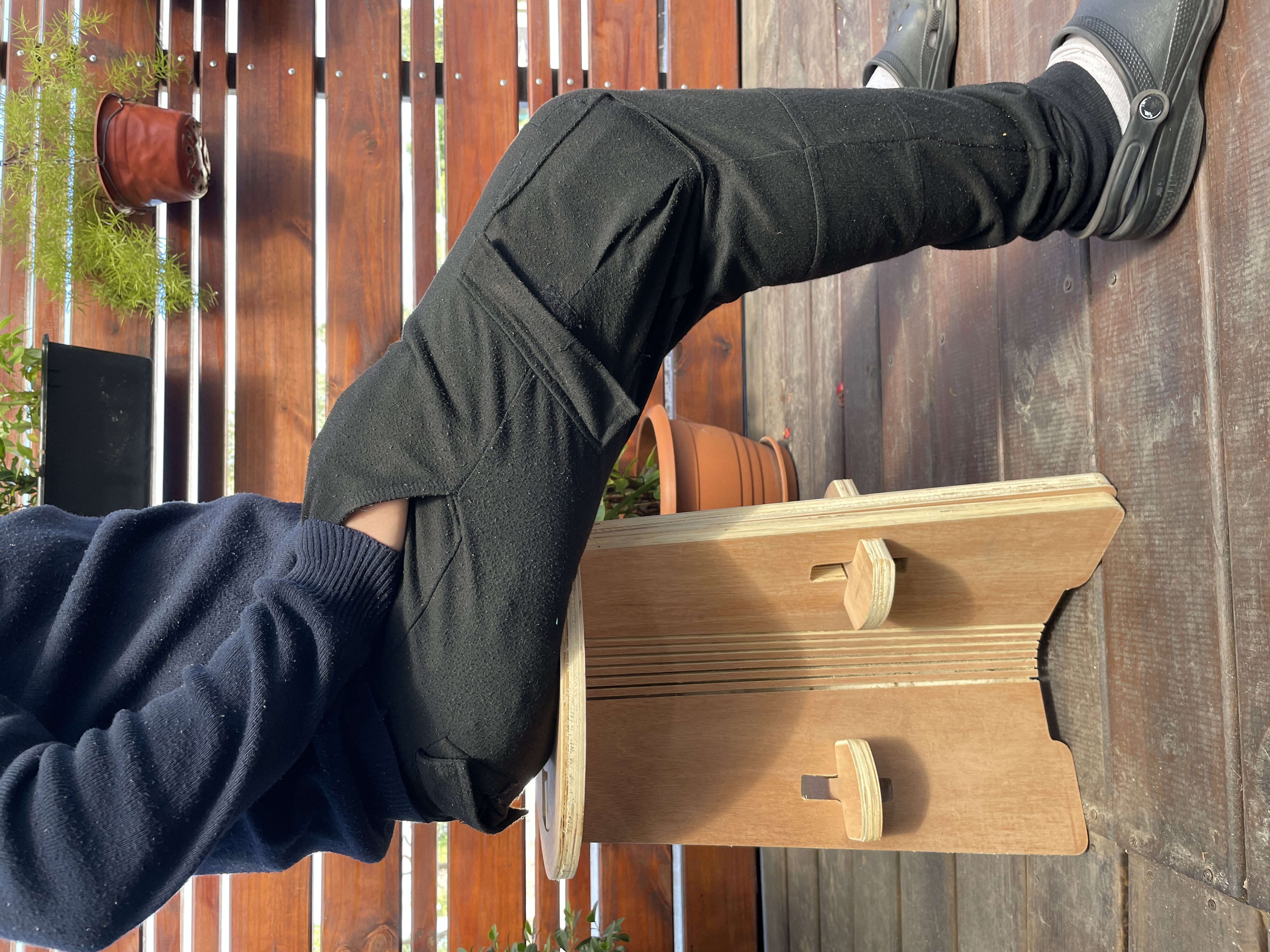
A stool fabricated in plywood multilaminate through laser/CNC cutting, with a fastener-free joint system. The side walls use the living hinge technique (parallel through-cuts) that allows rigid sheet to curve and form the body's tubular geometry. Flat-pack: 7 parts ship stacked and assemble without tools.
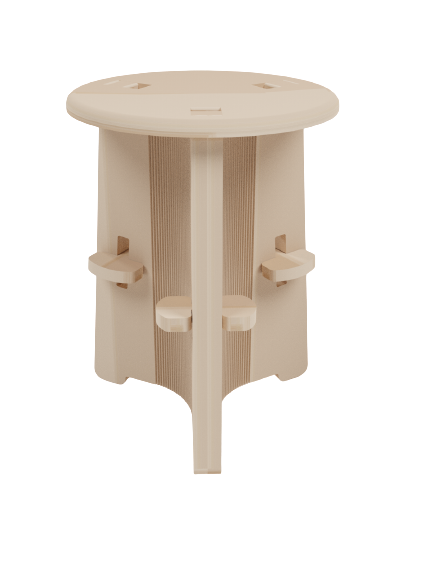
The product
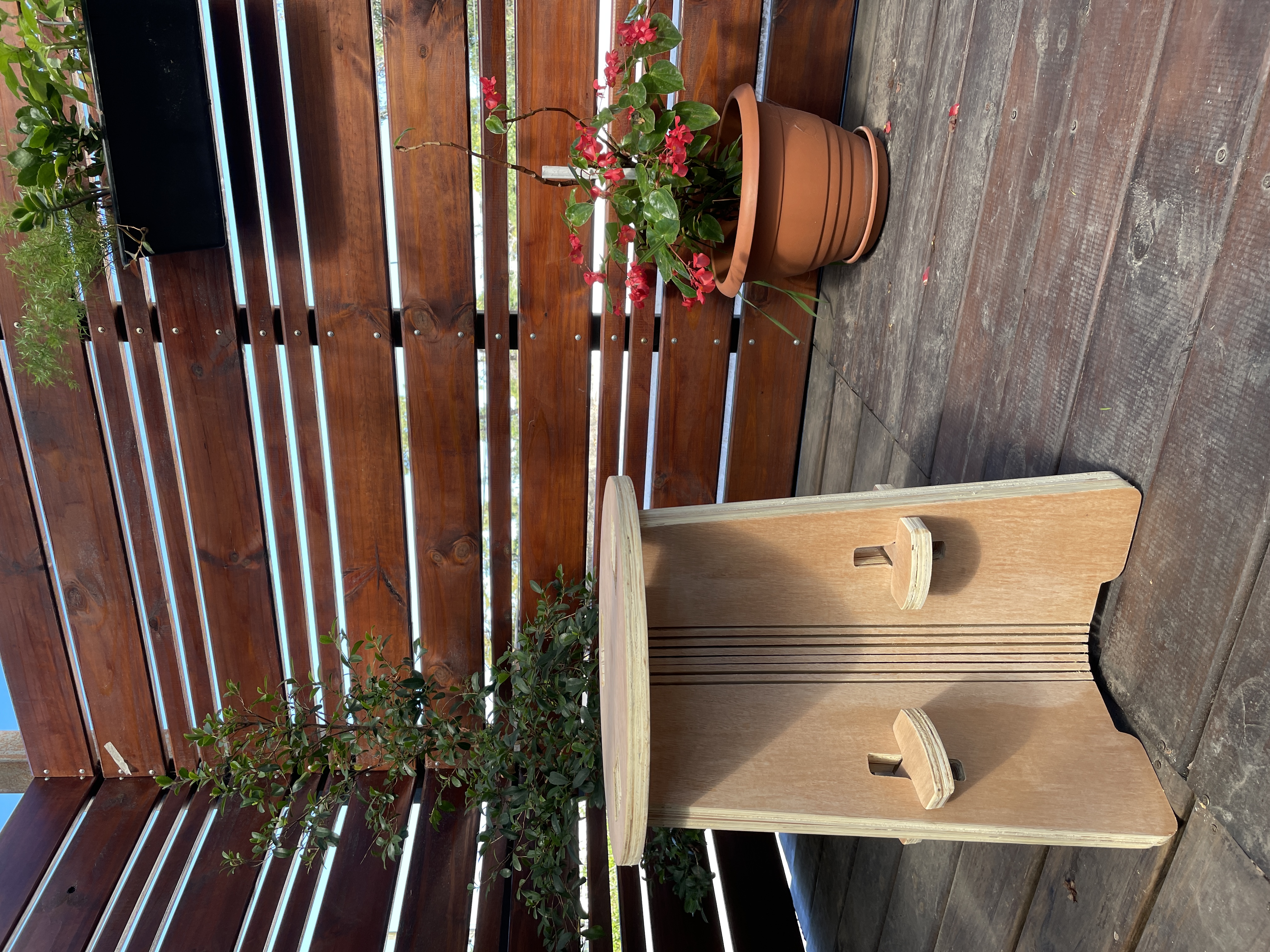
Construction system
| Component | Quantity | Function |
|---|---|---|
| Side wall (with living hinge) | 3 | Structure of the curved body |
| Top plate (seat) | 1 | Seat + top lock for the walls |
| Internal locks | 3 | Secure the walls from inside |
Joint detail
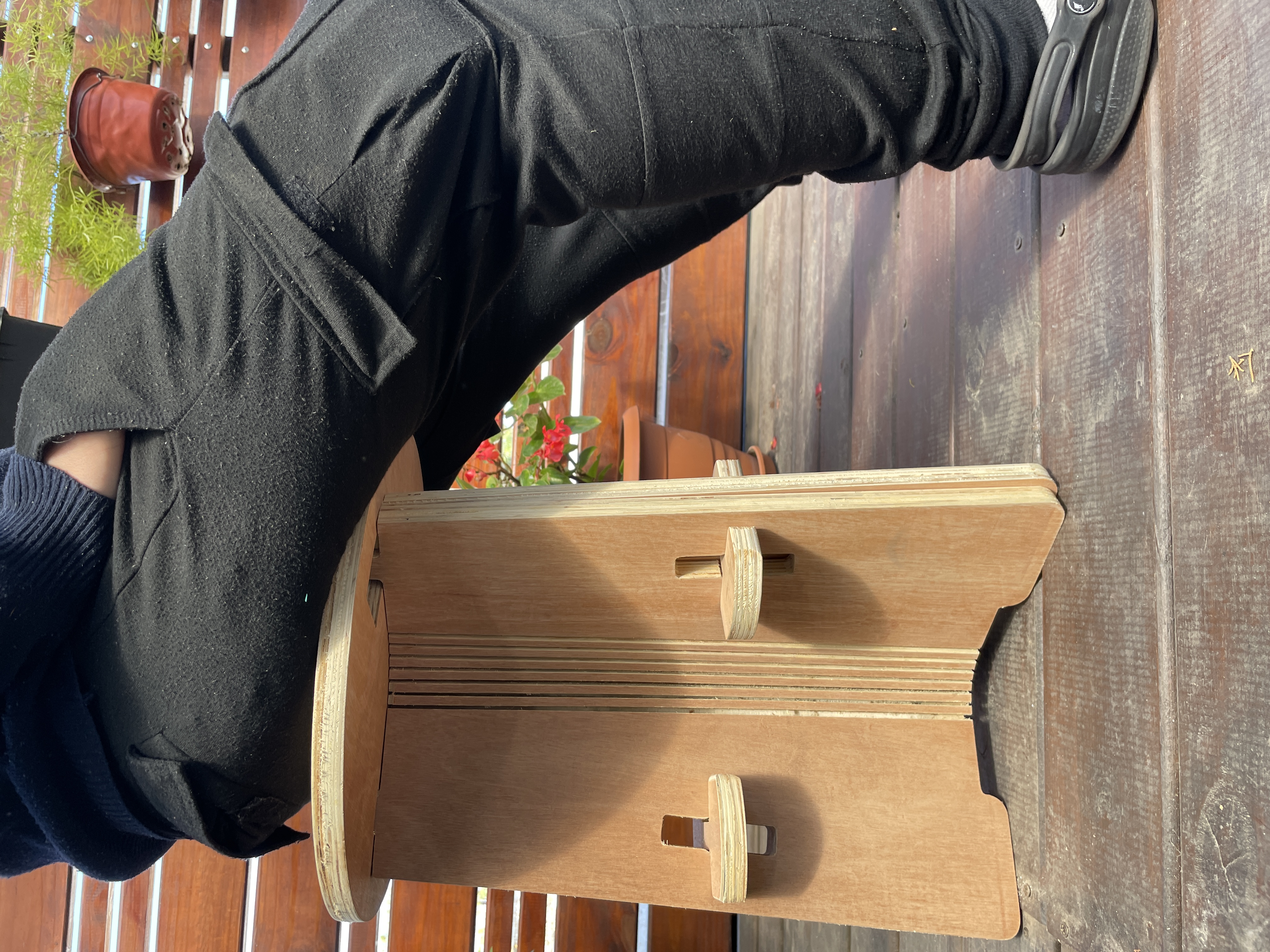
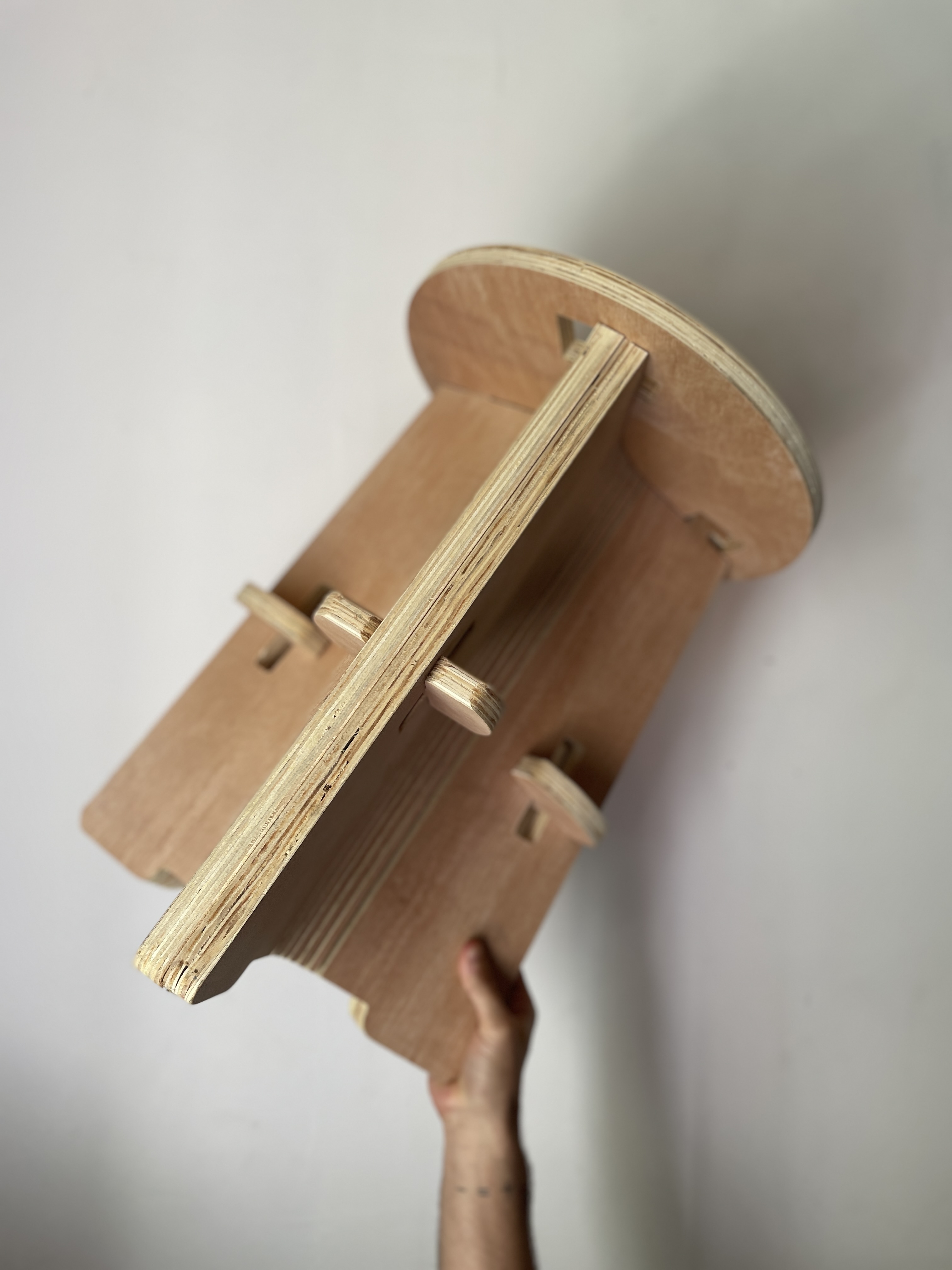
Assembly process
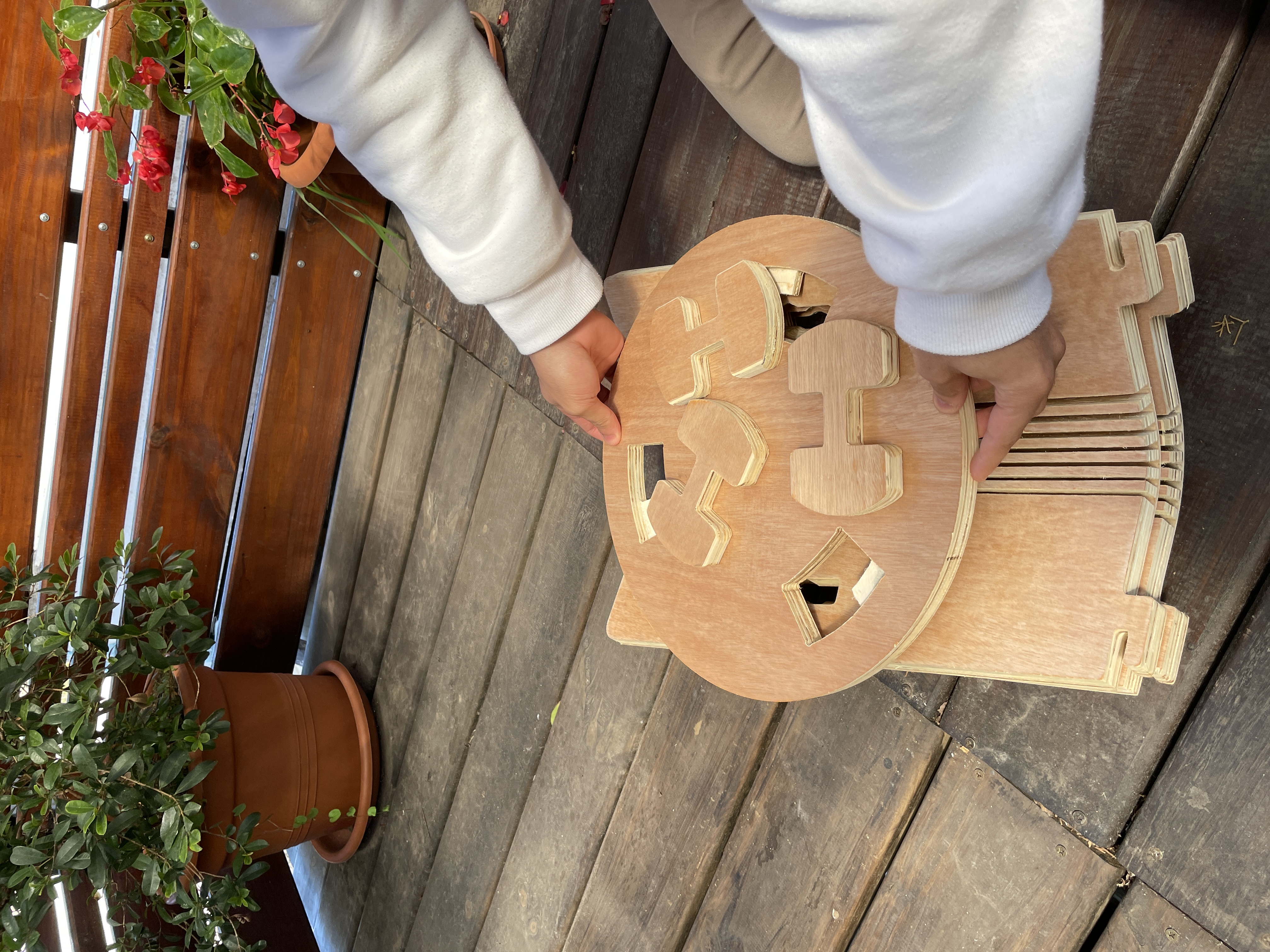
The stool ships as a flat-pack kit: 7 parts travel stacked and assemble on site without tools. Five-step sequence:
1. Identify the parts
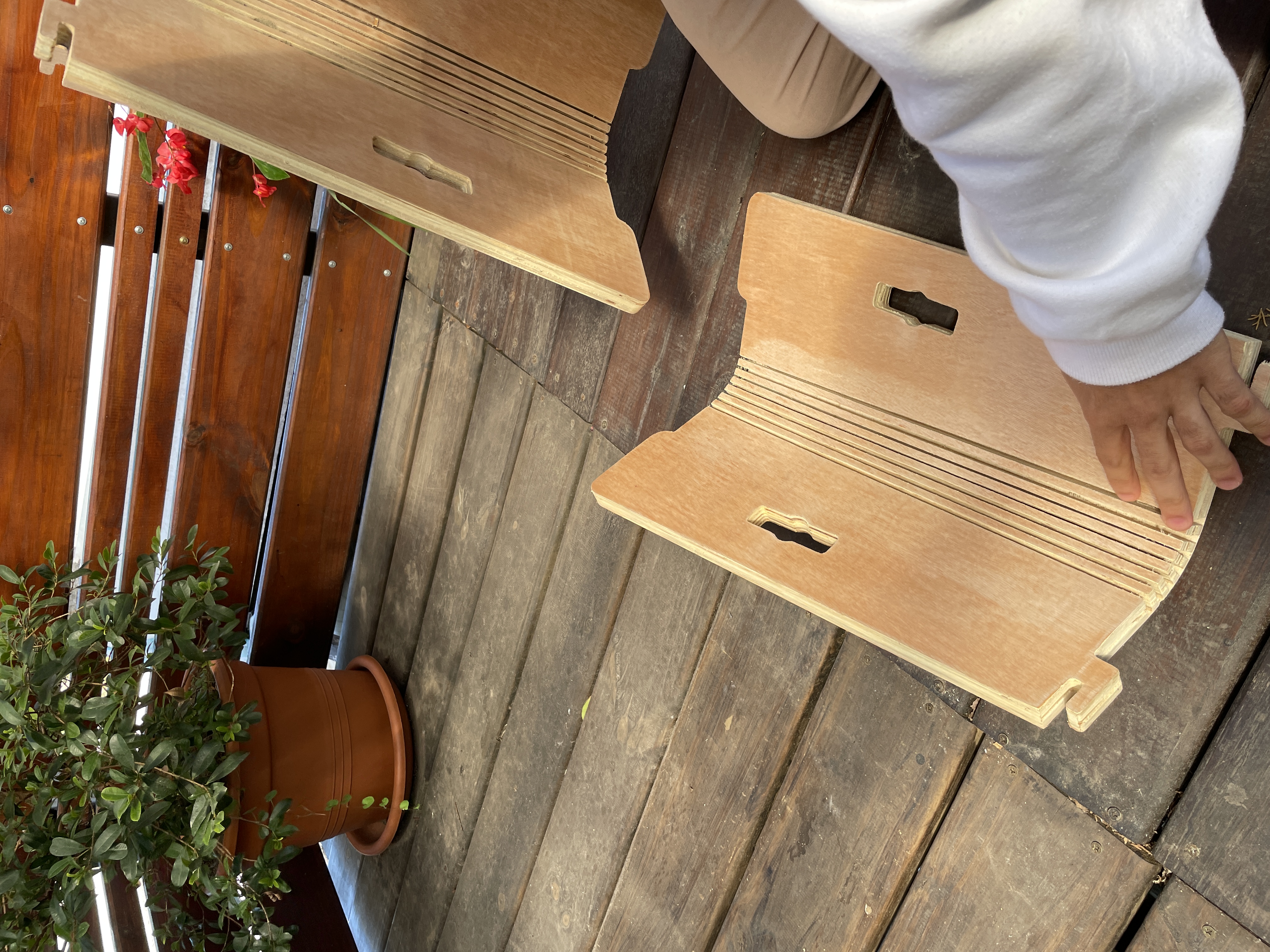
2. Curve the wall using the living hinge
3. Lock the walls into the top plate
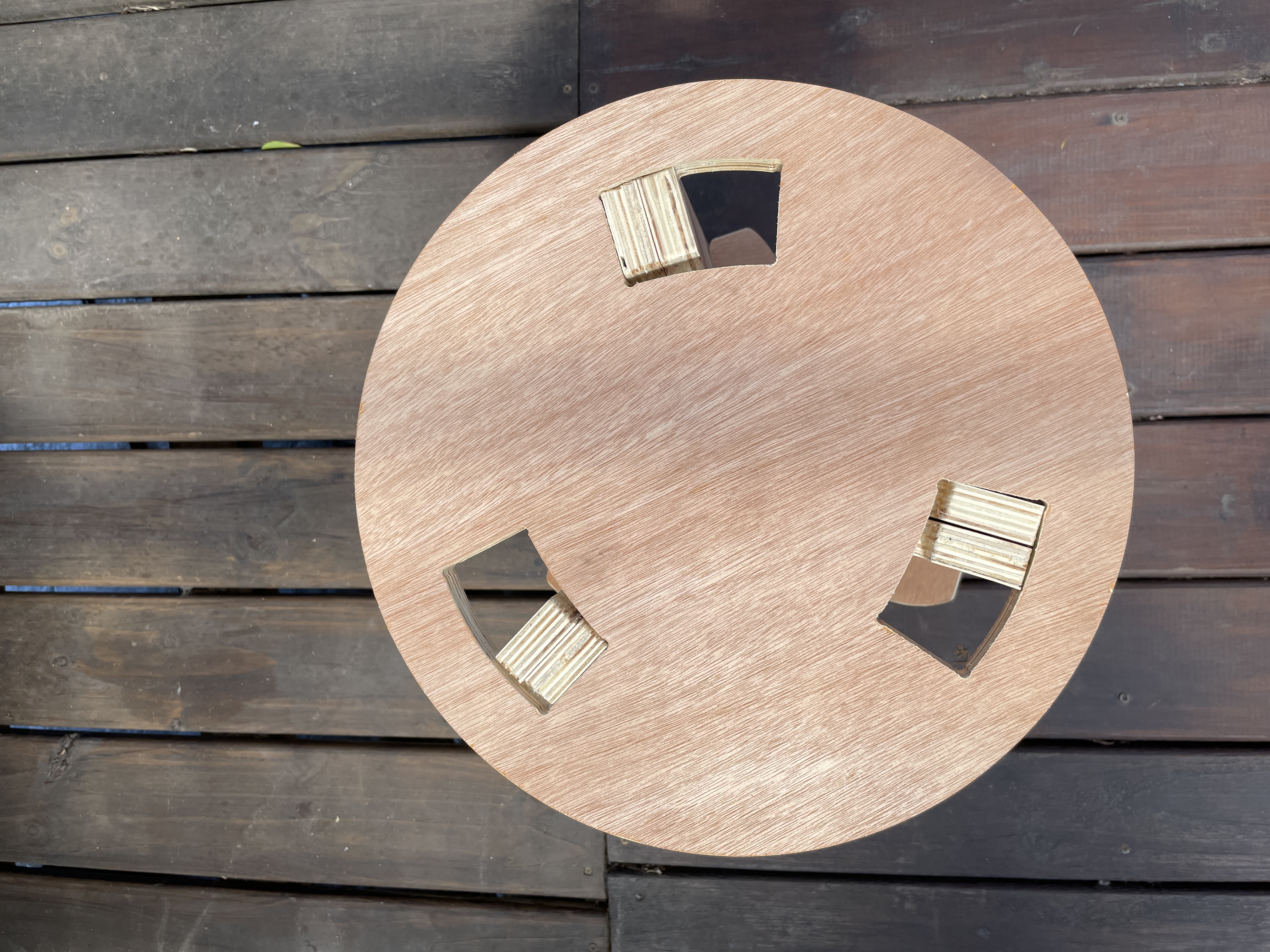
4. Lock from the inside
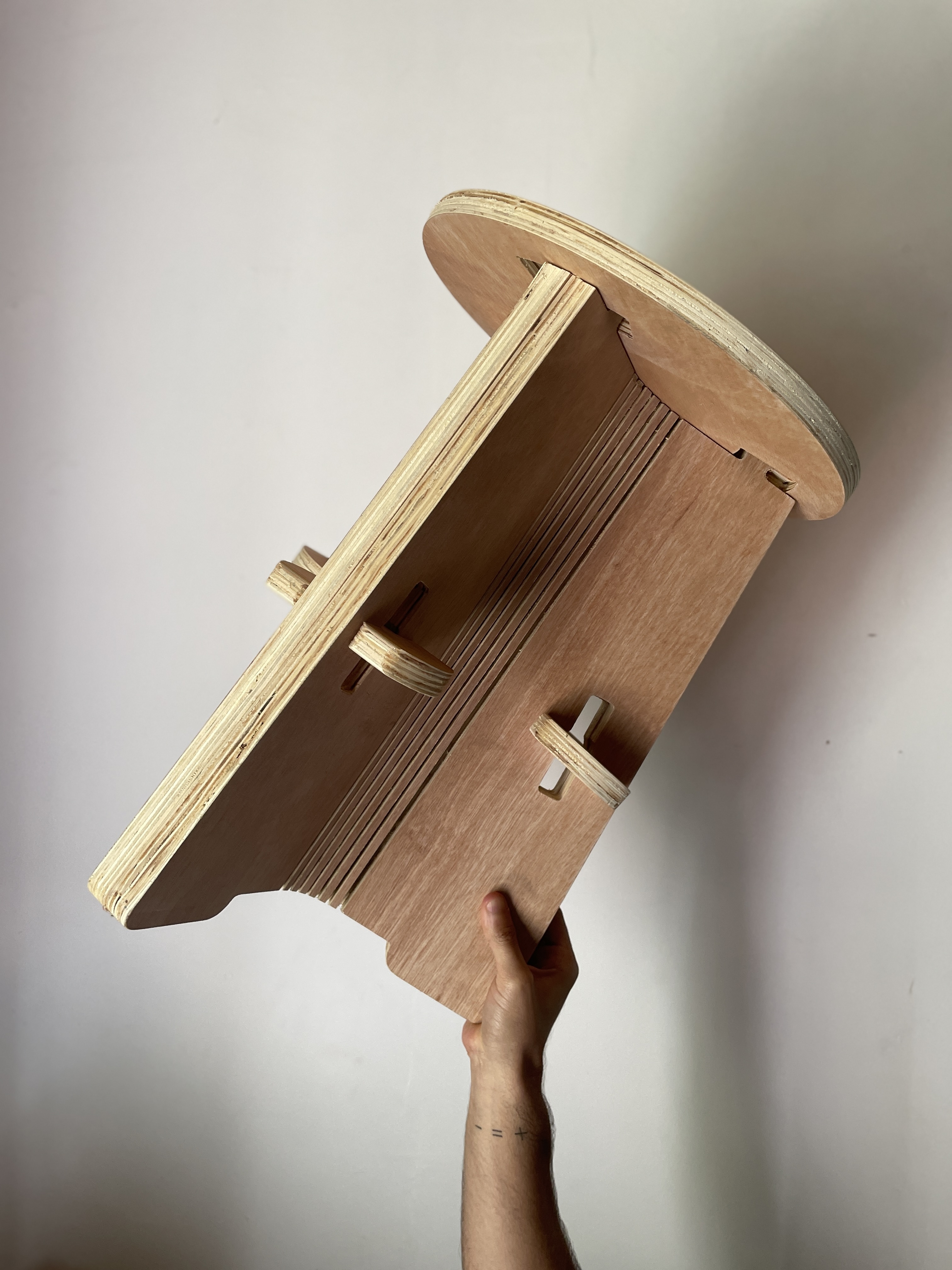
Disassembly and flat-pack
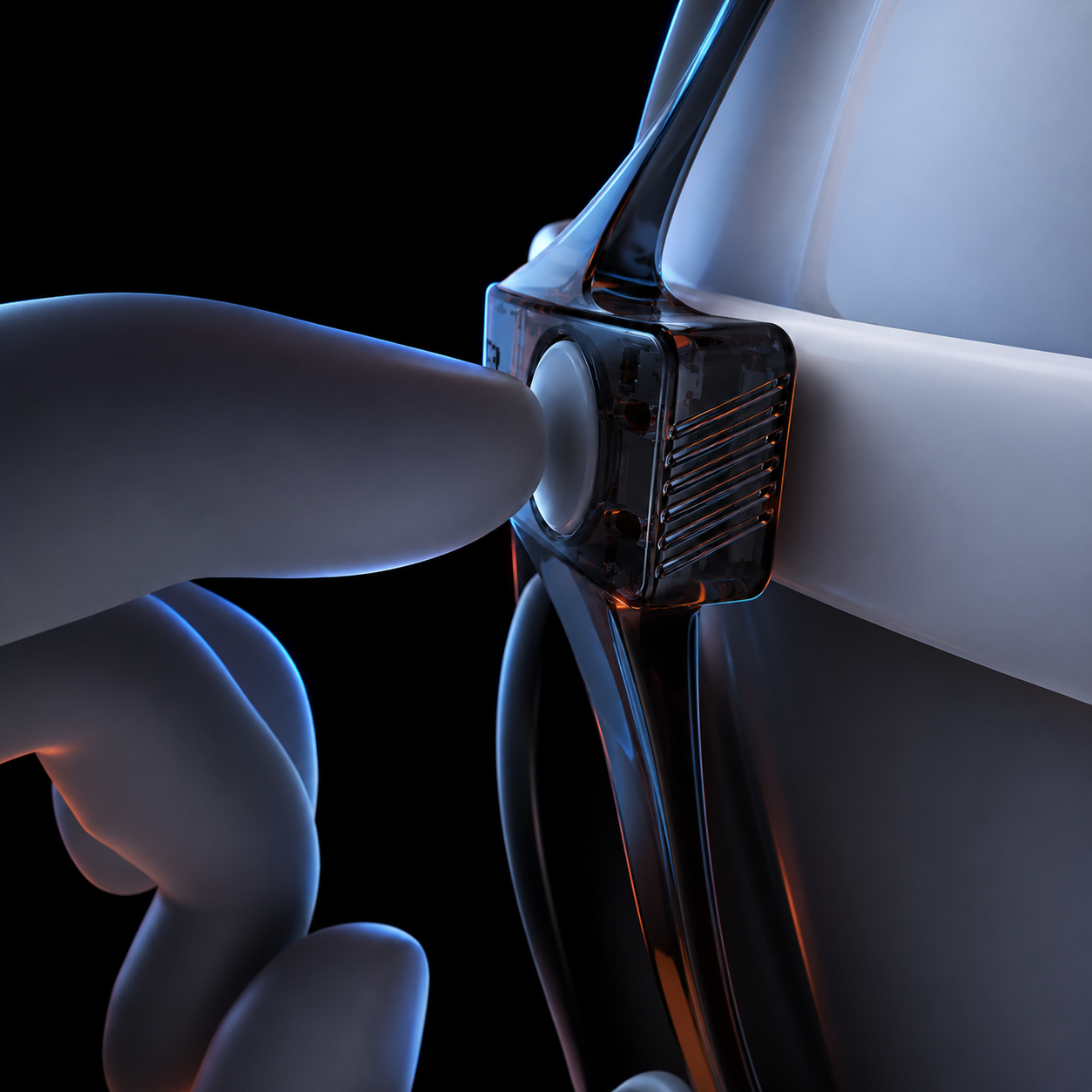
The same locking system that gives the stool its rigidity also lets you take it apart in seconds: pull the locks, the walls release from the top plate, and everything returns to flat-pack form.
Flat-pack benefits:
- Transport — the 7 stacked parts occupy the volume of a sheet of plywood.
- Repair — if one wall is damaged, the individual part is replaced without discarding the rest.
- Storage — when not in use it takes up the minimum footprint of the material.
- Circular economy — at end of life, parts separate cleanly for recycling or reuse.
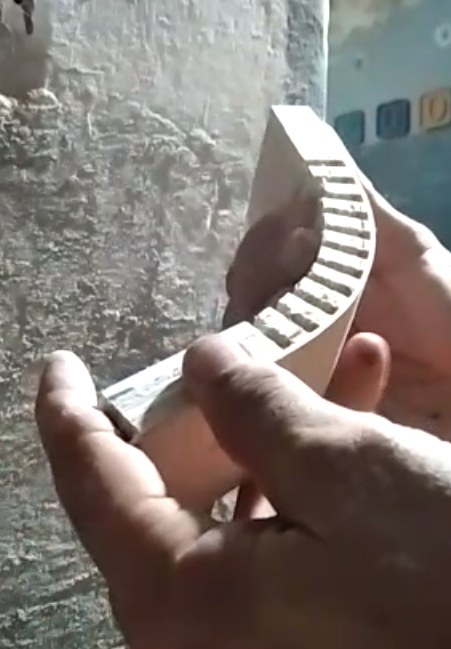
Living hinge — flexibility through kerfing
The key technique of the project is the living hinge: a series of parallel through-cuts on plywood that allows rigid sheet to curve without breaking. Each cut acts as a flex point, and the sum of many cuts produces controlled flexibility.
Cut layout