




Sushi Board — sintered recycled glass
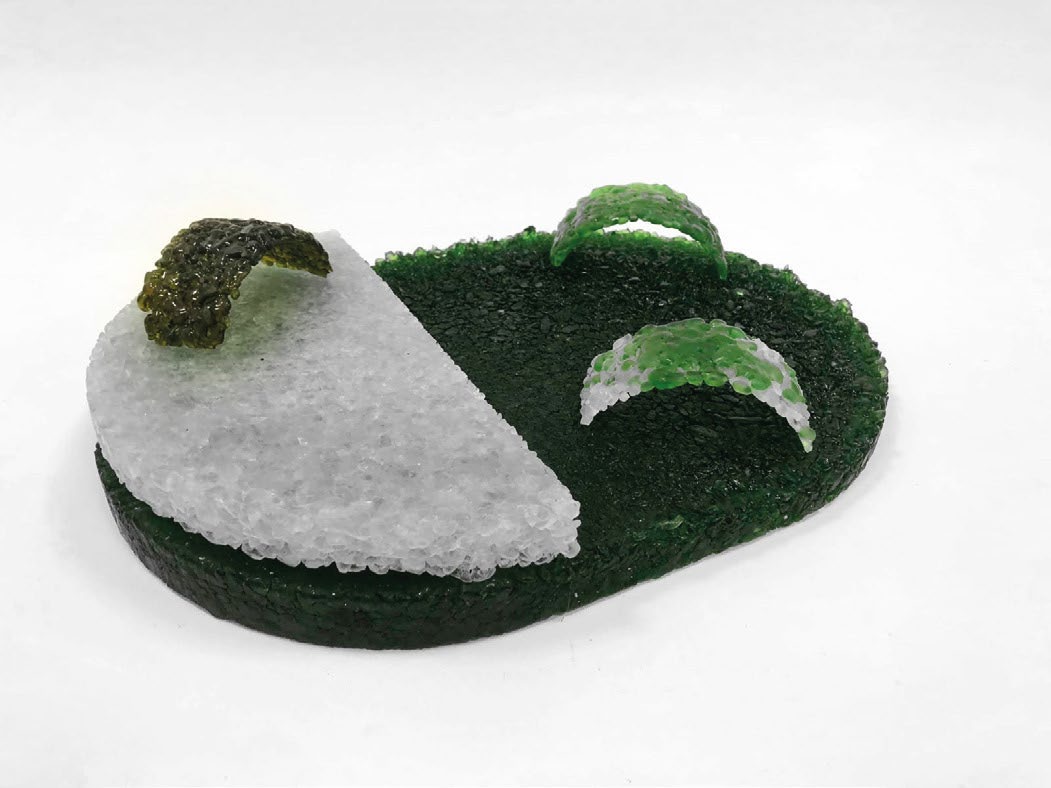
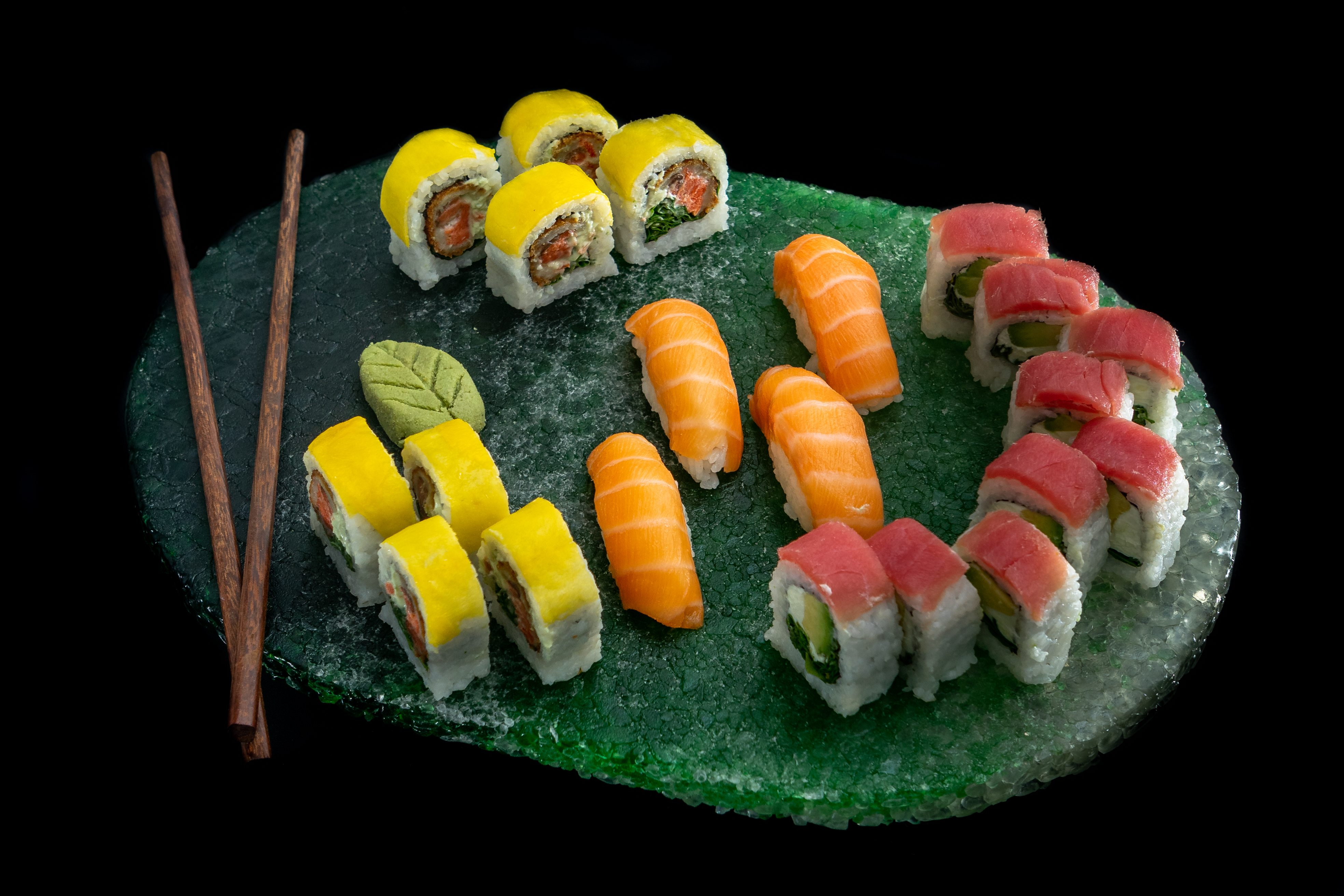
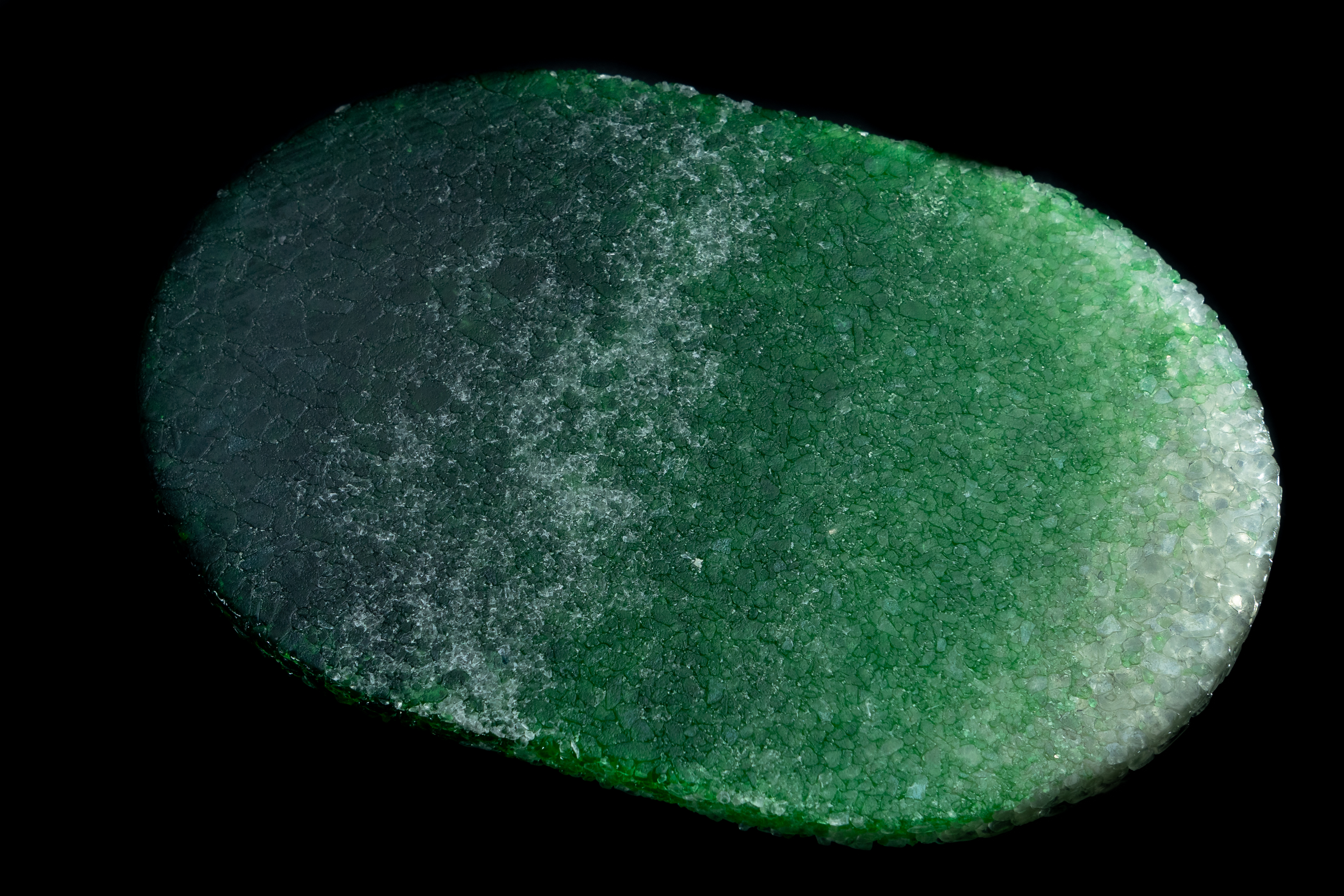
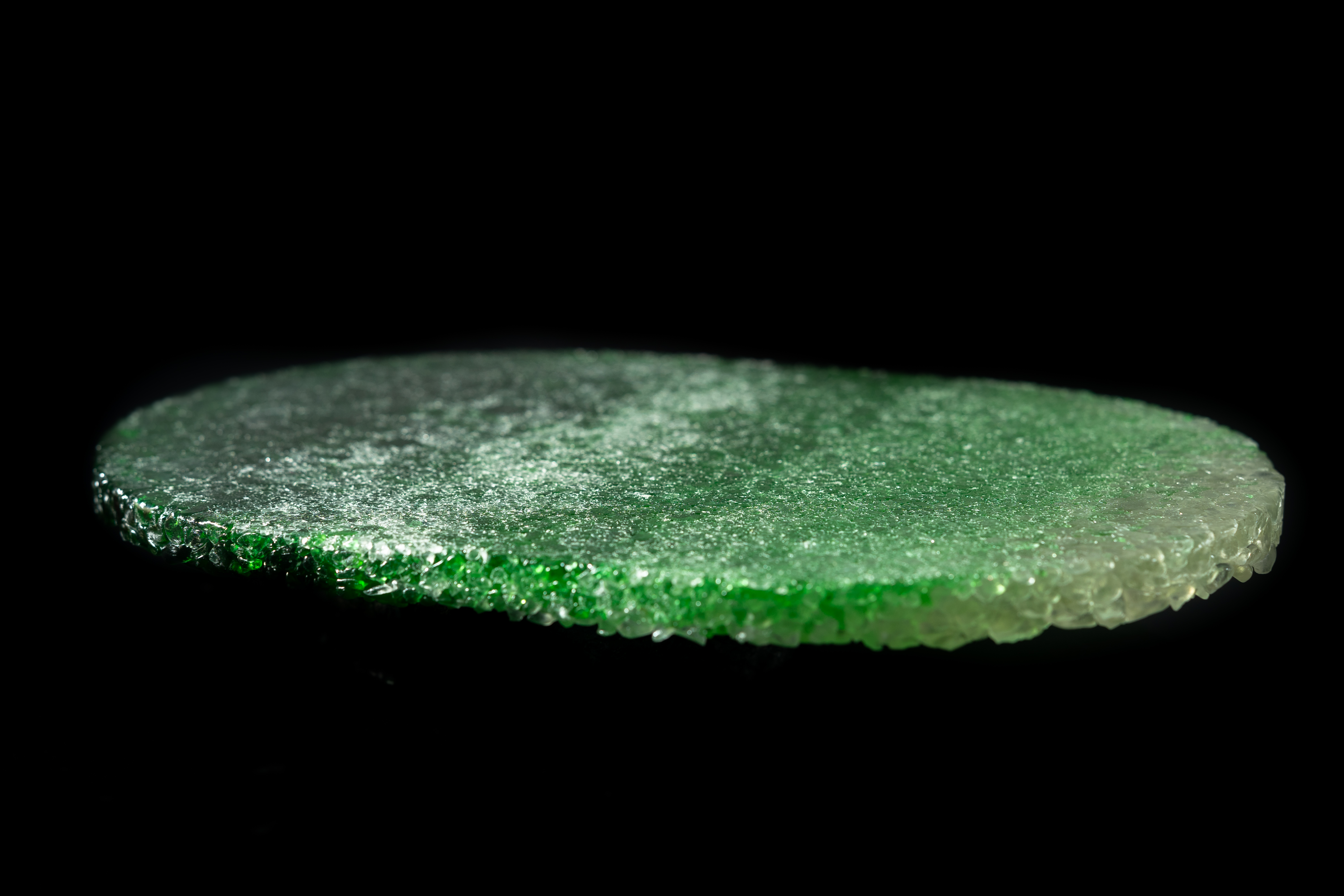
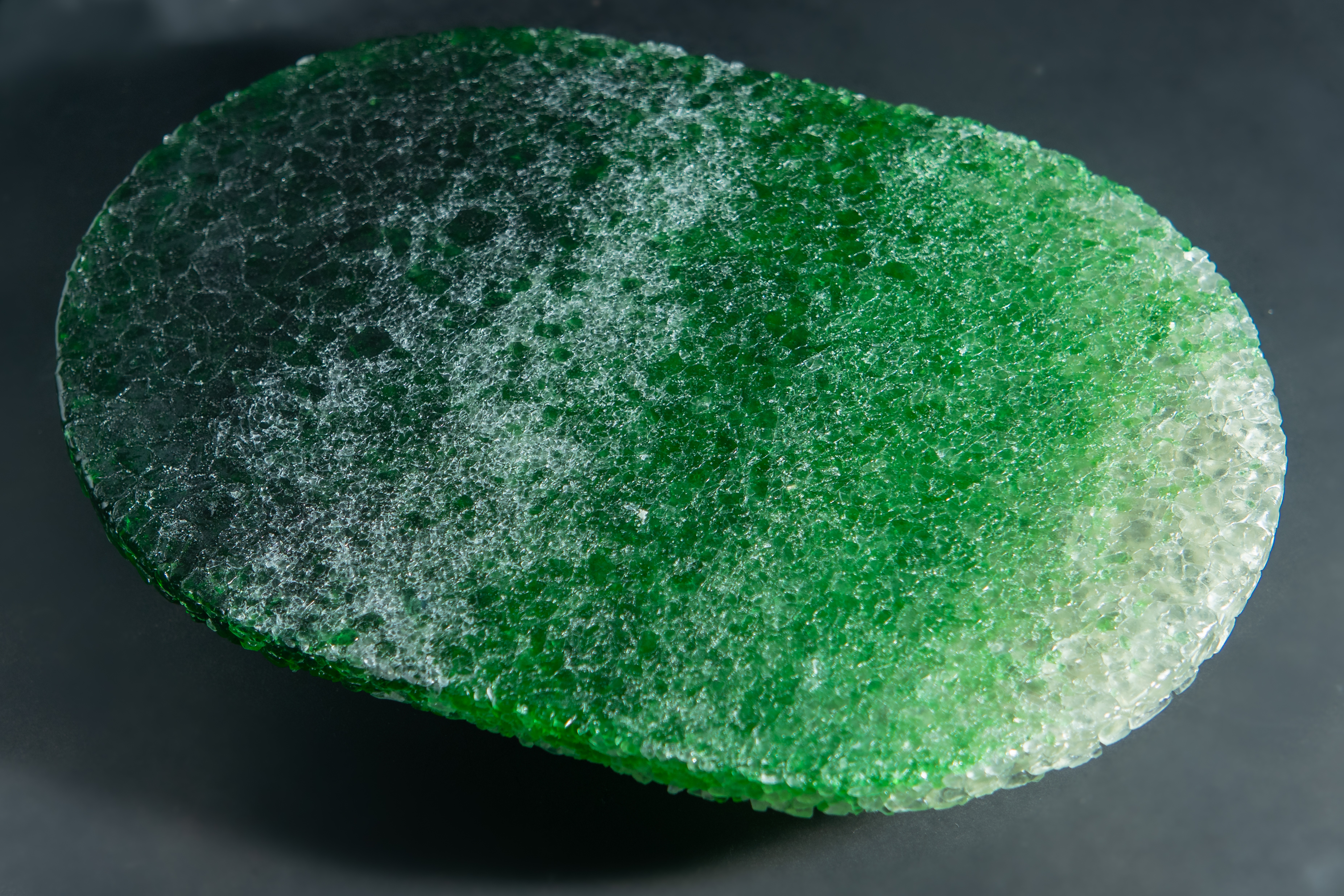
Oval serving board for sushi, made by sintering recycled glass cullet. A mix of green bottle cullet and clear cullet, fused in a kiln to form a rigid plate that preserves the granular texture of the original particles. A proof of concept on revaluing post-consumer glass applied to an everyday-use typology.
My role
Solo work across three fronts: material research (cullet mix, kiln curve), fabricating the piece, and producing an editorial photo session that brings the result into portfolio territory.
Executive summary
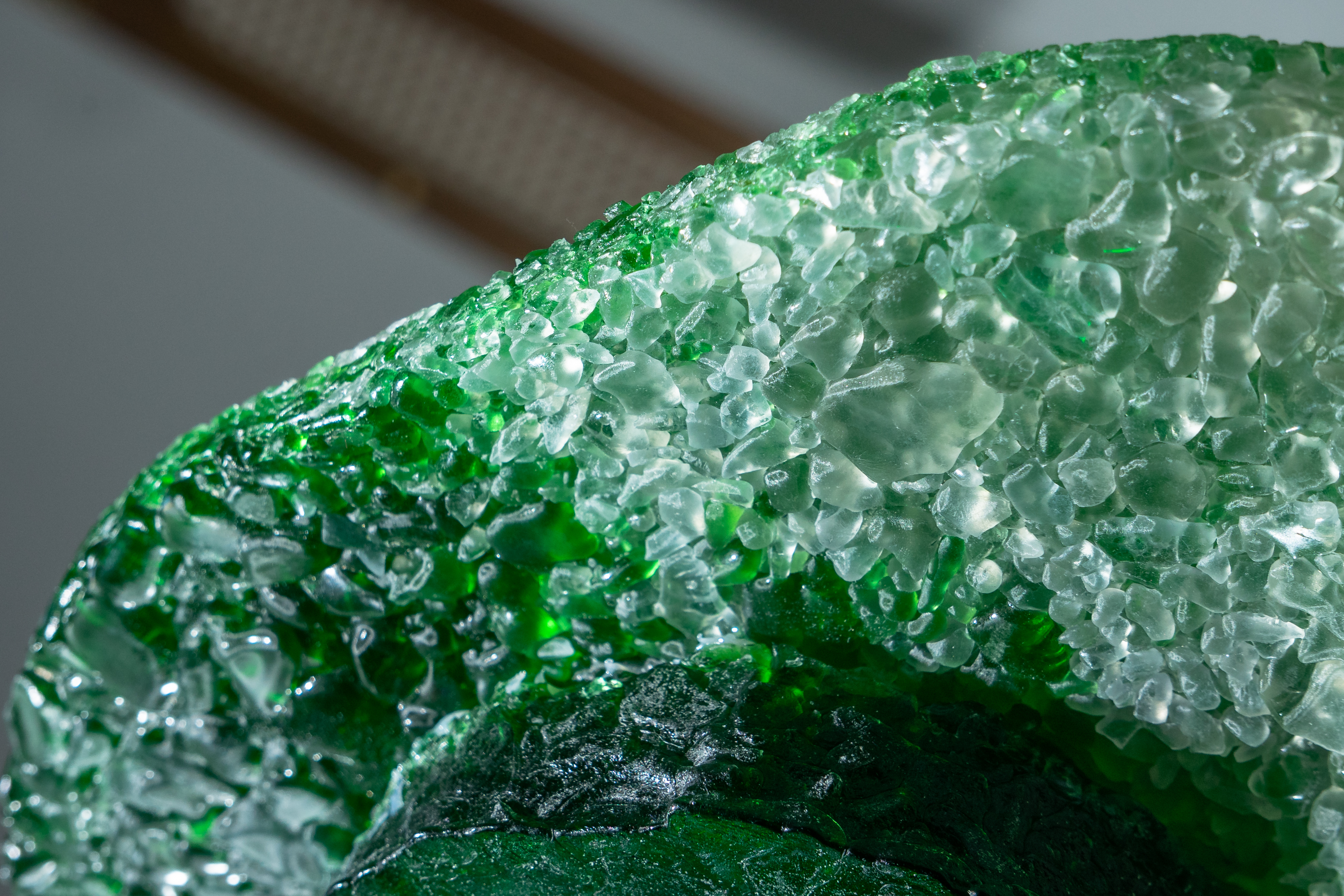
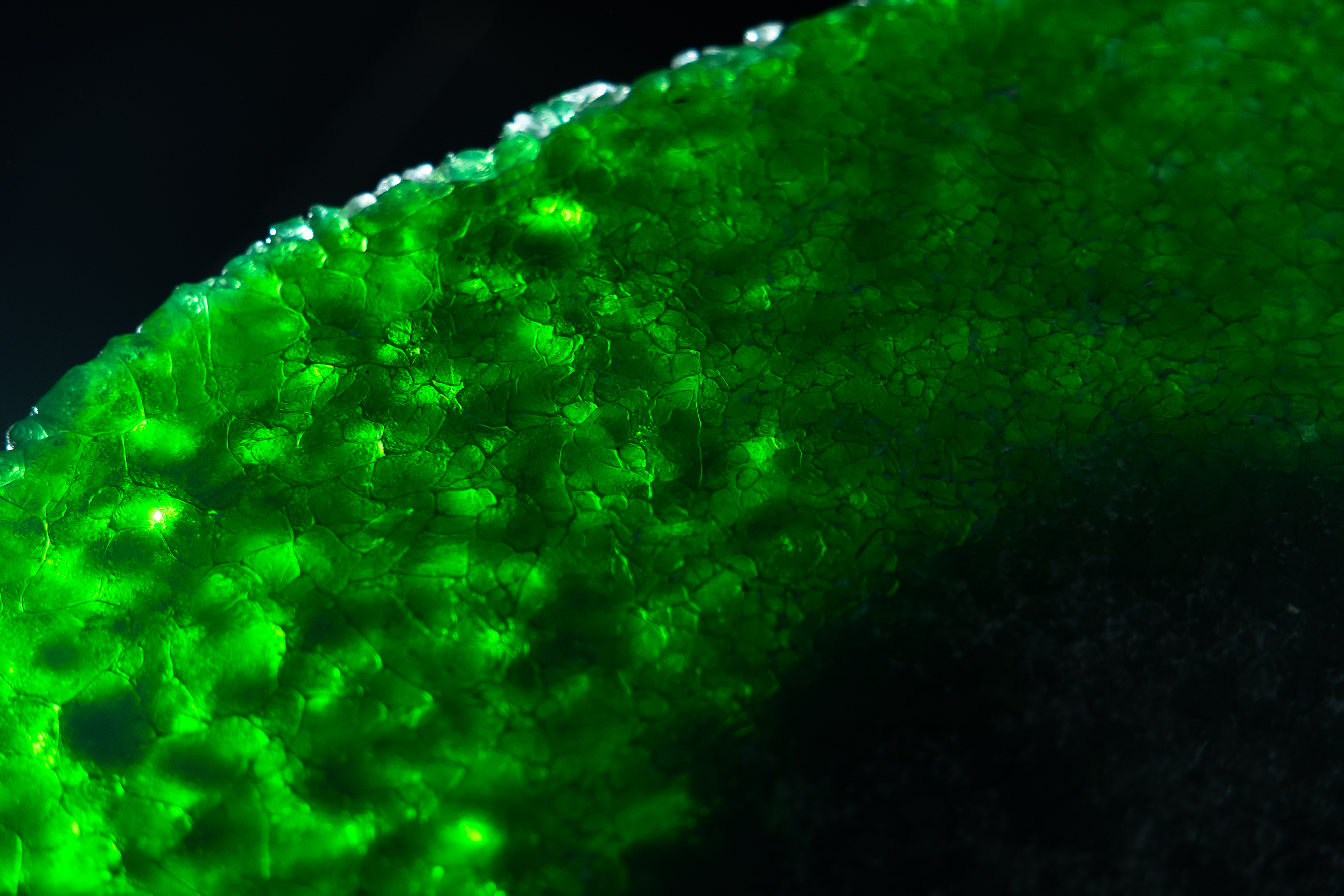
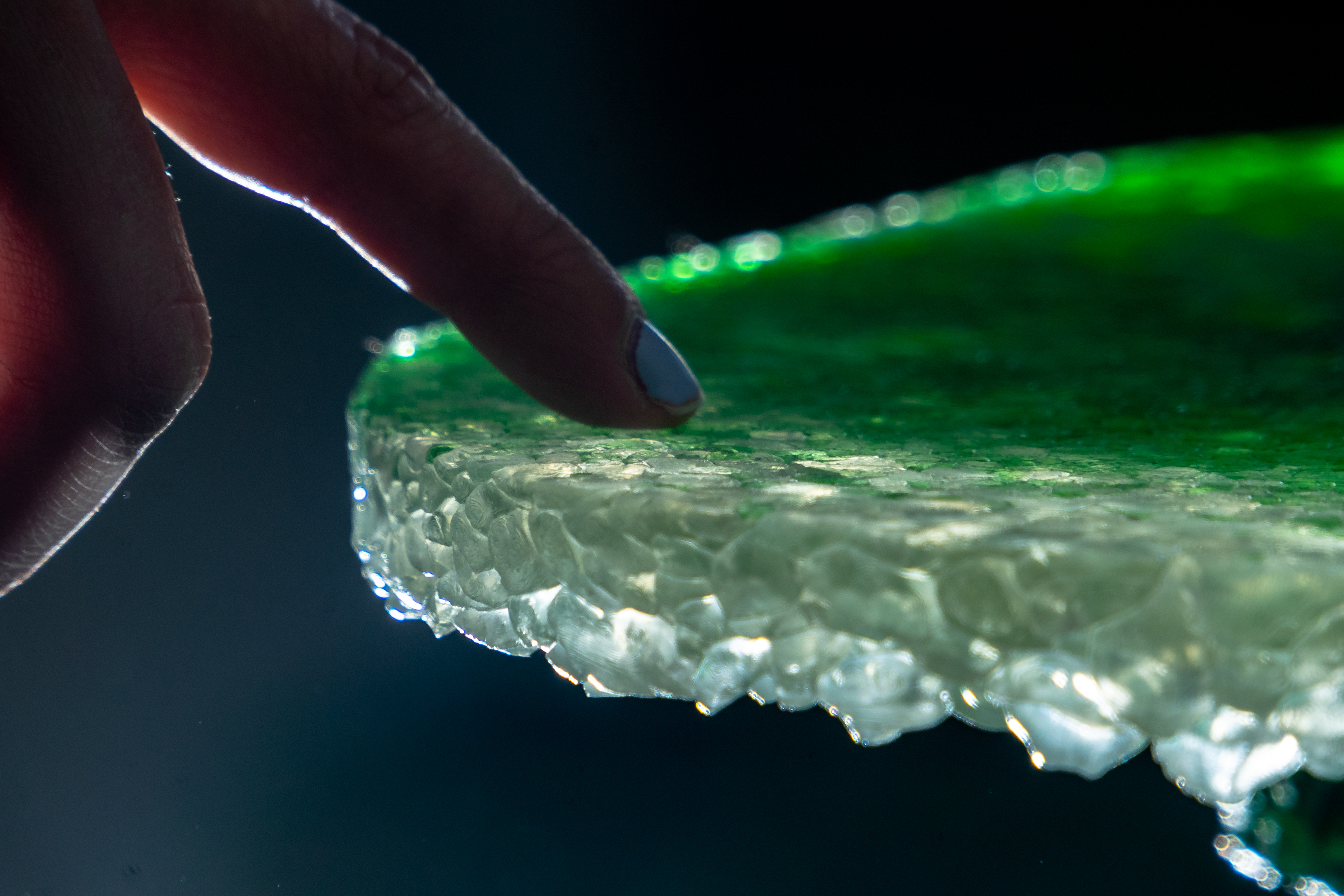
The Sushi Board is a piece of sintered recycled glass: green-bottle cullet and clear cullet are loaded into a refractory mold, kiln-fired, and fused just enough for the particles to weld at their points of contact without losing their individual shape. The result: a rigid yet granular plate, semi-translucent, where light passes through the gaps between grains.
The technique follows the same research line that culminated in the Reconfigurable Mold thesis: using local cullet as raw material without going through high-temperature melting or traditional glassblowing. The board works as a proof of concept of the process applied to foodware.
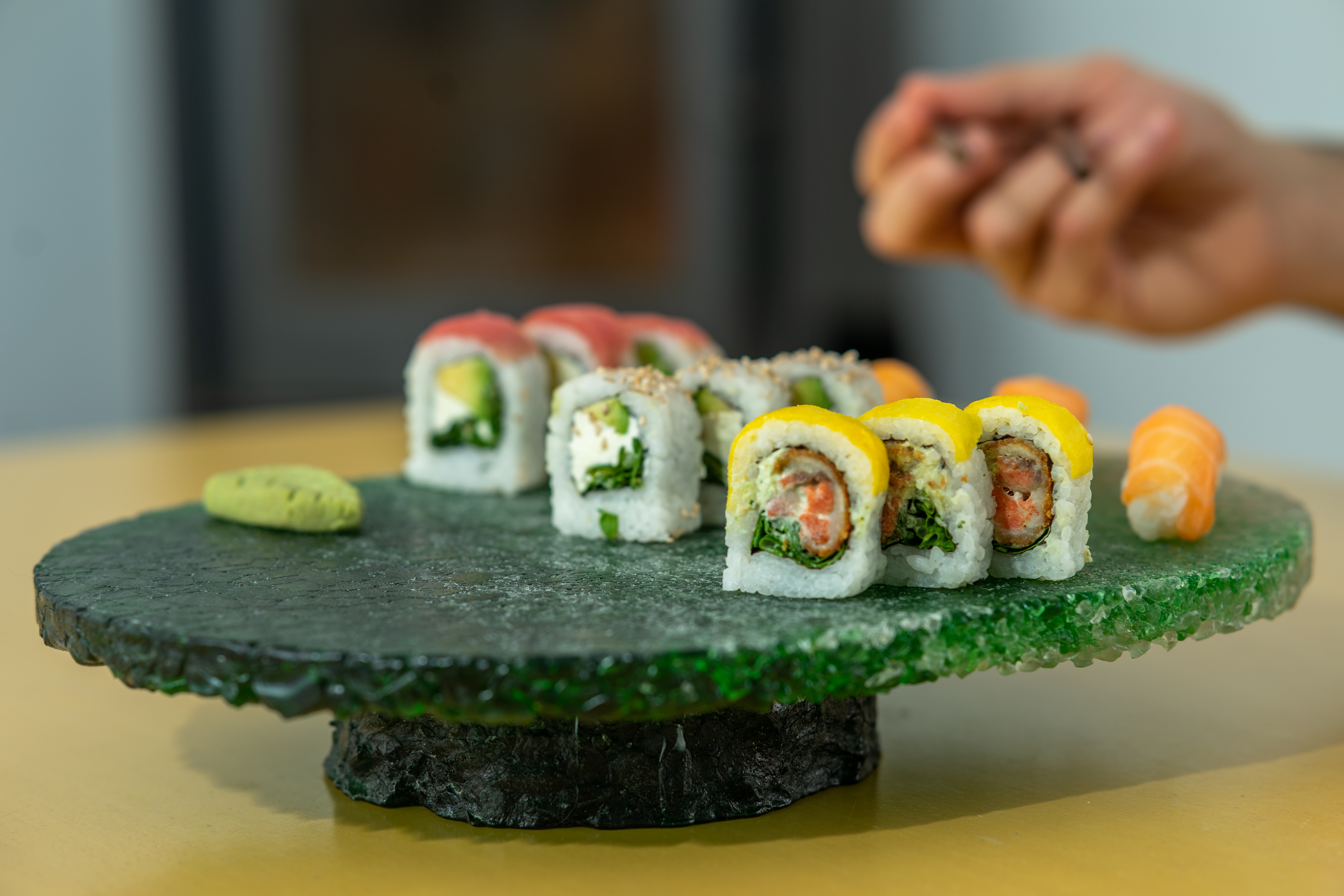
The project was documented through an editorial photo session — black background, real food, material close-ups — positioning the piece as a market object, not a lab sample.
The piece
Material attributes
| Field | Value |
|---|---|
| Material | Post-consumer glass cullet (bottle green + clear) |
| Process | Kiln sintering with refractory mold |
| Finish | Natural granular — no polishing or post-kiln tempering |
| Translucency | Semi-translucent — clear cullet transmits more light than green |
| Use | Cold-food serving (sushi, cheeses, fruit) |
Material — sintered recycled glass
Sintering is the intermediate technique between full fusion (which dissolves edges and produces a fully smooth, crystal-like piece) and simple compaction (no heat, no real bonding). The goal: the exact point on the temperature curve where particles weld at their contact points but don't yet flow or lose their identity.
Why local cullet matters
- Abundant feedstock in Uruguay — wine, beer and mineral water bottles. Today they're crushed and exported as low-value raw material.
- Color without added tint — green doesn't need pigment, it comes pre-loaded in the waste stream.
- Lower melting point vs. silica sand — sintering cullet uses far less energy than melting glass from scratch.
- Closed loop — the piece can be re-crushed and reused with no quality loss.
This material logic is the same one the Reconfigurable Mold scales toward production.
Scale and handling
Why push this project
- A look of its own — sintered granular glass doesn't resemble anything in the conventional tableware market. Not industrial pressed glass, not artisan ceramics, not wood.
- Material storytelling — bottle-green is legible at first glance.
- Viable in small-batch production — reusable mold, cheap and abundant cullet, accessible kiln (same gear as the thesis).
- Possible market — restaurants, food styling, designer retail, sustainable corporate gifting.
- Connection to the Reconfigurable Mold — the board can serve as a commercial pilot product while the thesis pushes standardization.