
PINCUERO
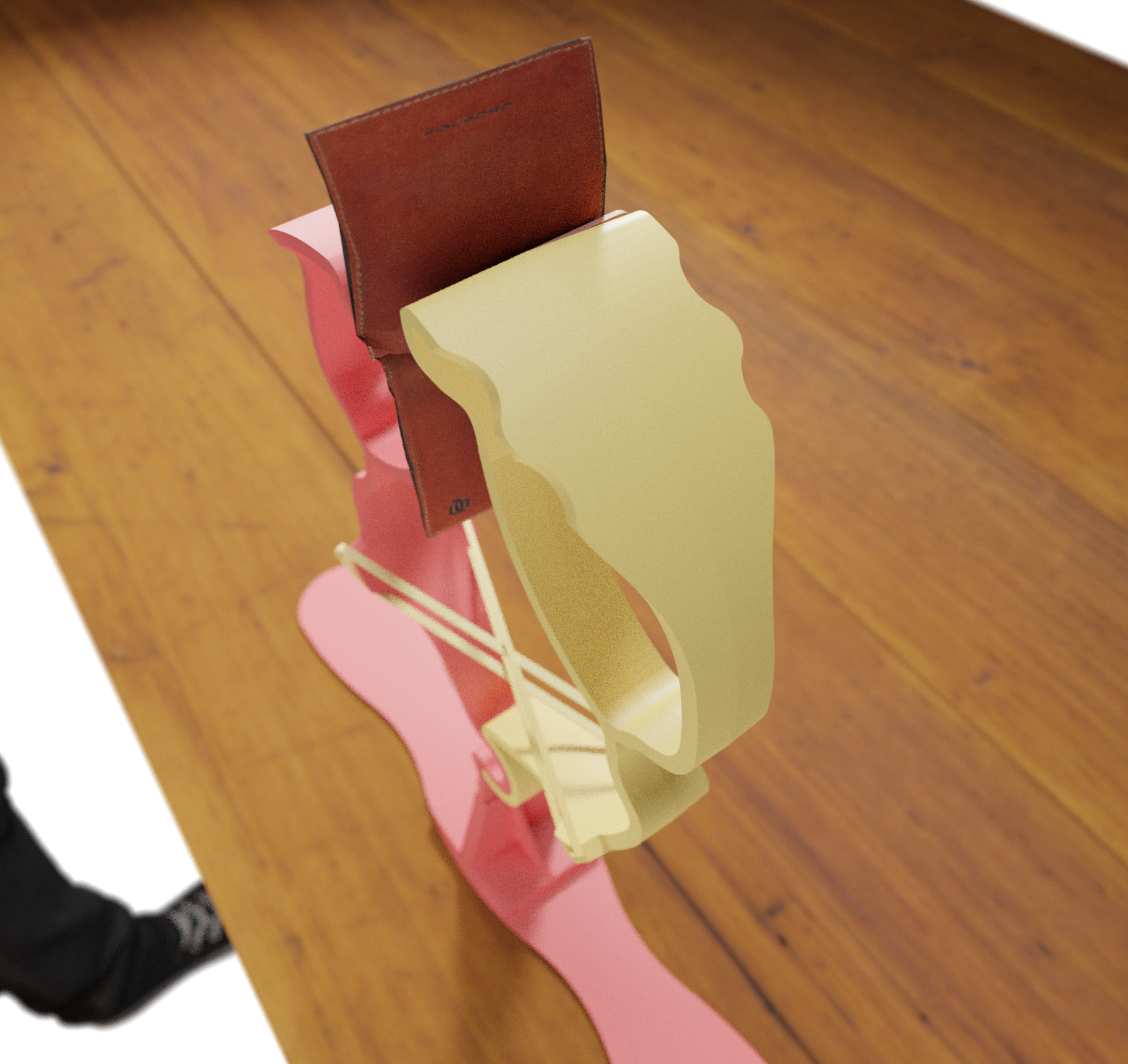
Contemporary reinterpretation of the leather stitching pony (saddle stitching pony). A device that holds two pieces of leather for hand-stitching, designed for hobbyists. Replaces the traditional screw + spring system with a crossed elastic tension that's lighter, easier to print, and cheaper to make.
My role
Co-designer with Alfredo Ferreira · EUCD/FADU/UdelaR · April–July 2021
Pair work from the first brief through to the final technical sheets. In the divergent phase each of us developed two alternatives (I worked the bench-clamp path and the leg-mounted version; Alfredo worked the complementary ones). In the convergent phase we merged ideas to reach PINCUERO.
Executive summary
Project developed during the pandemic (2021), in pair with Alfredo Ferreira. The brief asked us to design a device that solves a real problem for a hobbyist user while meeting serial-fabrication requirements (injection molding).
Through a Zoom interview we identified the user and their pain point: a hand-leather worker who stitches as a creative hobby and can't find accessible tools. The specific piece we improved was the leather stitching pony (saddle stitching pony) — expensive, heavy and craft-oriented.
The result was PINCUERO, a two-piece device with elastic tension that reduces the cost and weight of the traditional pony while keeping (or improving) clamping stability. We delivered 15 final technical sheets ready for fabrication + a 3D-printed prototype for validation.
The problem
The user
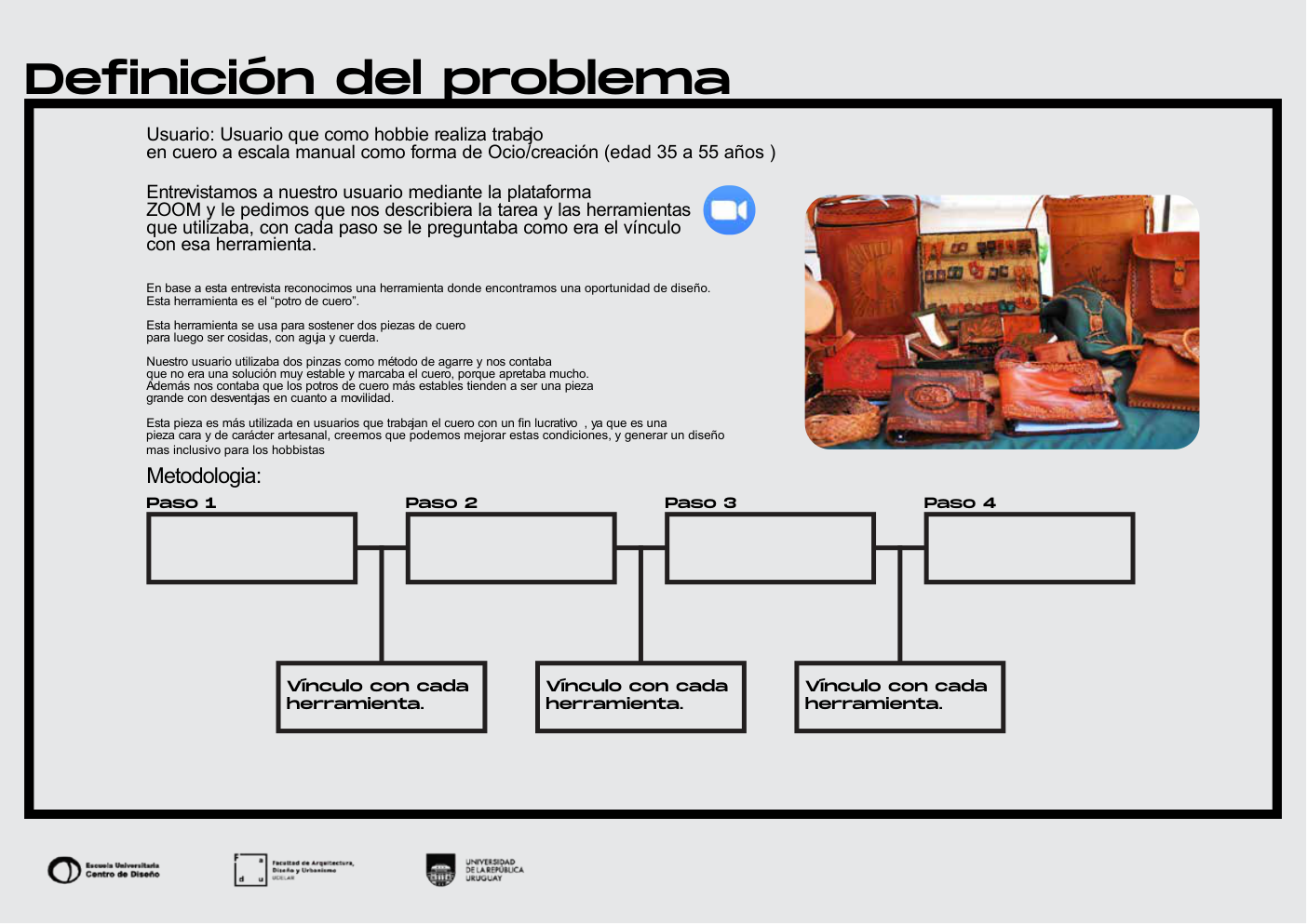
A man or woman, 35 to 55 years old, who works leather at hand-scale as a hobby / creative leisure activity. No commercial intent — they stitch for pleasure.
We ran the interview over Zoom (in the middle of the pandemic) and asked the user to walk us through the activity step by step, tool by tool.
The identified pain
"Regular clamps aren't a stable solution and they mark the leather because they squeeze too much. The most stable stitching ponies tend to be a single bulky piece with mobility downsides." — Interviewed user
The traditional stitching pony holds two pieces of leather while the user sews them with needle and thread (saddle-stitch technique). But the available ponies had problems:
- Expensive and craft-made — designed for professional/commercial users
- Heavy and not portable
- Marks the leather when replaced with regular clamps
- Unstable or excessive pressure
Product concept: a device that assists the stitching of leather pieces by holding them in place, designed for hobbyists, manufacturable in series.
Requirements
15 requirements classified as mandatory (i), desirable (d) or optional (o):
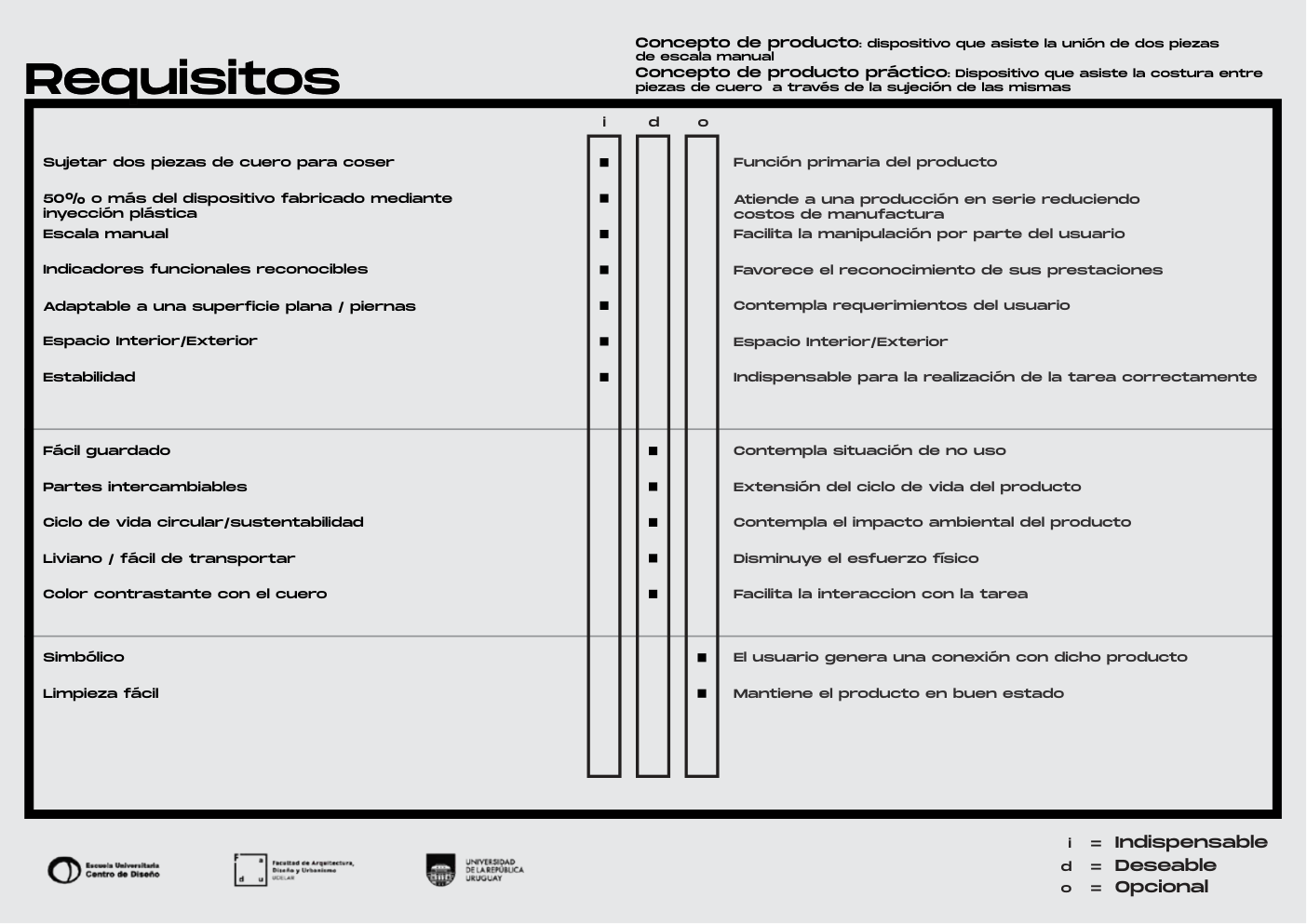
| Mandatory | Desirable | Optional |
|---|---|---|
| Hold two pieces of leather for stitching | Adaptable to flat surface / legs | Color contrast with leather |
| 50%+ of the device made by injection molding | Interior/exterior space | Symbolic |
| Hand scale | Stability | Easy cleaning |
| Recognizable functional indicators | Easy storage | |
| Interchangeable parts | ||
| Circular life cycle / sustainability | ||
| Lightweight / portable |
Paths and alternatives
From the user analysis and their points of contact with their environment (legs, work surface), we proposed 2 design paths, each with 2 alternatives (4 total — 2 from each team member).
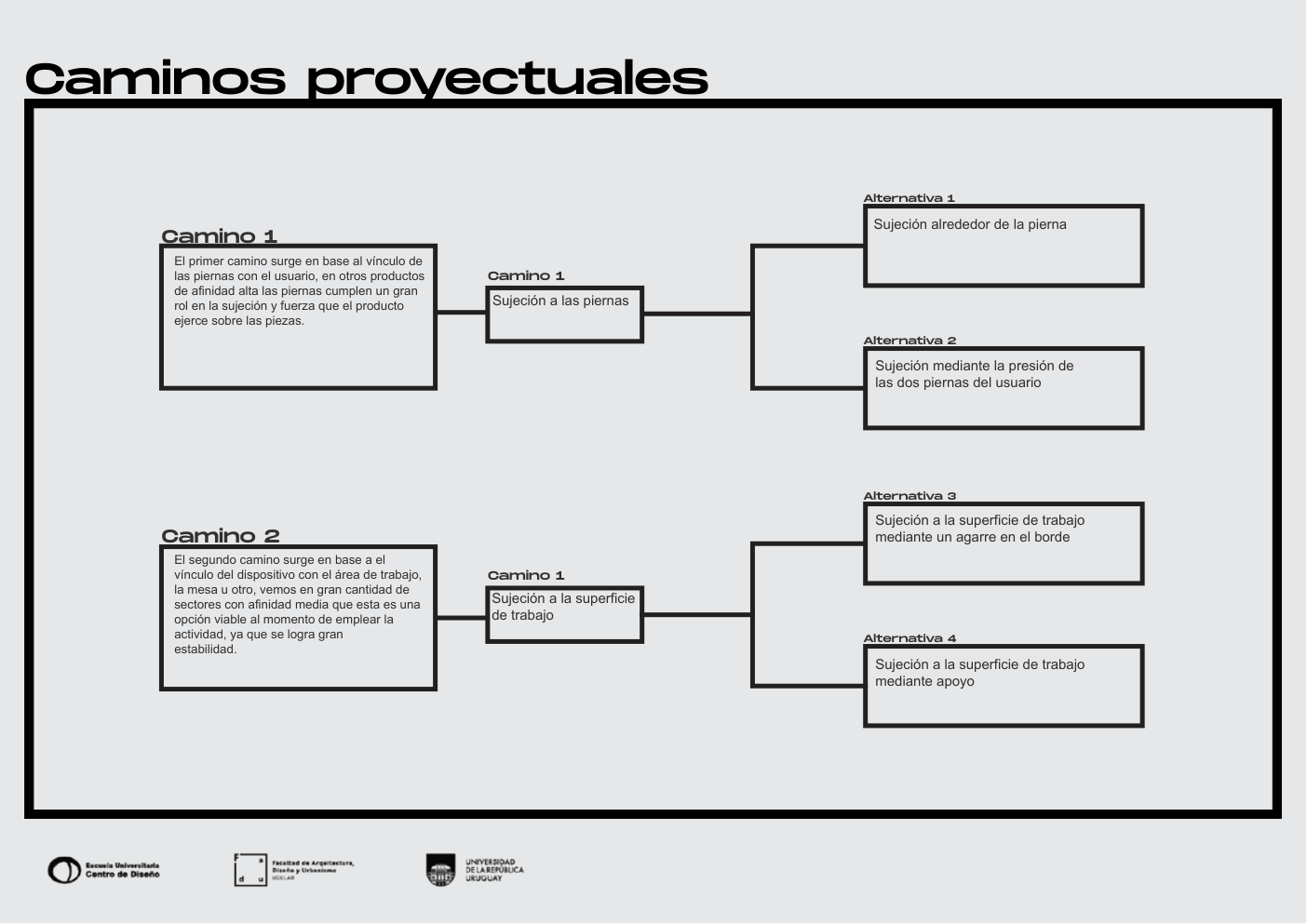
Path 1 — Leg-mounted
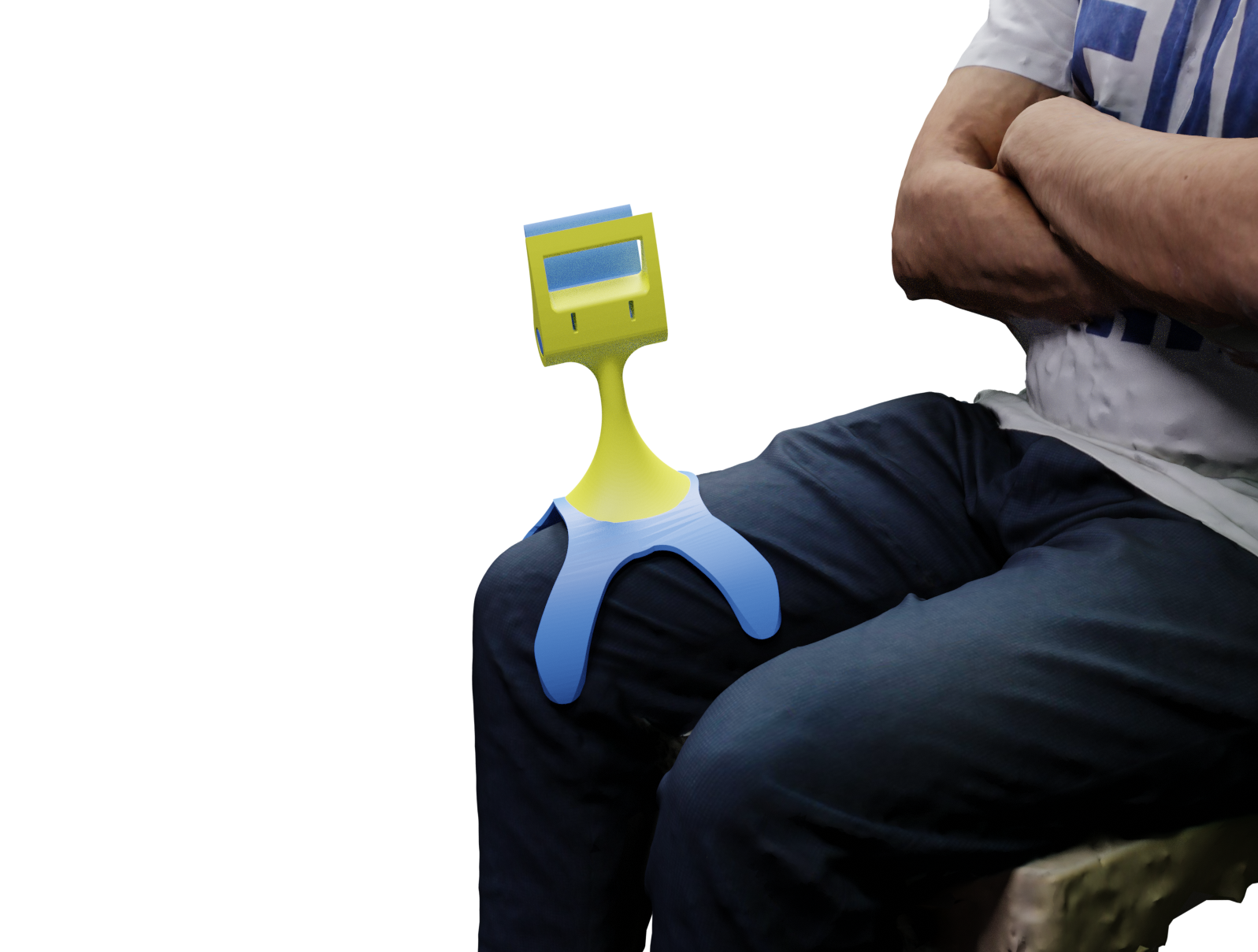
Alternative 1 (Santiago): mount around the leg with a rigid base held by the deformation of the thigh muscle when seated. A leather strap with a watch-like buckle generates pressure on the workpiece.
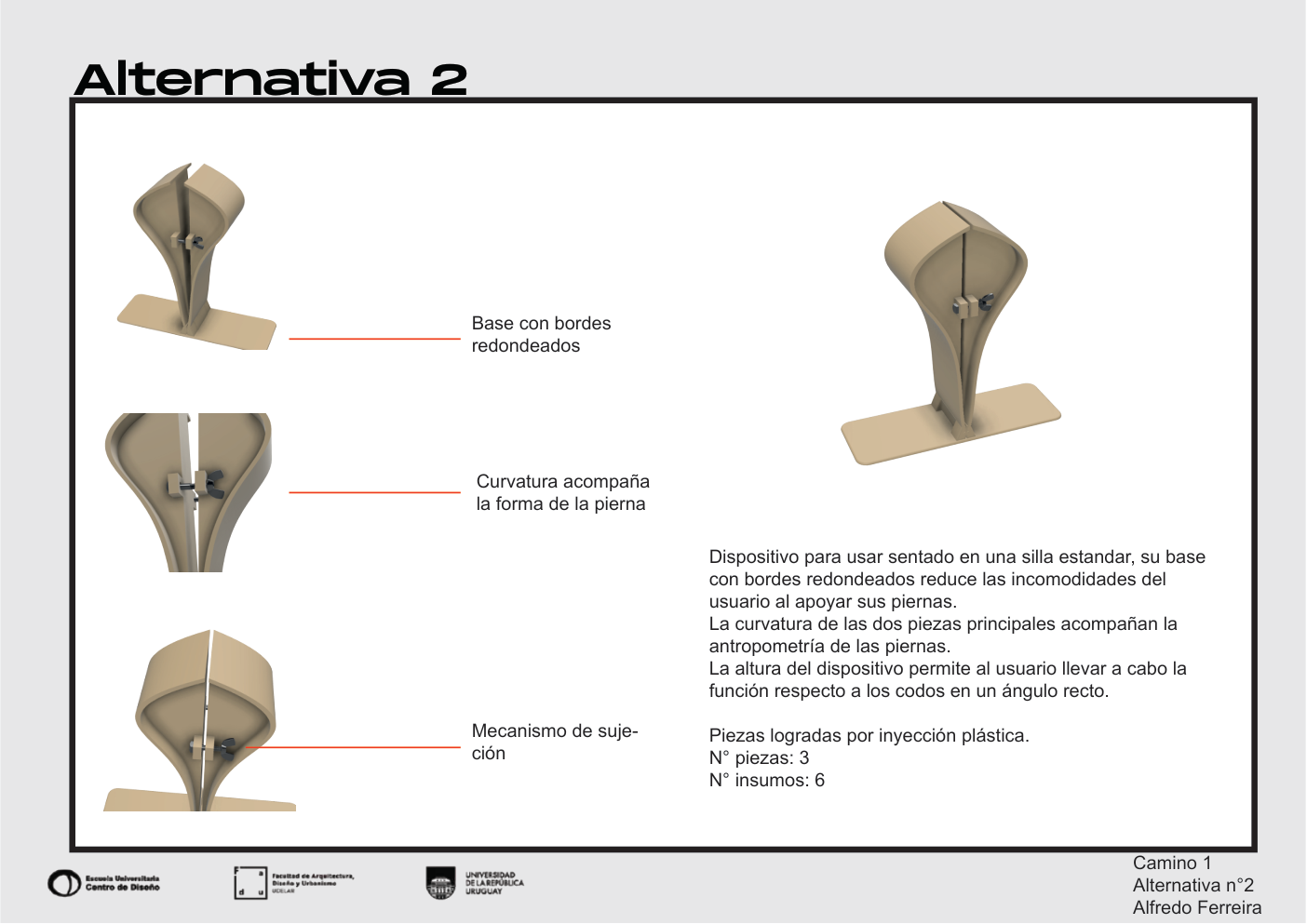
Alternative 2 (Alfredo): held in place by pressure of both legs. Rounded-edged base, curvature follows leg anthropometry. Height calibrated to keep elbows at right angle.
Path 2 — Work-surface-mounted
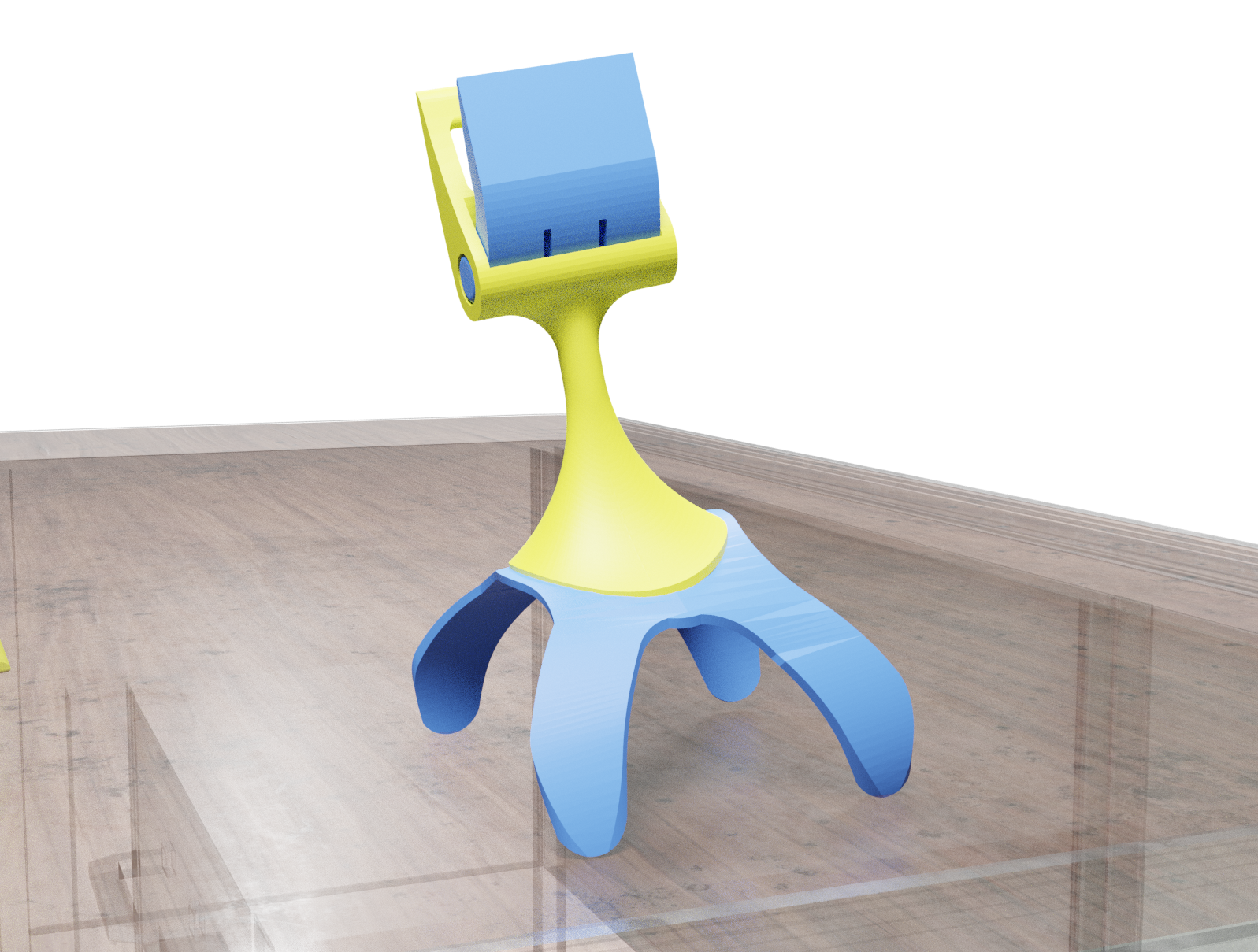
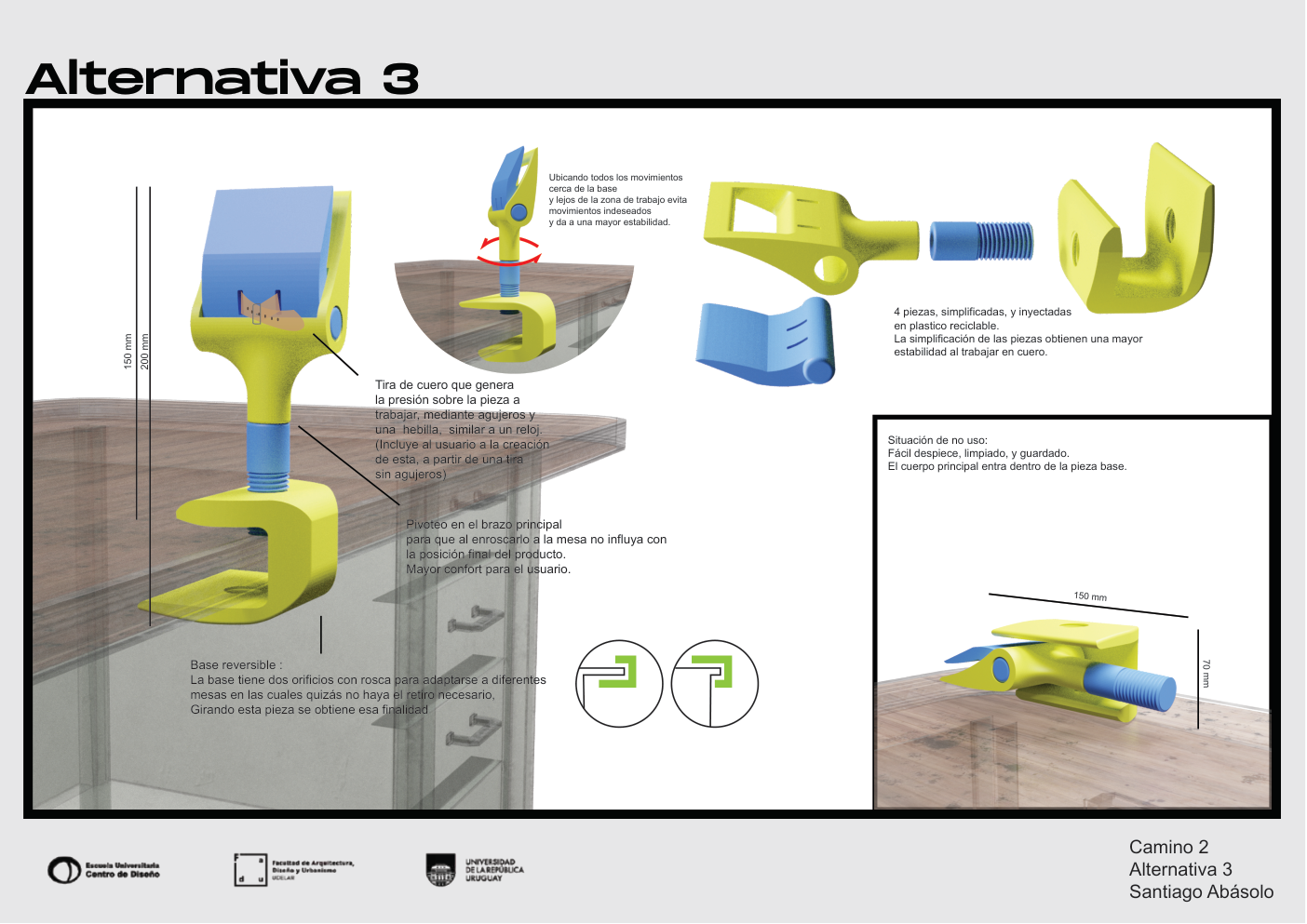
Alternative 3 (Santiago): vise-style clamp gripping the edge of the table. Pivot on the main arm so screwing it down doesn't change the final position. Reversible base with two threaded holes to fit different tables.
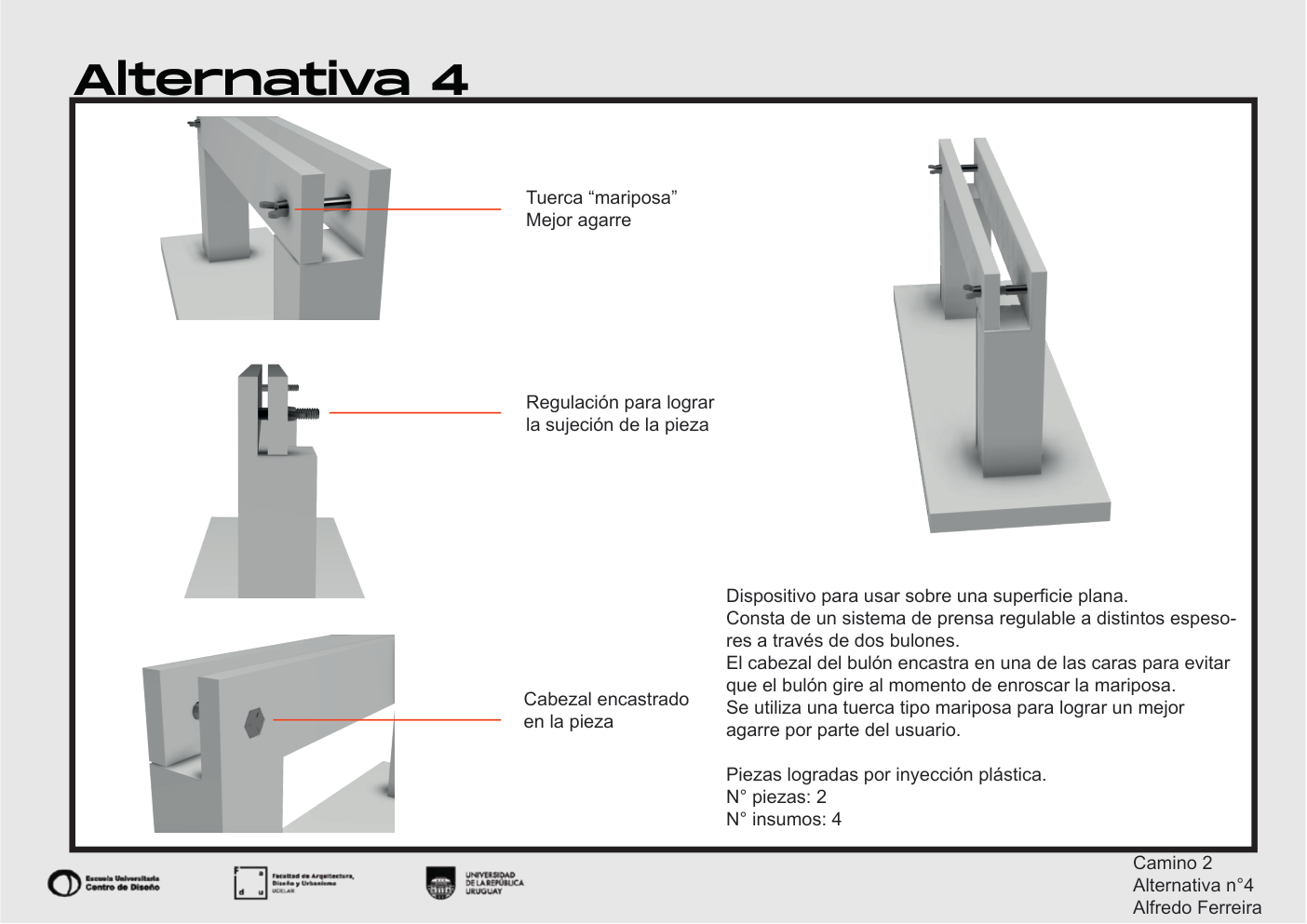
Alternative 4 (Alfredo): adjustable press on a flat surface. Two bolts with a wing-nut allow adjusting to different thicknesses. The bolt head is keyed into the part so it doesn't spin when tightening the wing-nut.
PINCUERO — the integrated proposal
After evaluating the 4 alternatives through a survey with teachers and peers, we consolidated the lessons into a single proposal that combines the best of each line: the portability of the leg-mounted approach + the stability of the base-supported paths.
The concept
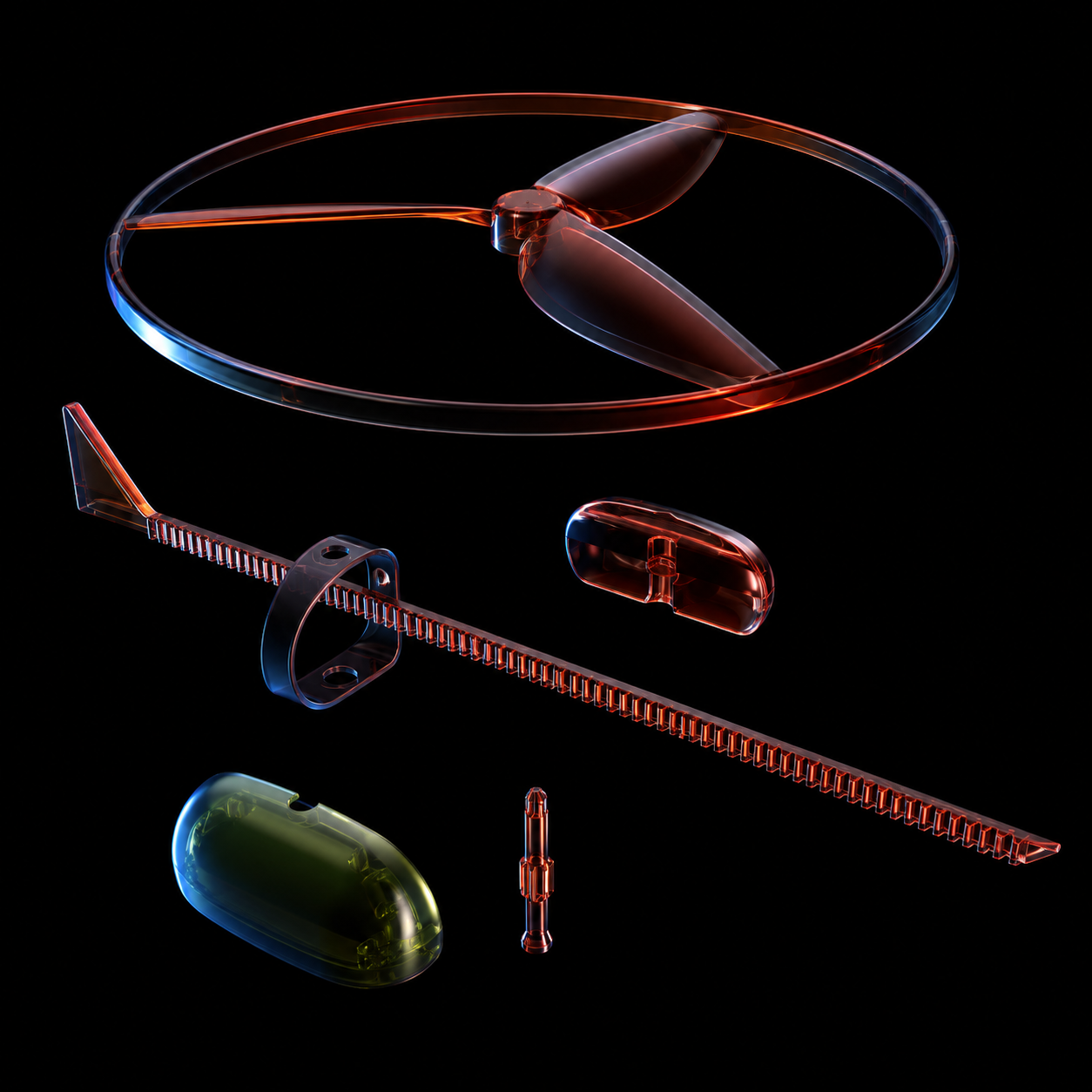
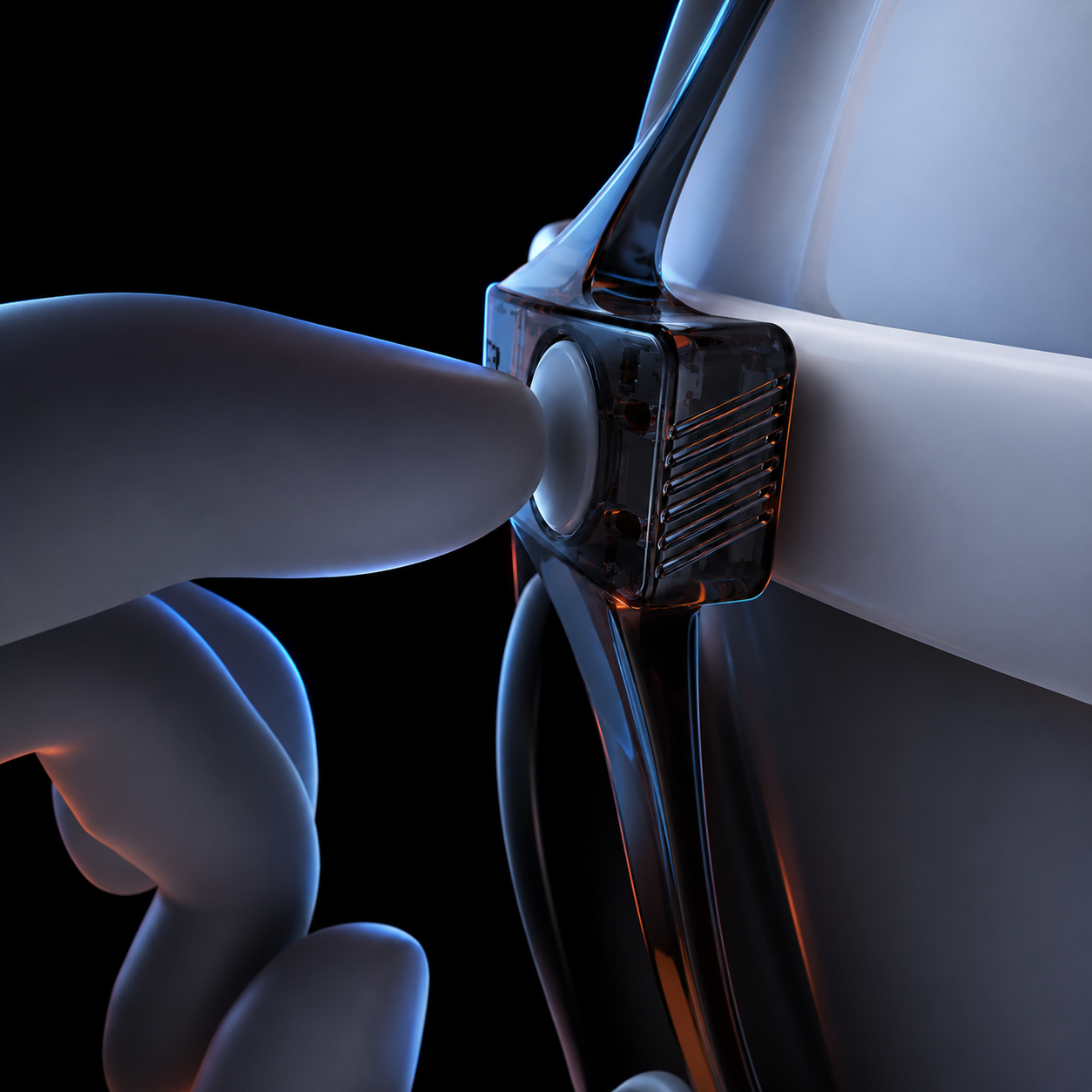
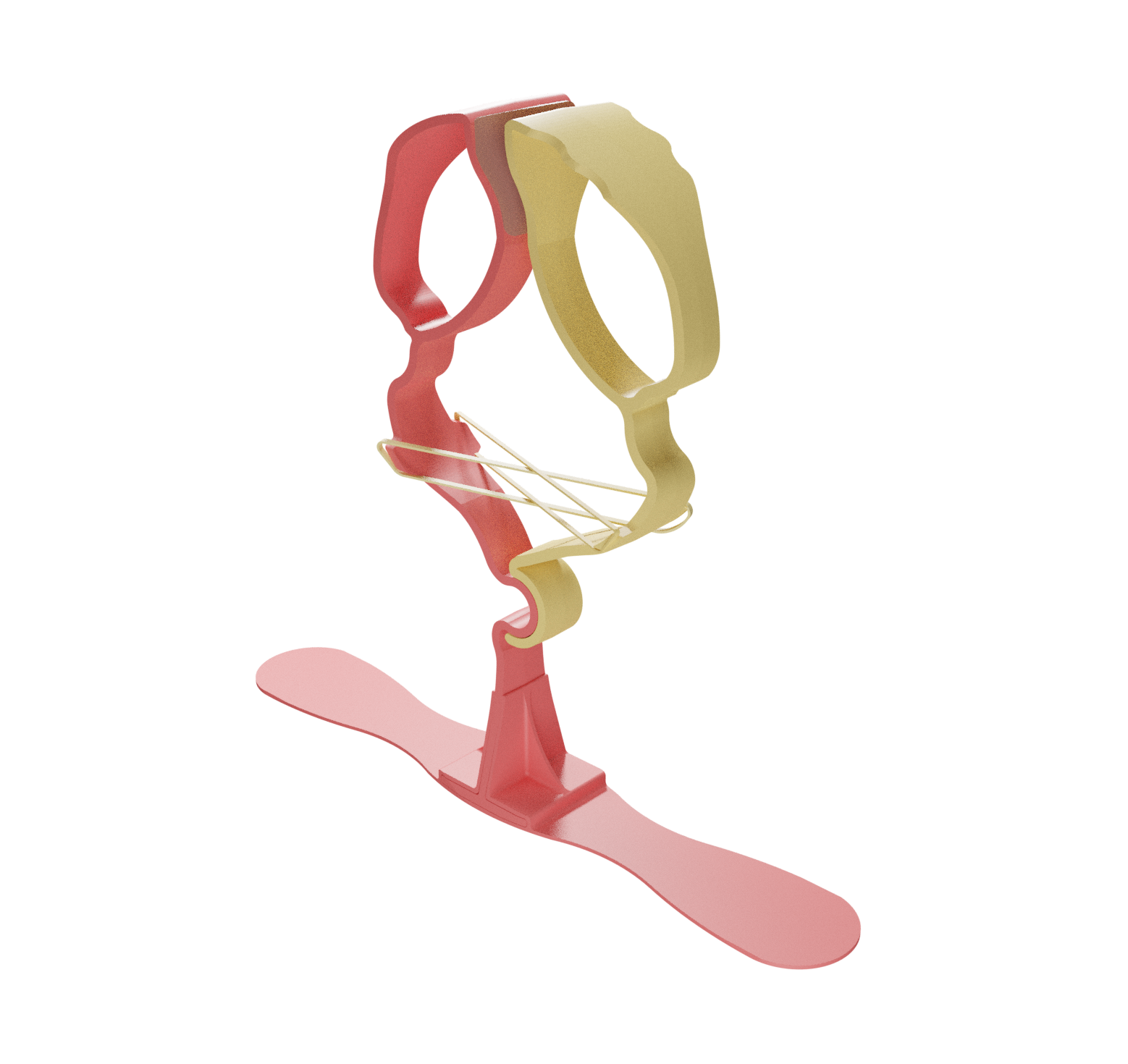
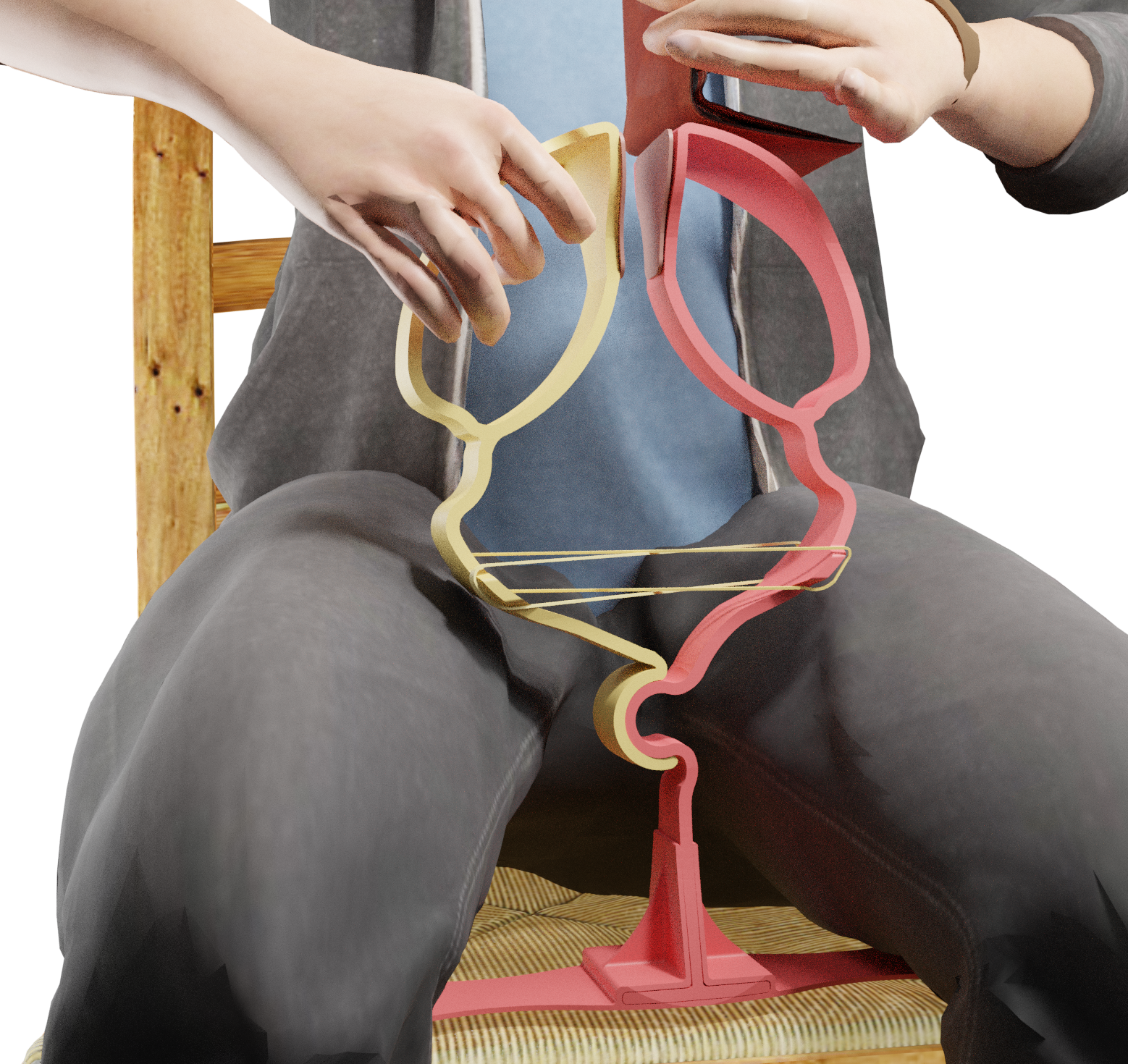
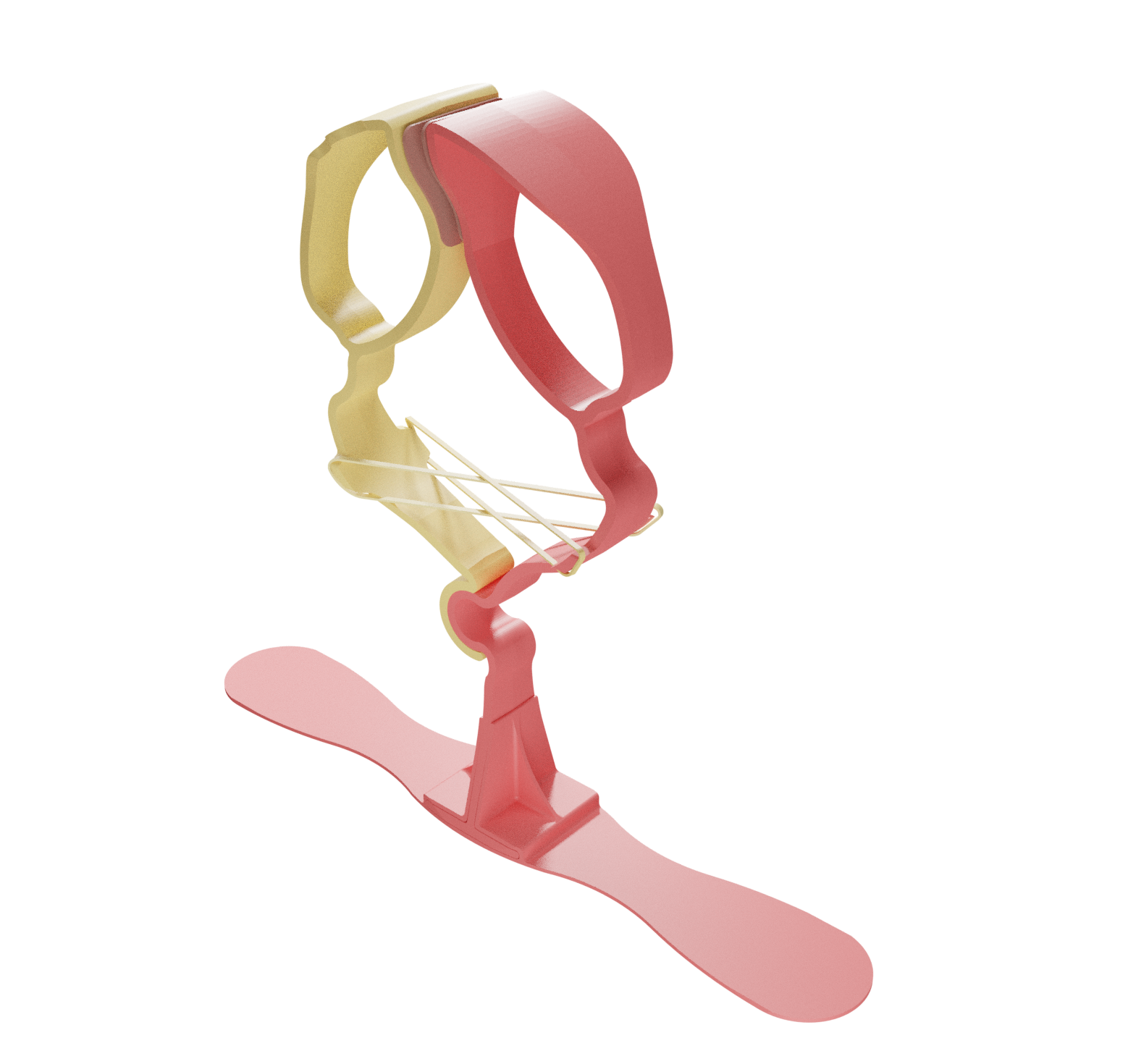
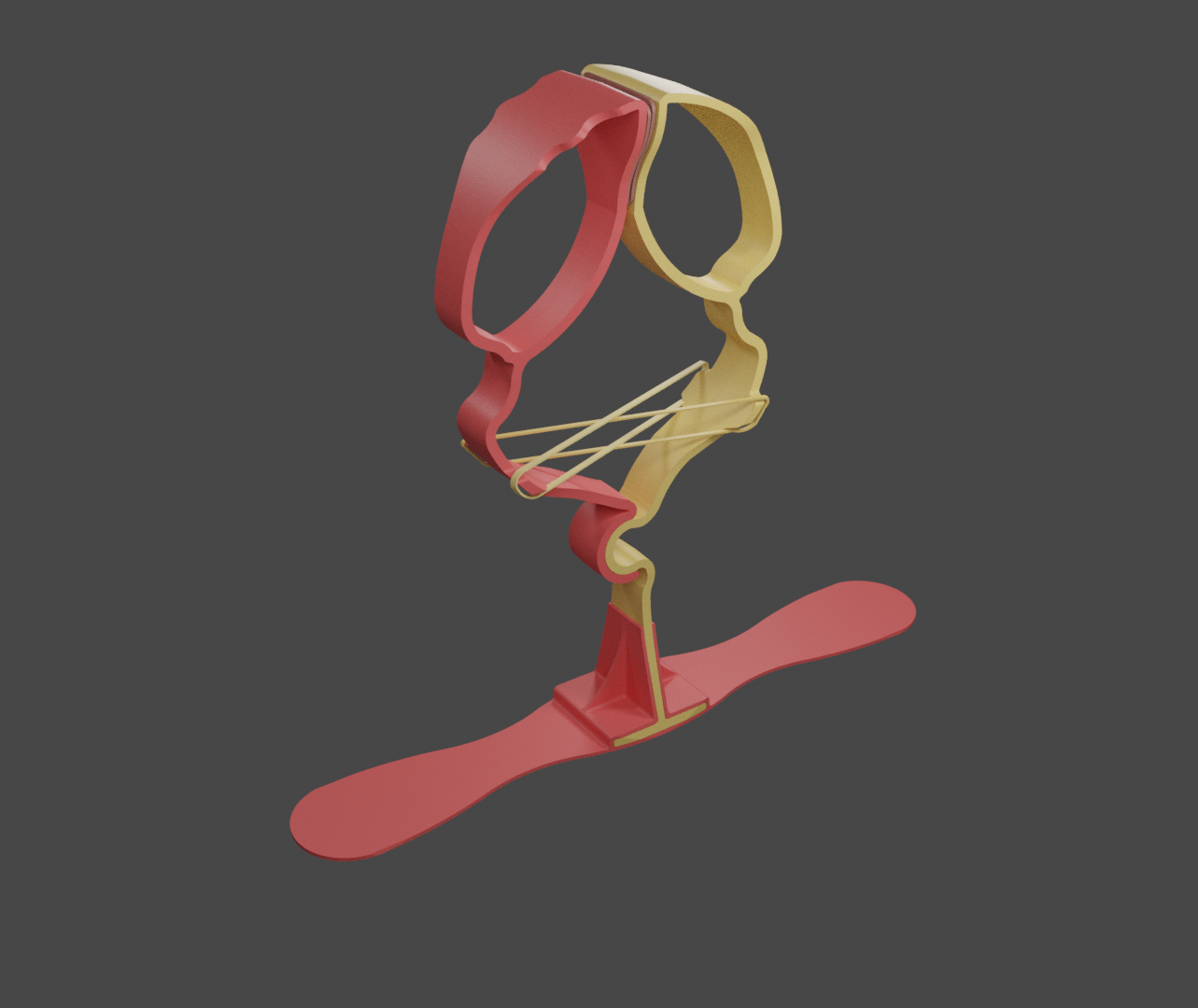
PINCUERO works as a light pony to use between the legs (seated on any standard chair). Two asymmetric "egg-like" pieces clip together forming a vertical clamp, and tension comes from elastic bands crossed in an X instead of the traditional screw + spring.
Design decisions
- No screws or metal — the whole system works with plastic geometry + elastic bands. Lower cost and simpler fabrication.
- Asymmetric form — the two pieces (Clamp A and Clamp B) have different shapes that complement each other when closing.
- Curved wavy base — stabilizes the device when resting between the legs and reduces discomfort.
- Crossed-X tension — elastic bands cross to create a uniform closing force, with no single pivot point.
- Opening by base separation — the user pulls the bases apart downward to insert the leather, releases, and the tension does the rest.
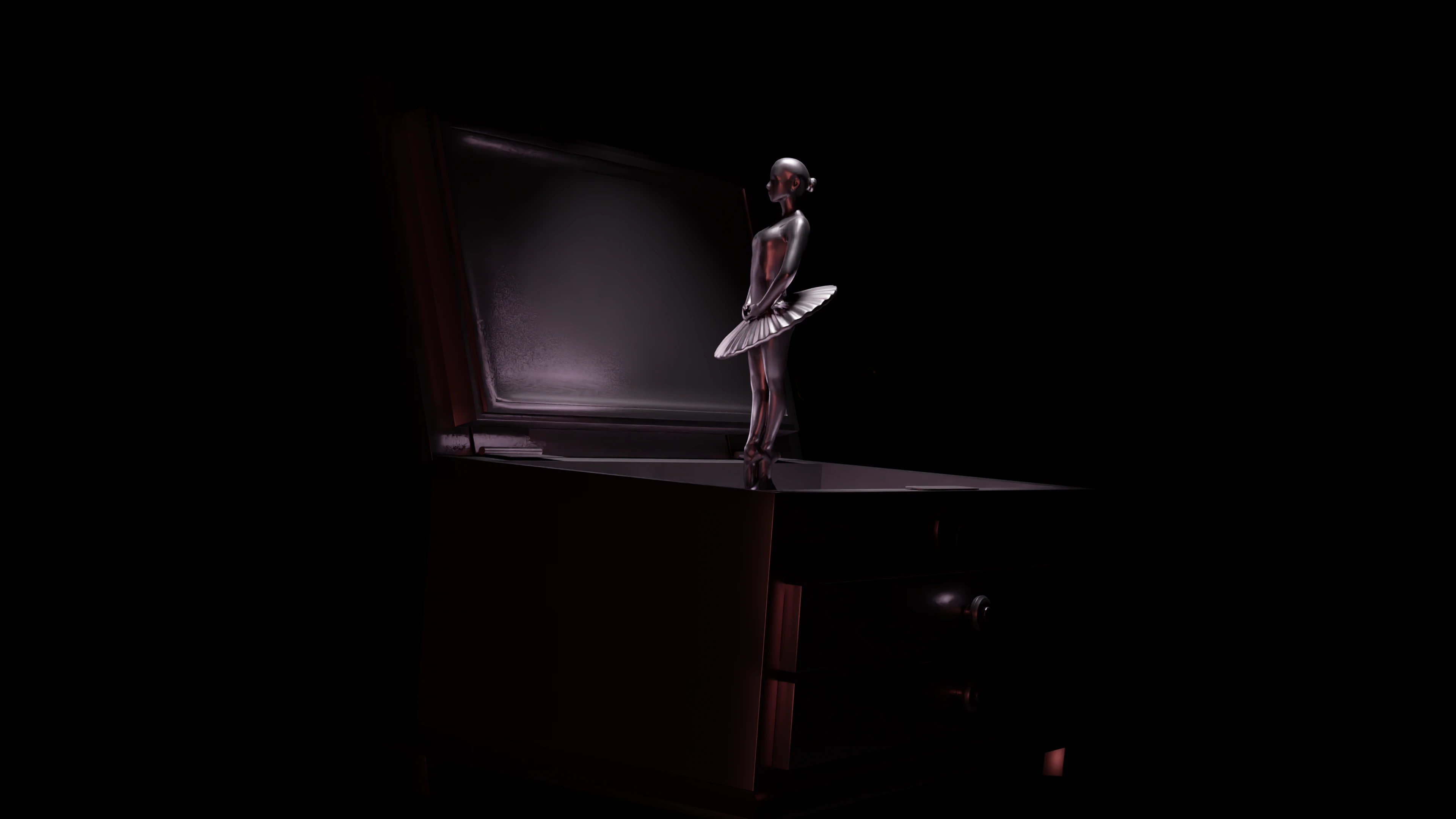
Final renders
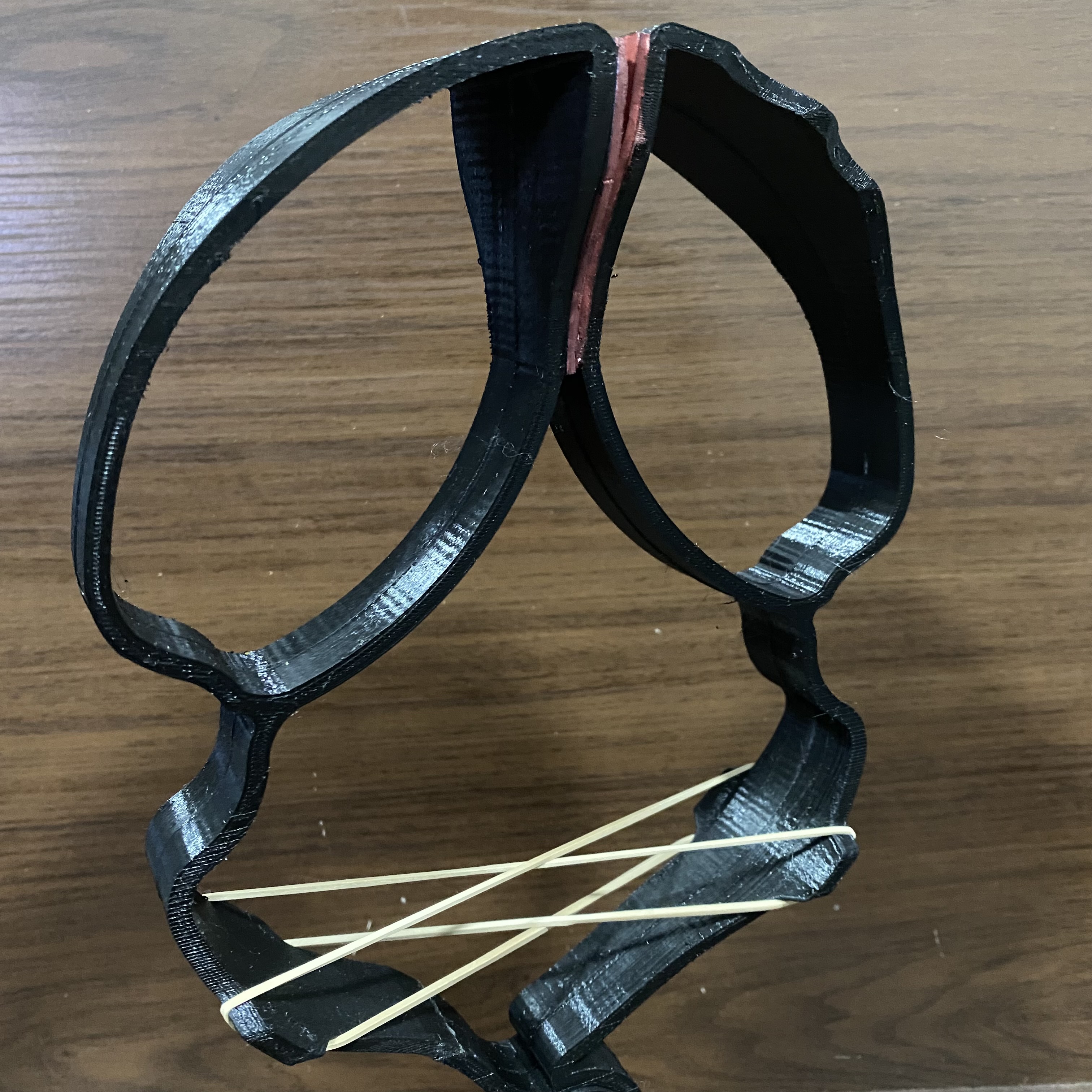
Physical prototype
We 3D-printed a working prototype (PLA) to validate the closing mechanism. The elastic bands correctly replaced the screw system and the pressure was enough to hold the leather without marking it.
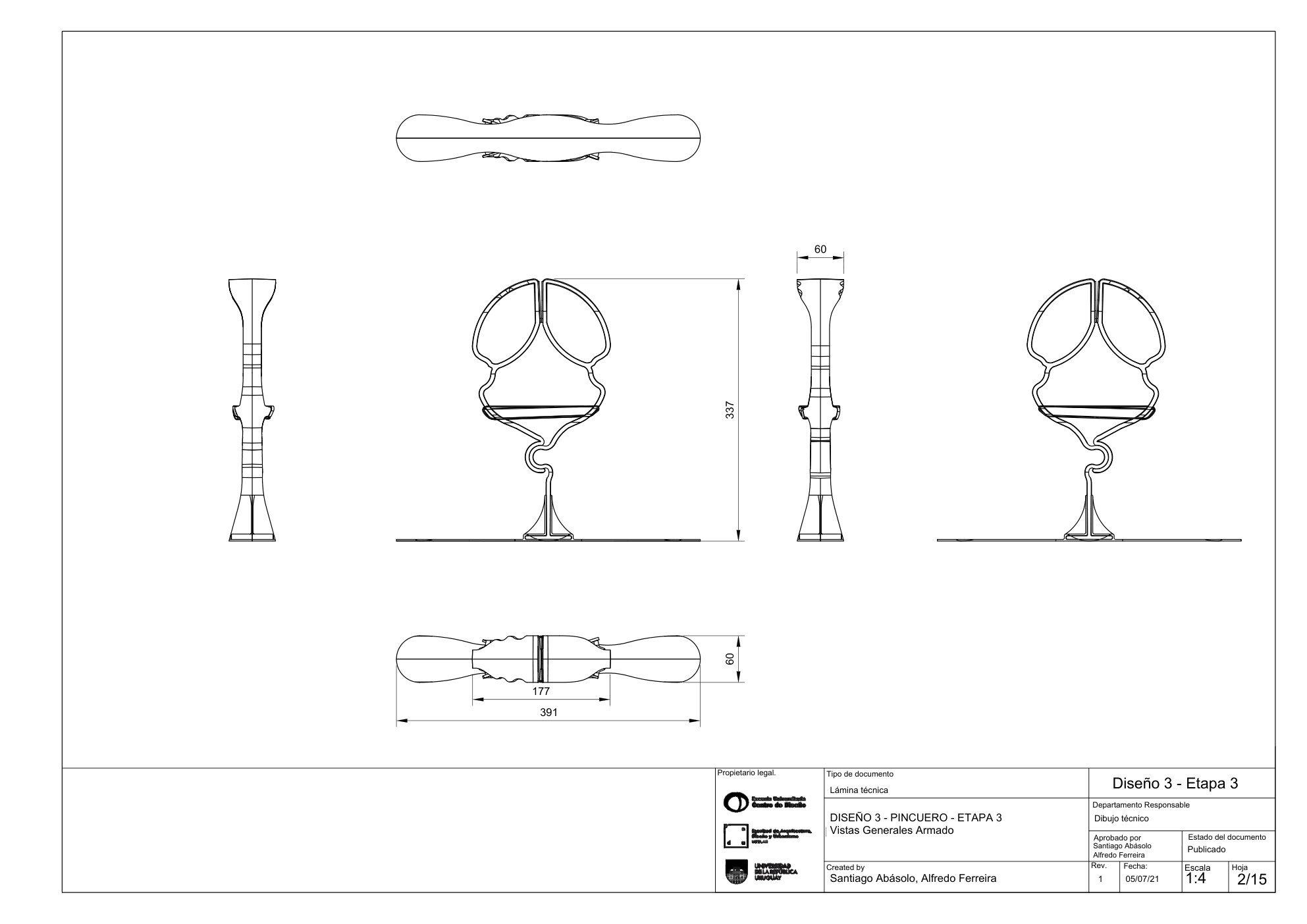
Technical sheets
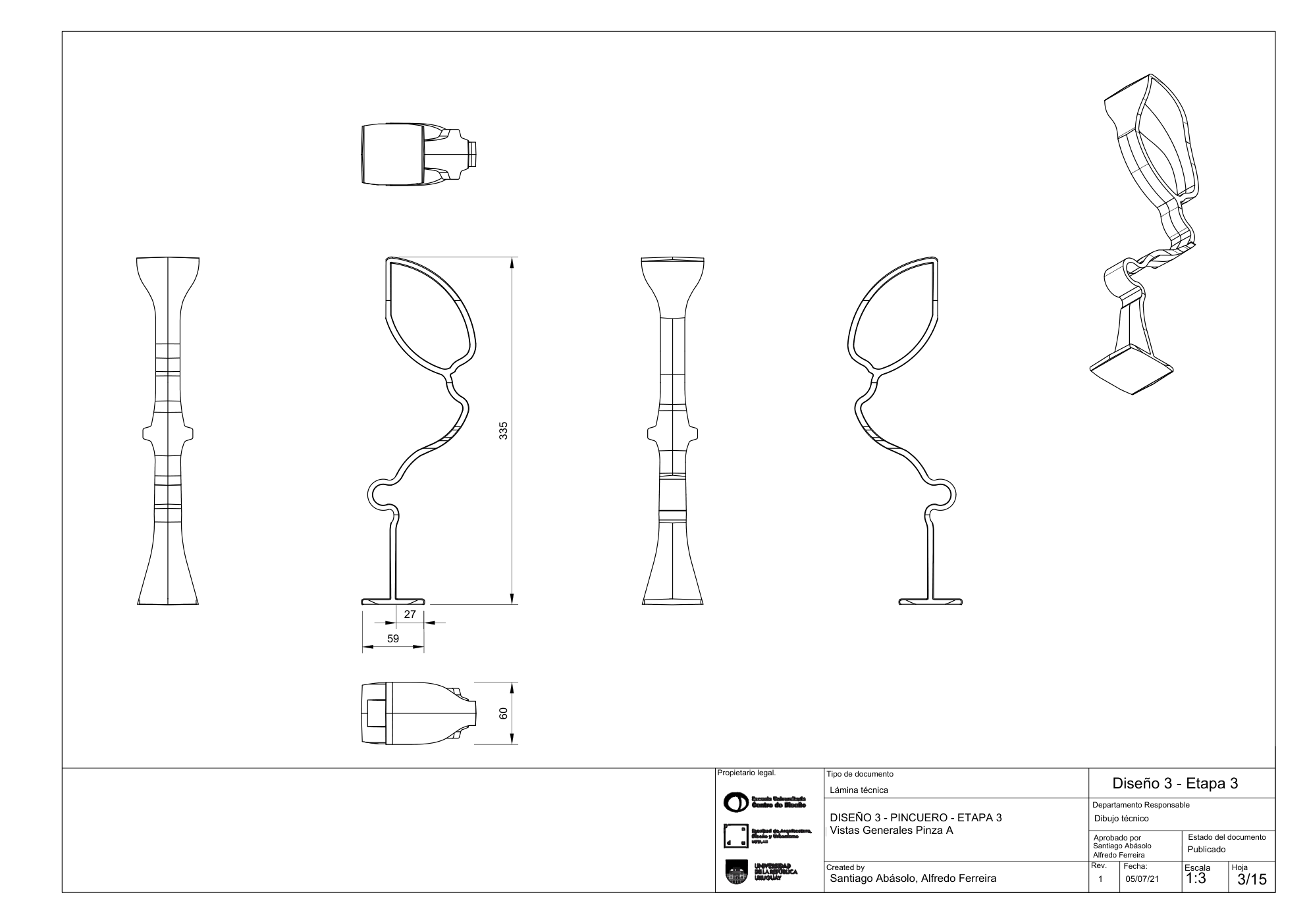
15 final technical sheets with views, sections, components table and assembly sequence. Key sheets below:
Assembly views
Clamp A
Clamp B
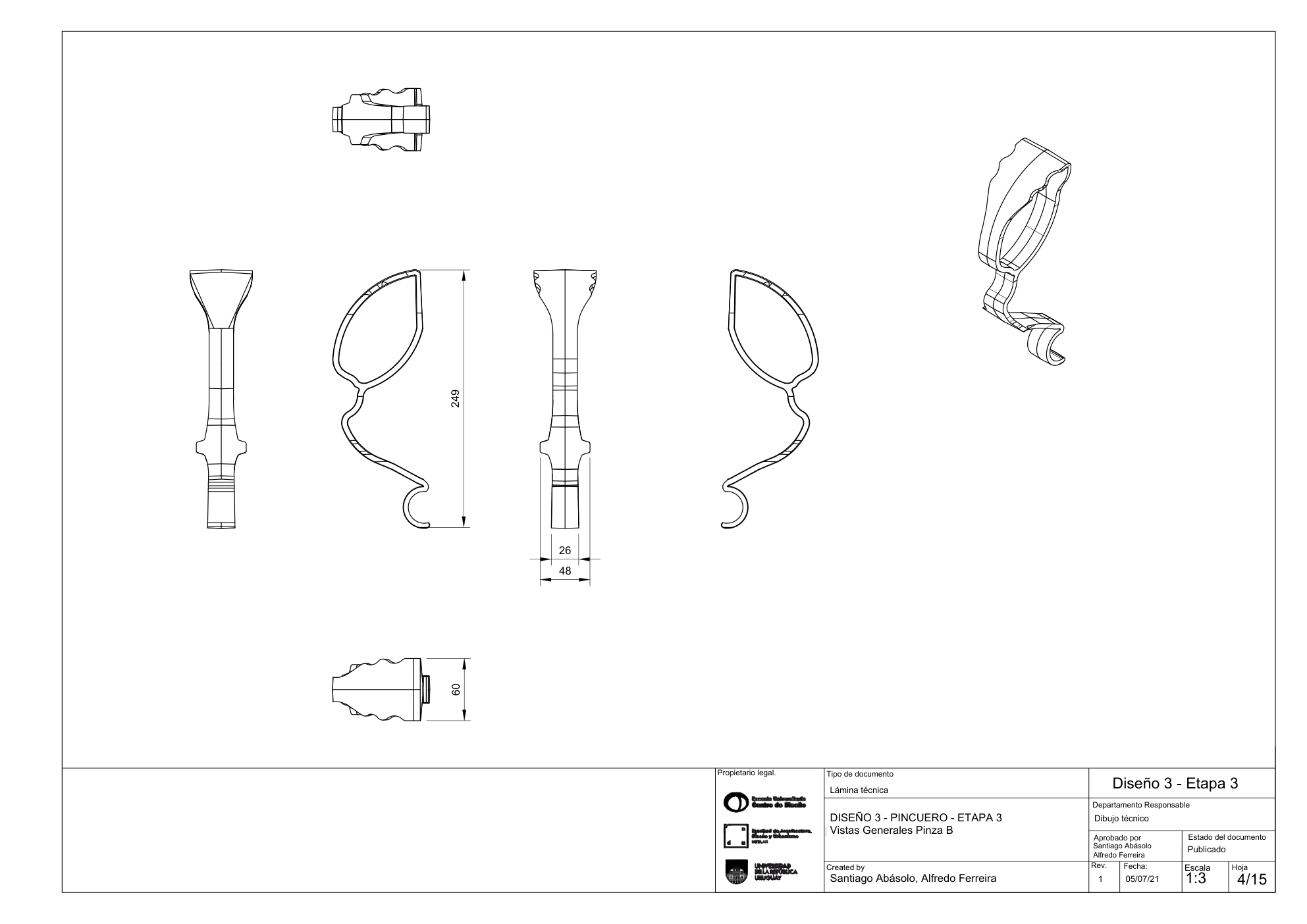
What I learned
- Single-user research — the deep Zoom-interview method forced us to structure questions carefully and listen closely. One well-run interview is worth more than ten generic surveys.
- Improving an existing product — instead of inventing a new category, the brief was to redesign the stitching pony with sensitivity to the hobbyist user. The constraint helped us focus.
- Reducing hardware — going from "screw + spring" (craft / metal) to "crossed elastic tension" (injected plastic + rubber) was a project decision that simplified cost, weight and fabrication.
- Pair work with Alfredo Ferreira — first long pair project of the year. The "2 paths × 2 alternatives each" structure worked very well to split work during divergence and converge afterwards.
- Crossed-band tension system — works because it distributes closing force uniformly along the two asymmetric pieces, without requiring a rigid pivot point.