


CHIPEGO
RFID-based system for recording attempts and completed climbs in a bouldering gym. It combines a route device, identification wristbands and a data platform.
IoT system developed with Montevideo Boulder Club to record route activity and turn it into useful information for members and route setters.
My role
I co-designed CHIPEGO with Sebastián Varela in 2022 at EUCD/FADU, Universidad de la República.
The work covered field research, system definition, product design, preliminary electronics selection, RFID-reader prototyping, data architecture, web-interface design and technical documentation.
Summary
The project was developed with Montevideo Boulder Club as its project partner. Visits, interviews and observation showed that attempts, completed climbs and comments about routes circulated informally. This lack of records made member progress difficult to follow and required route-setting decisions to rely mainly on observation and isolated comments.
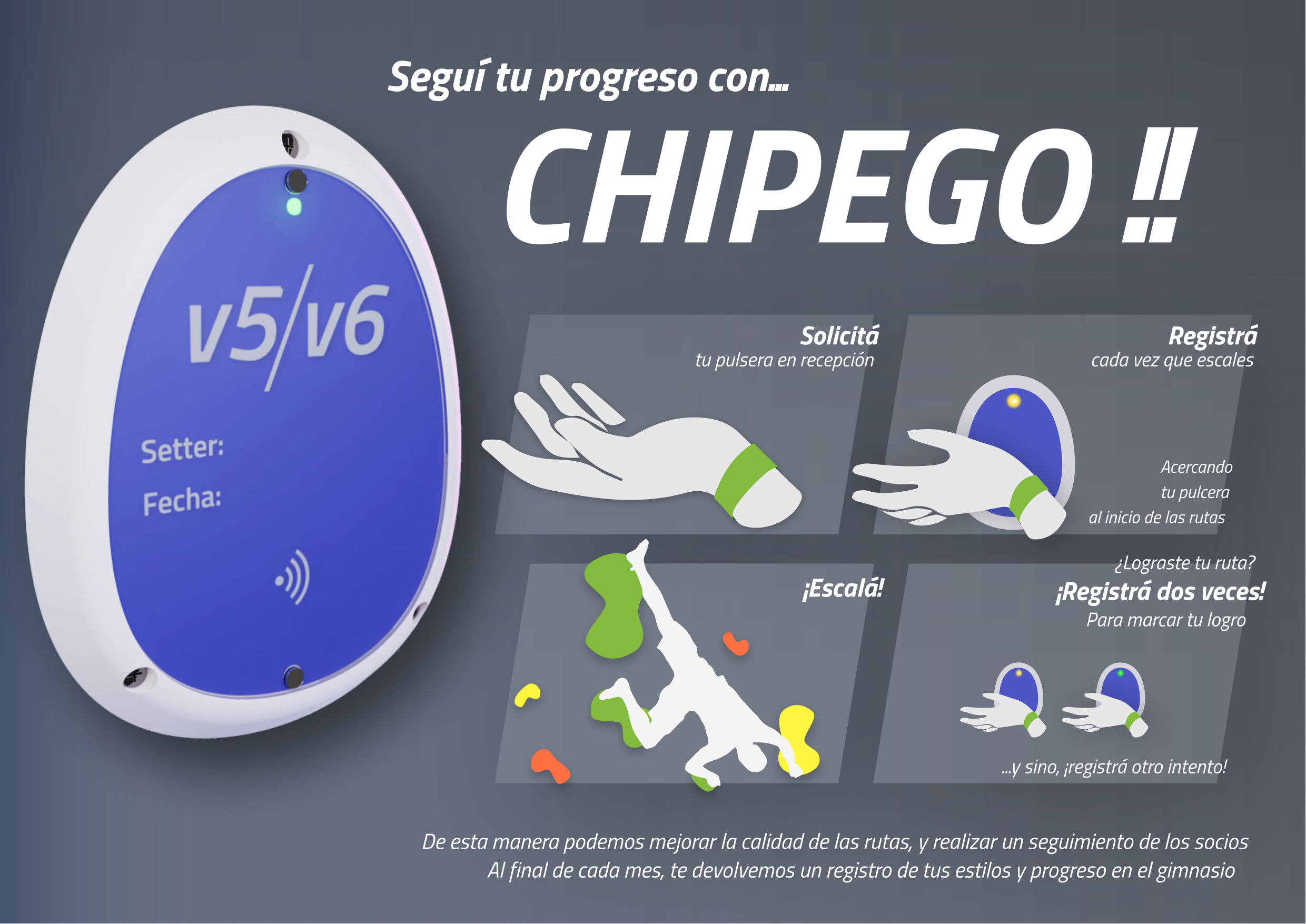
CHIPEGO proposes recording each attempt through an RFID wristband and a device installed beside the route. The data are stored and transferred to a platform containing information about use, difficulty and progress.
Diagnosis and objectives
The diagnosis mapped members, employees, setters, routes and patterns of gym use. It identified four needs:
- recording attempts and completed climbs;
- comparing the stated grade of a route with user performance;
- supporting individual progress tracking;
- providing evidence for route renewal and setting.
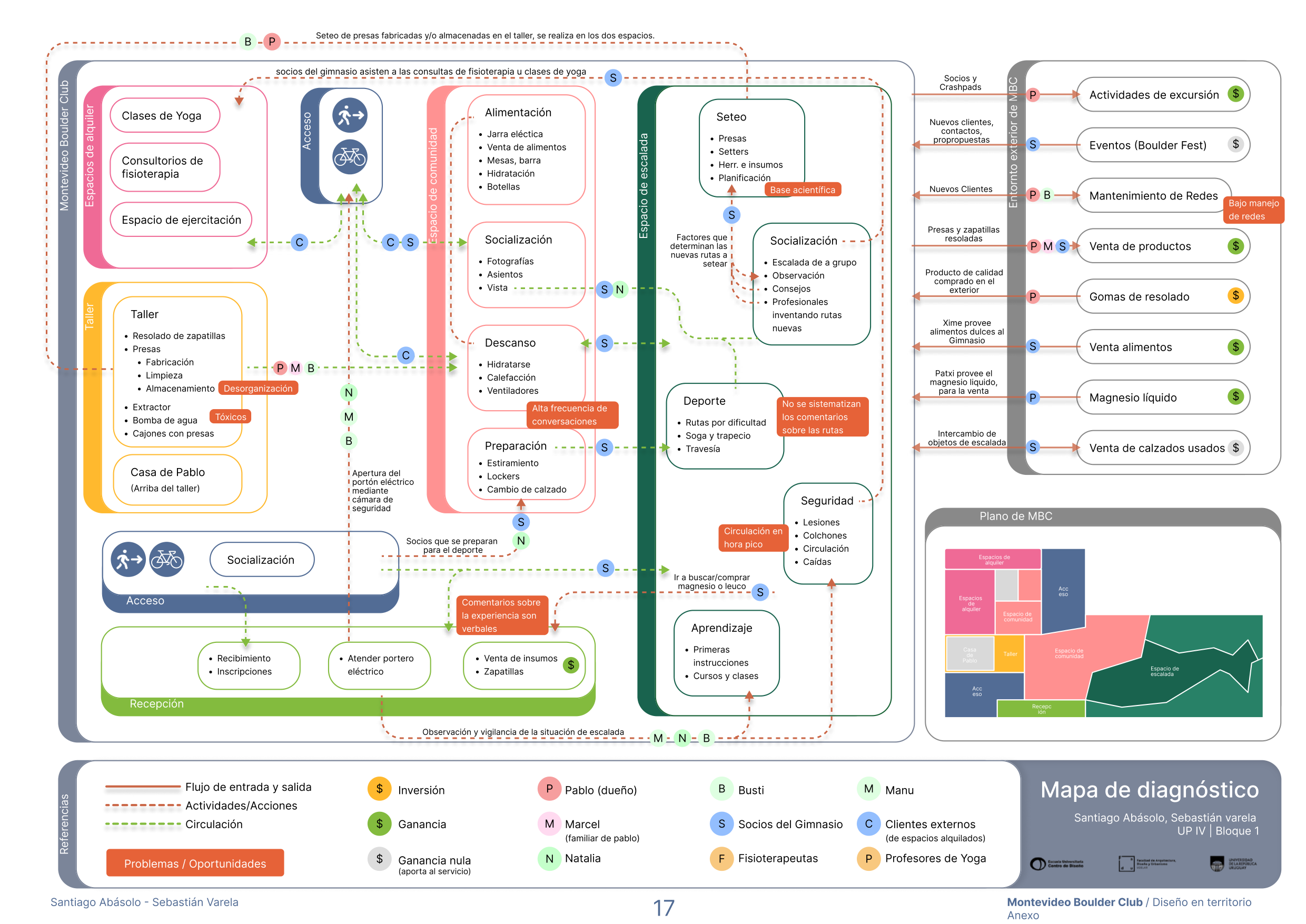
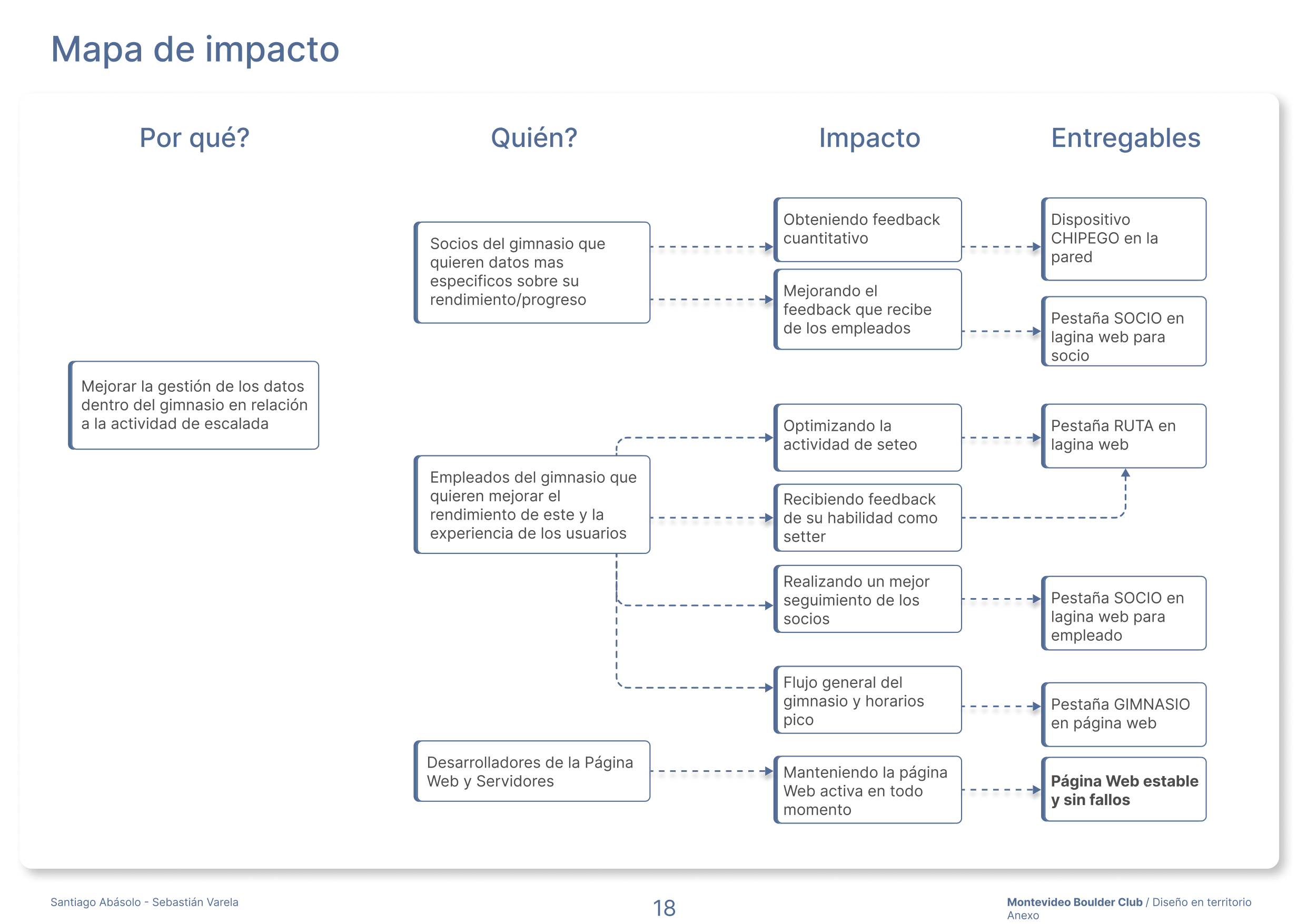
The project question was how to systematise information generated during climbing without interrupting the activity or adding substantial work for staff.
System and interaction
The system combines three components:
- RFID wristband. Identifies a member or day-pass user.
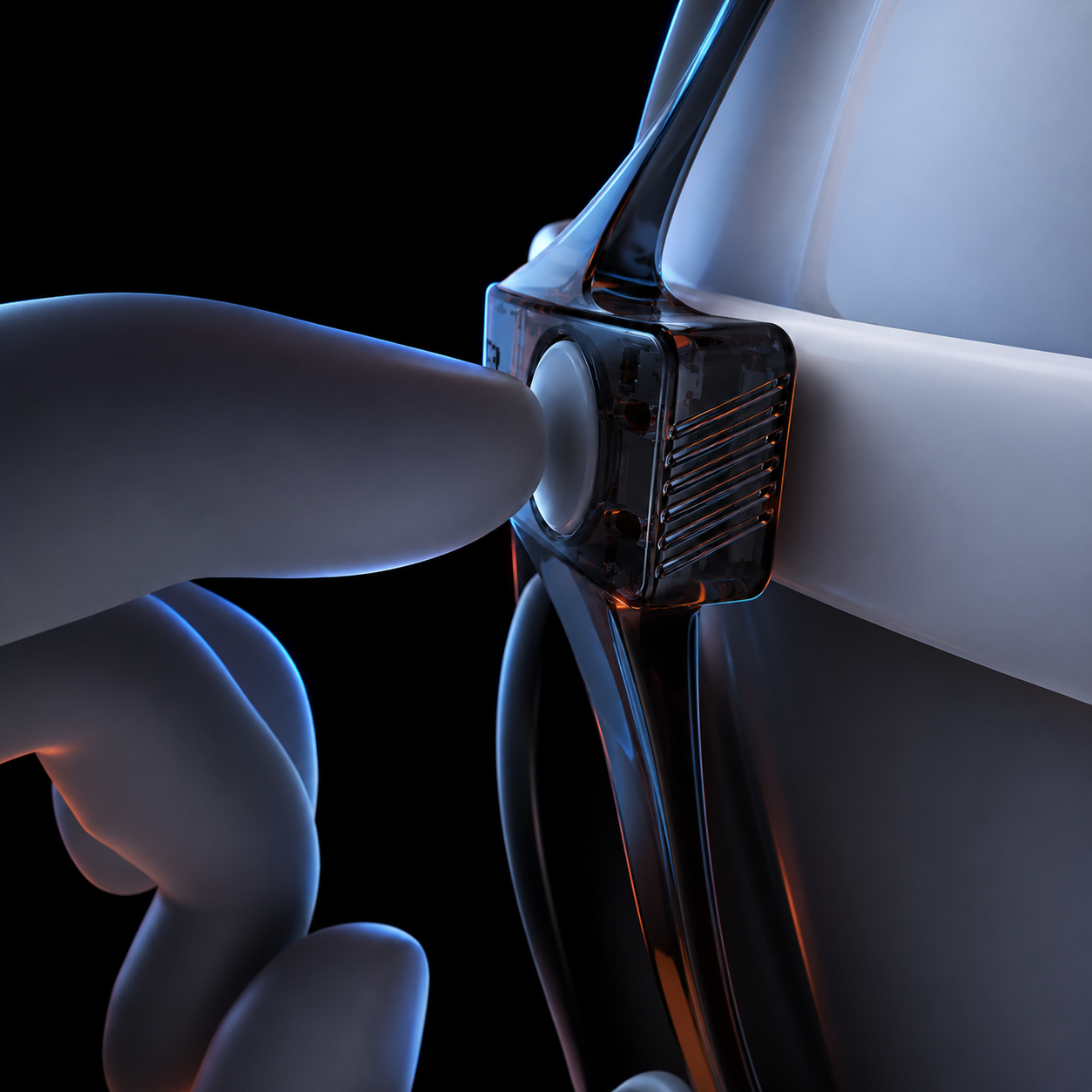
- CHIPEGO device. Records the beginning and outcome of an attempt.
- Web platform. Organises the data by gym, route and member.
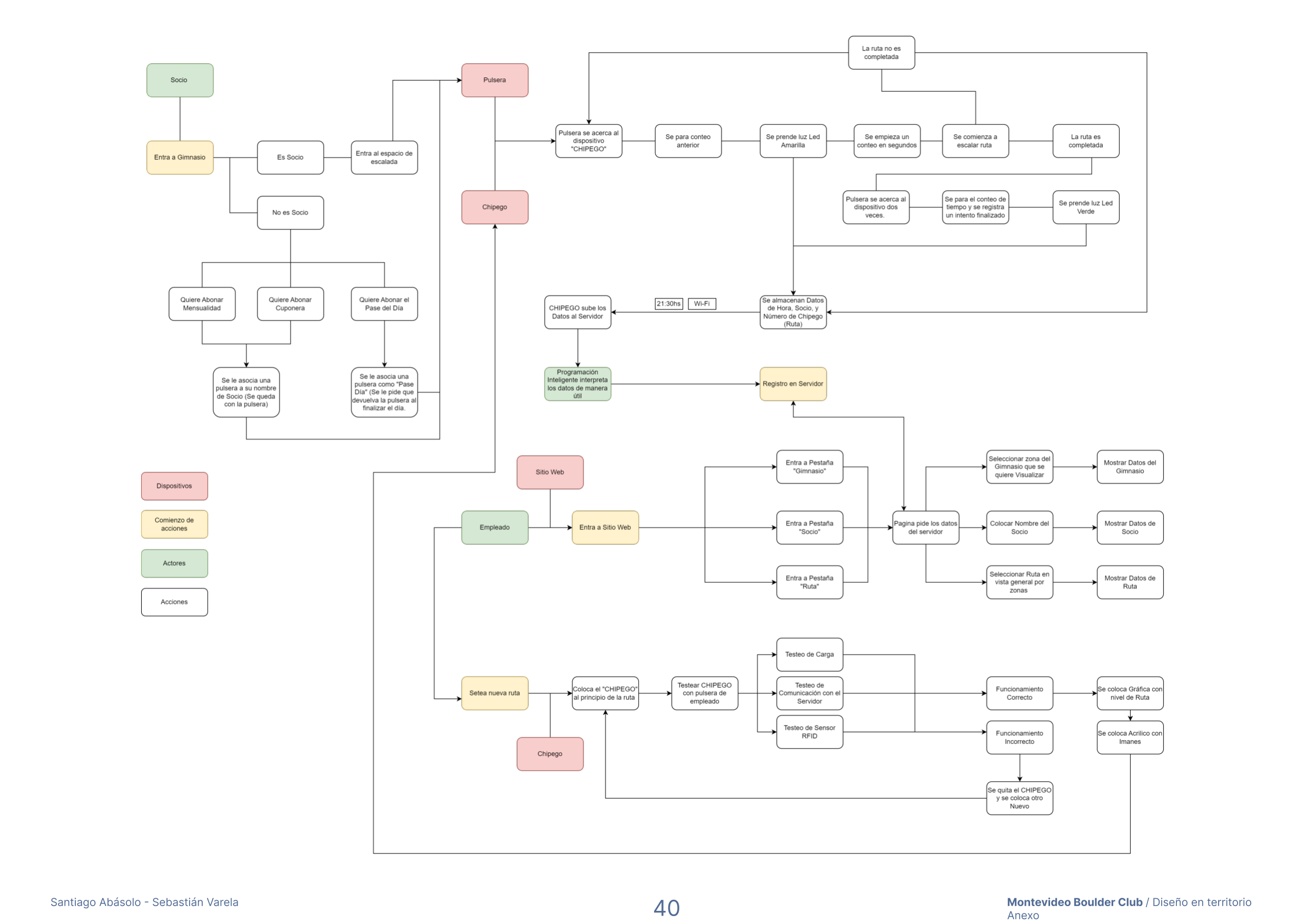
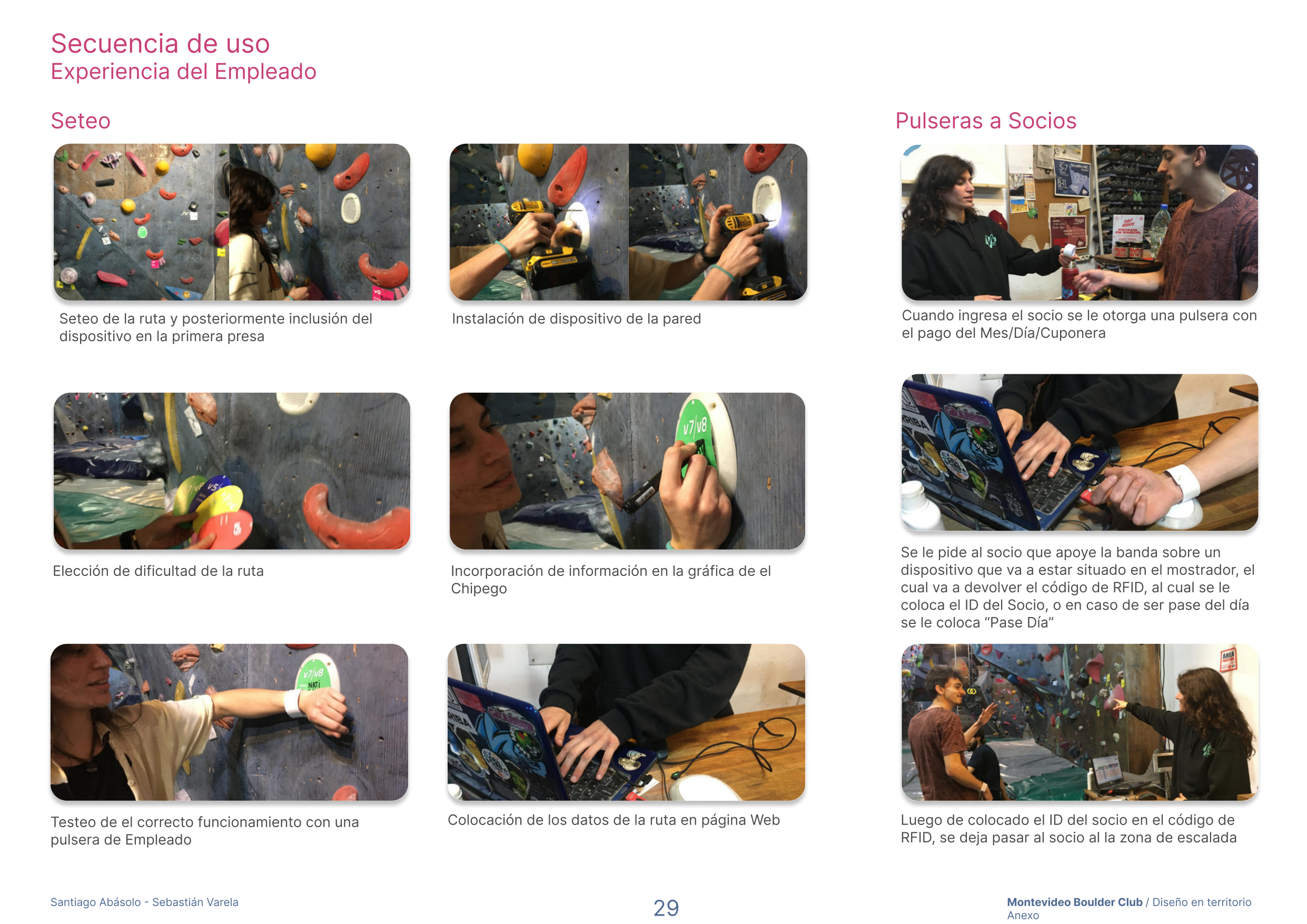
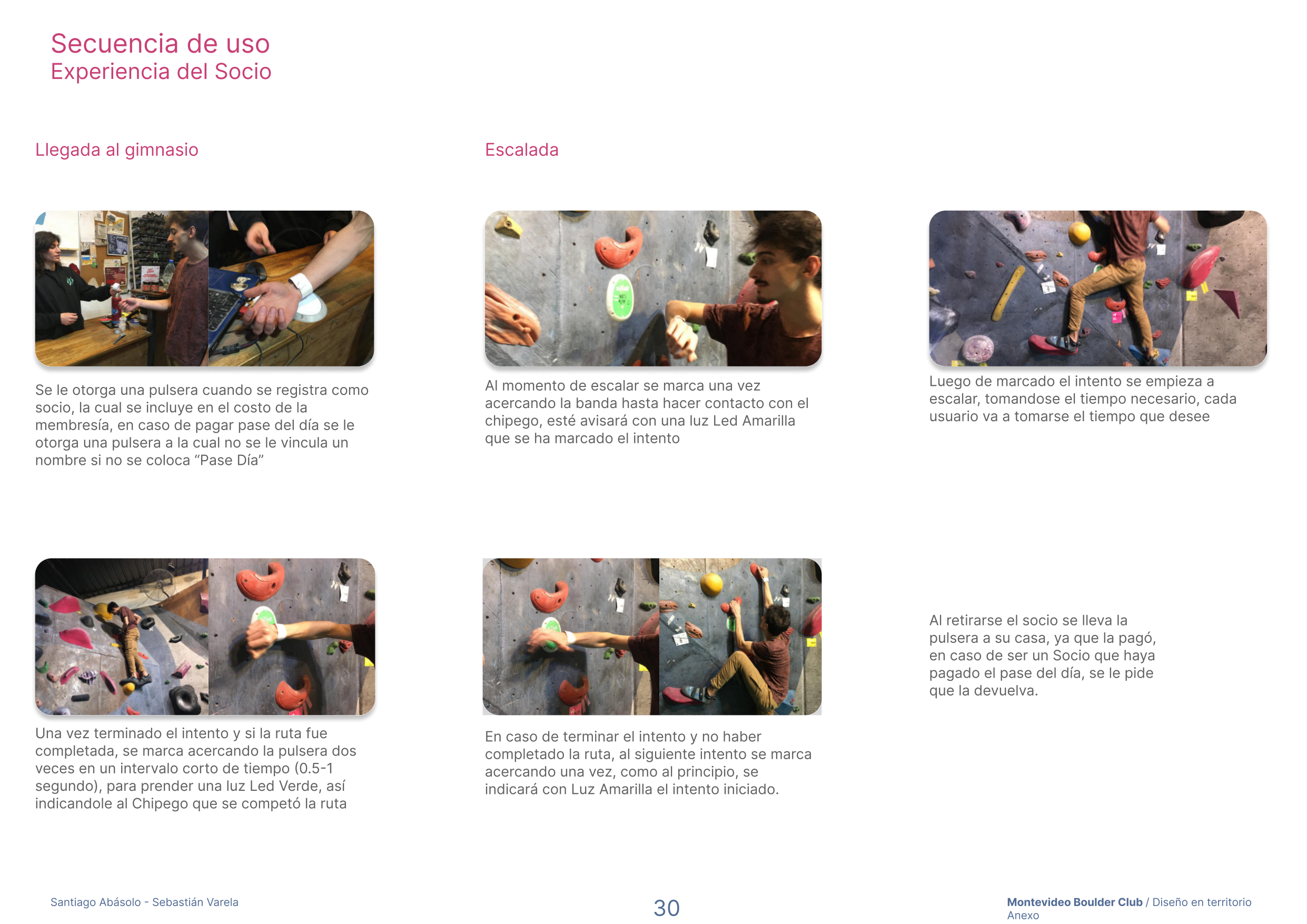
Before climbing, the user presents the wristband to the device and receives a yellow signal. After completing the route, the user presents it twice and the signal changes to green. The record includes time, identifier and route number. The proposal stores data locally and transfers it over Wi-Fi each night.
Design and prototyping
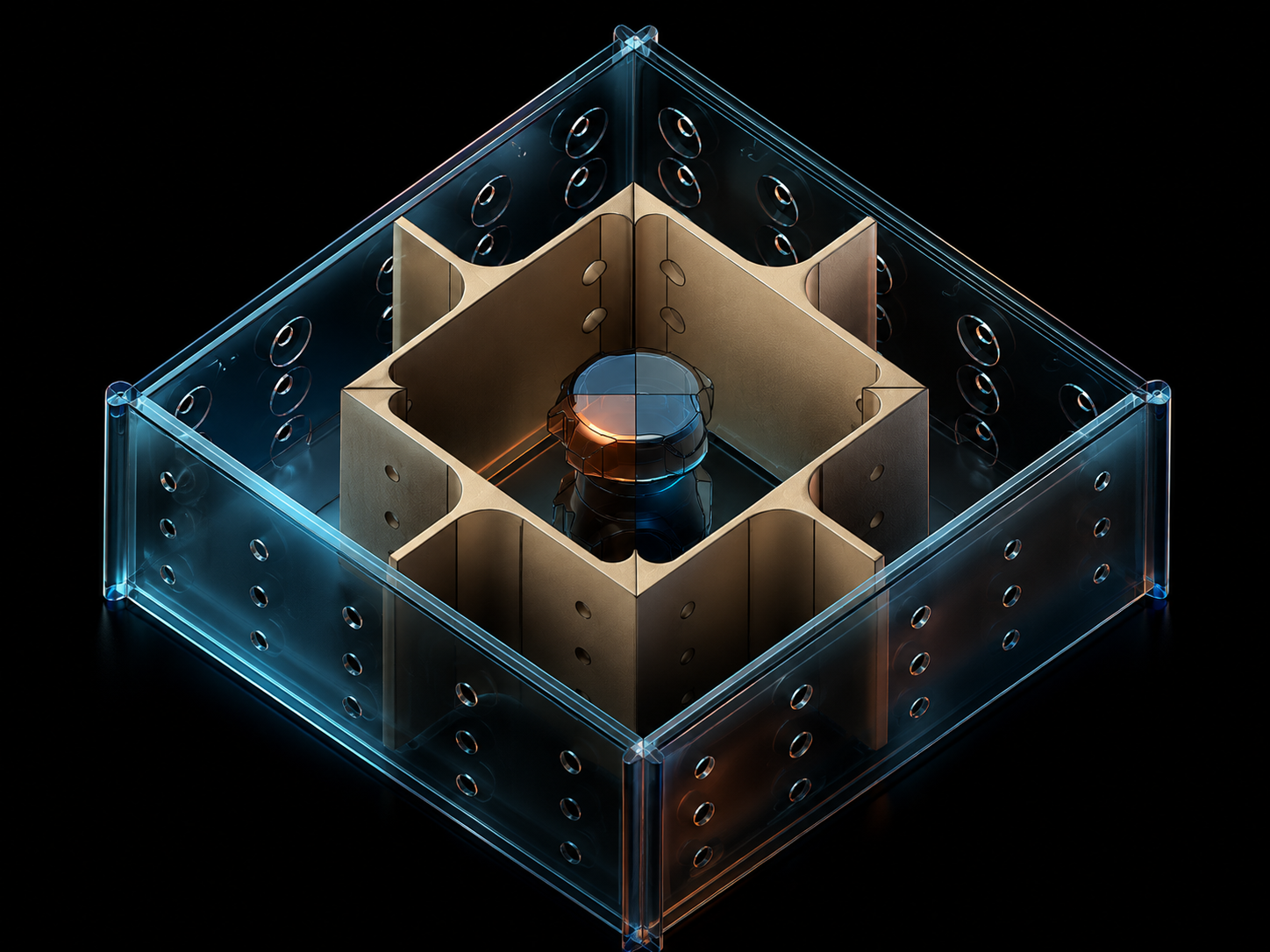
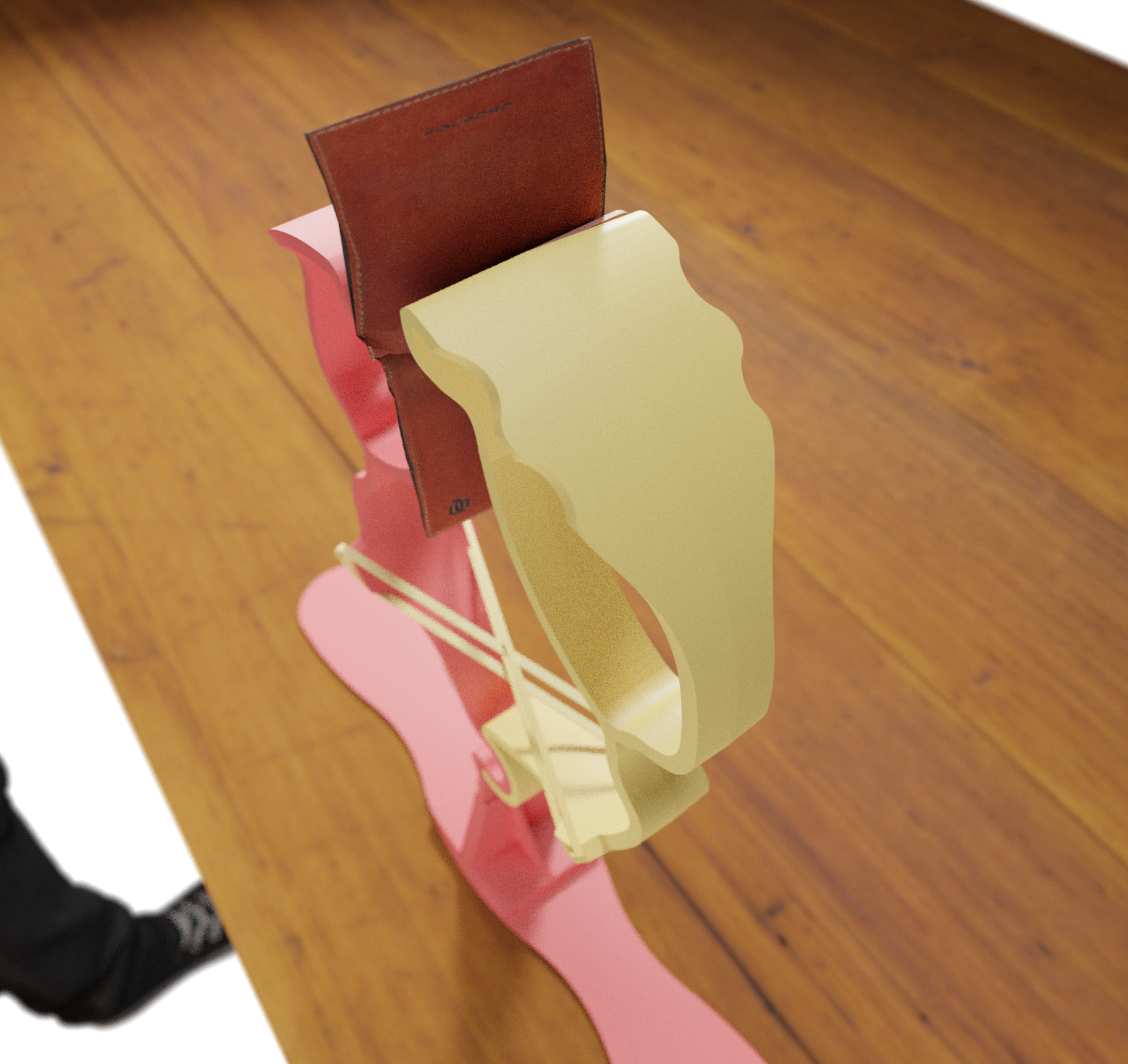
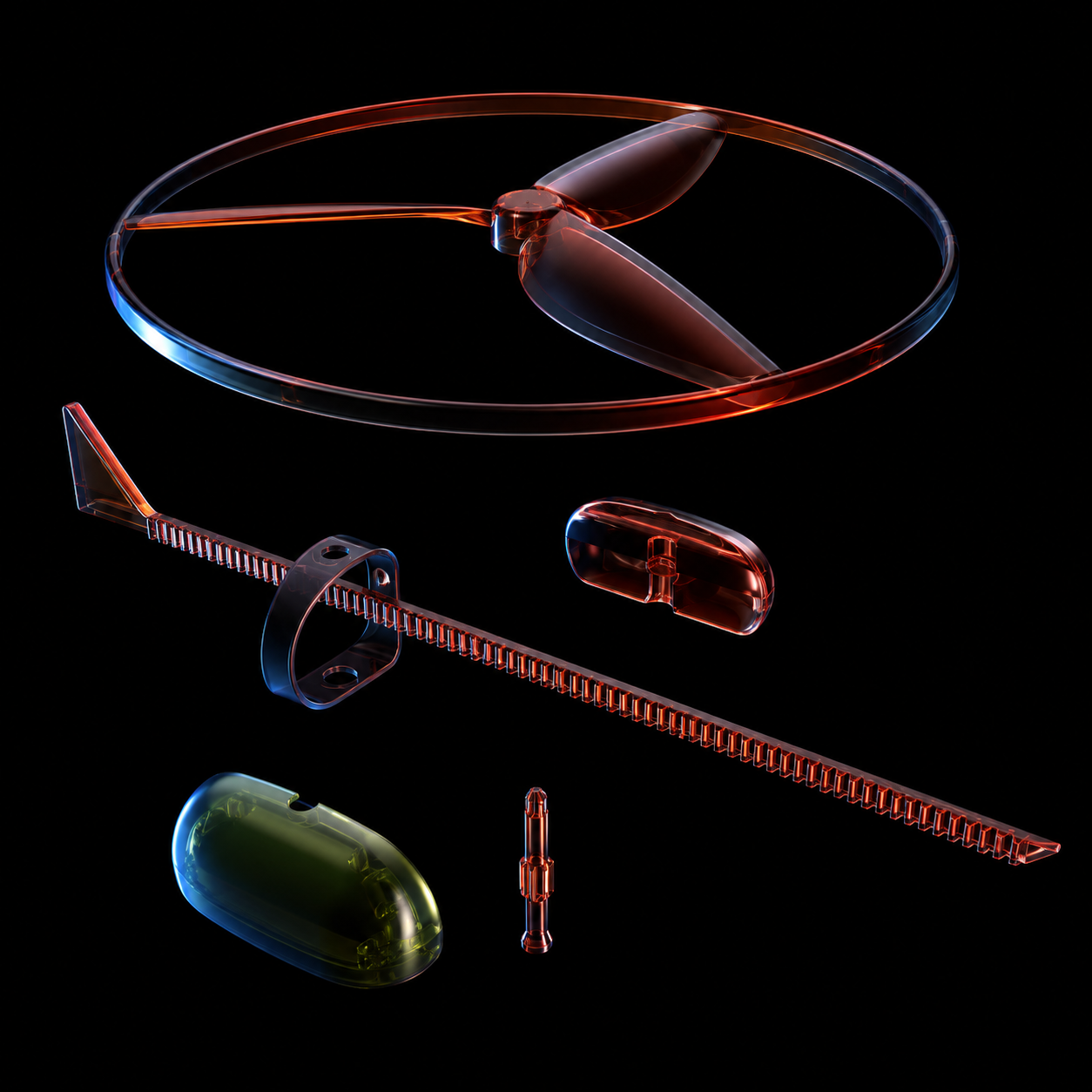
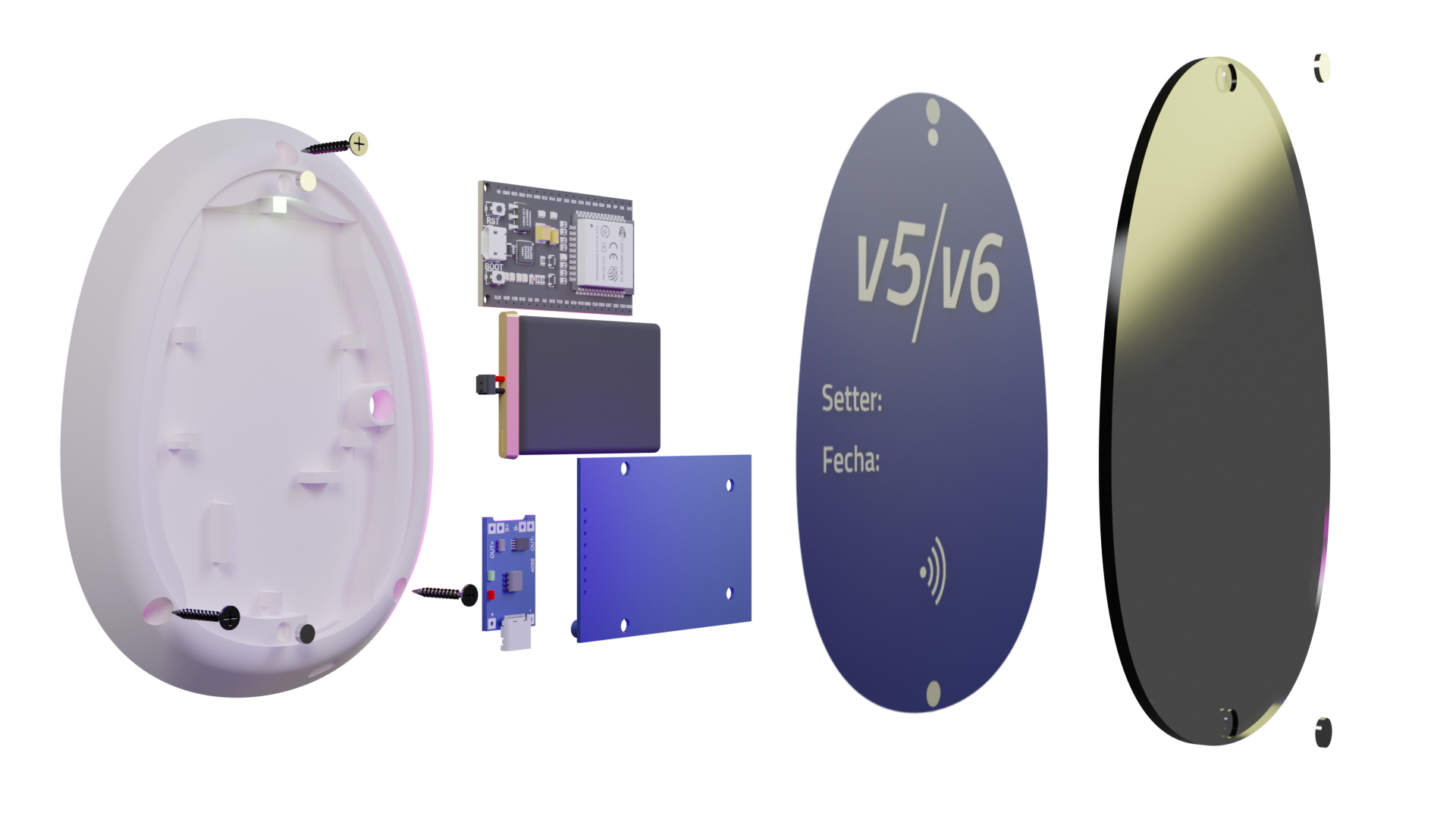
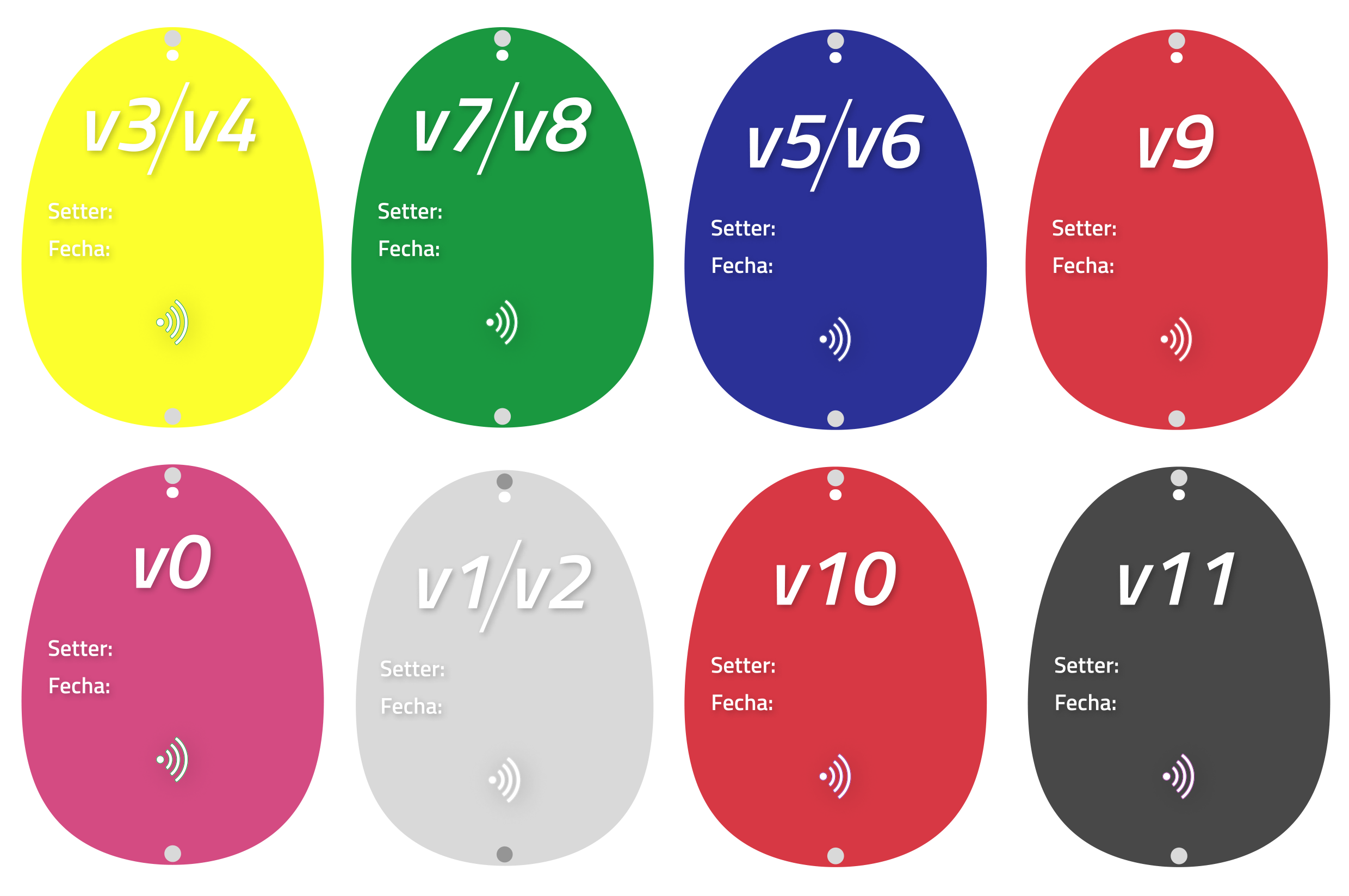
The enclosure references the gym's climbing holds and uses polyester resin, a material the partner already used in its workshop. The bevelled edge reduces snagging points, while an acrylic cover allows the route-grade graphic to be changed.
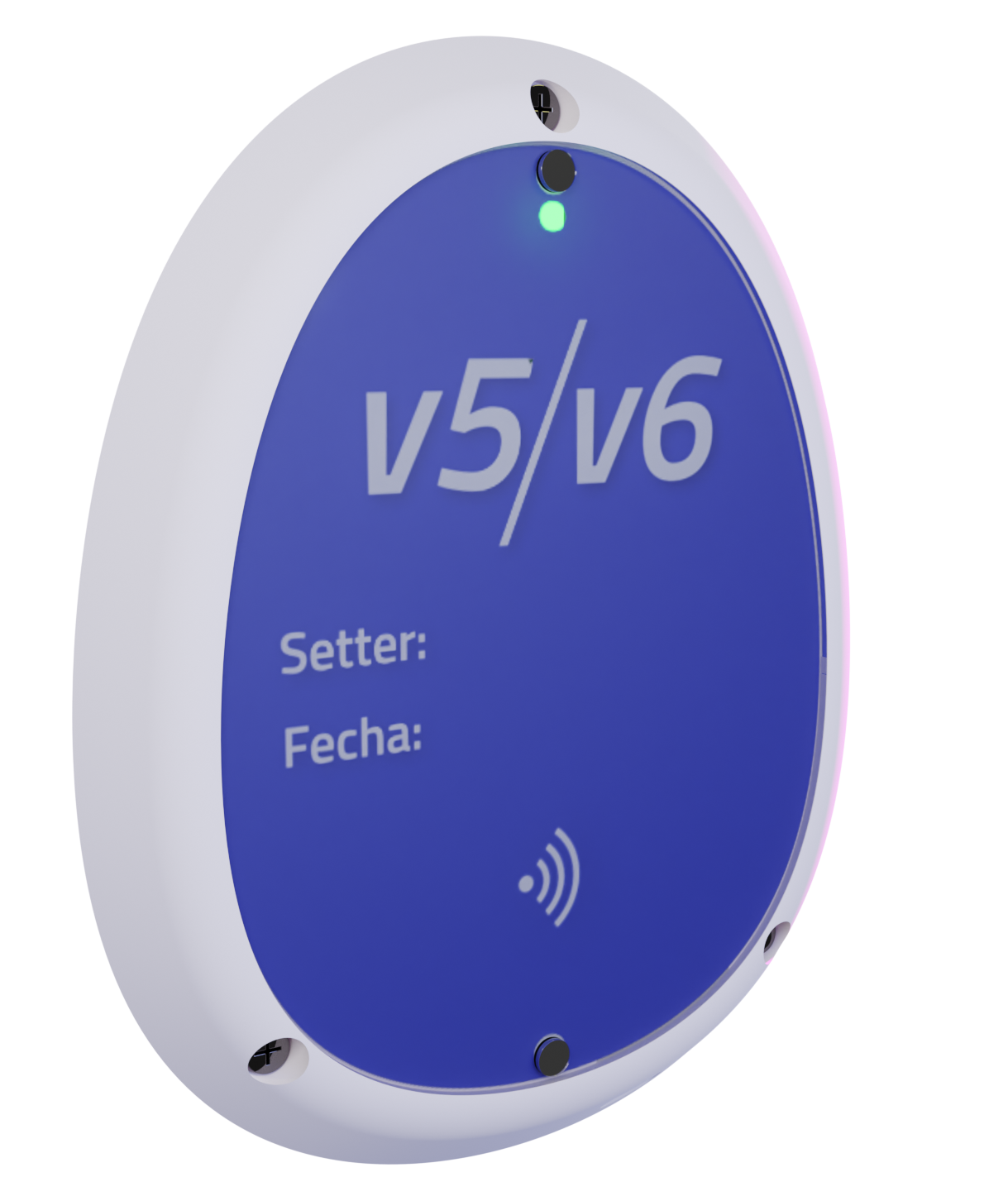
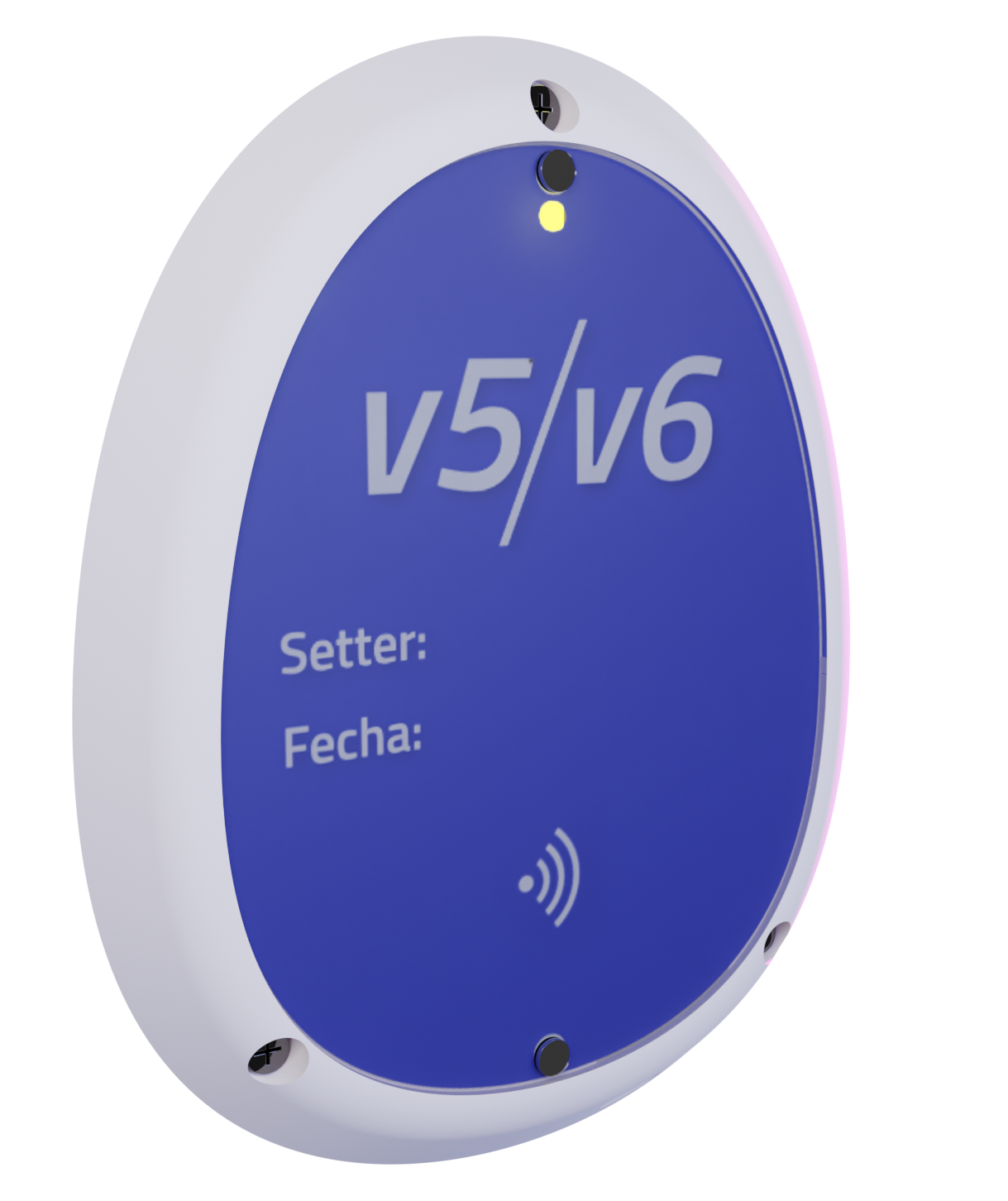
The proposal replaced mains power with a USB-C rechargeable battery to avoid wiring across the climbing walls. It also replaced audio feedback with LED signals, which were more legible in a gym with music and constant activity. Magnets secured the cover and simplified graphic changes during setting.
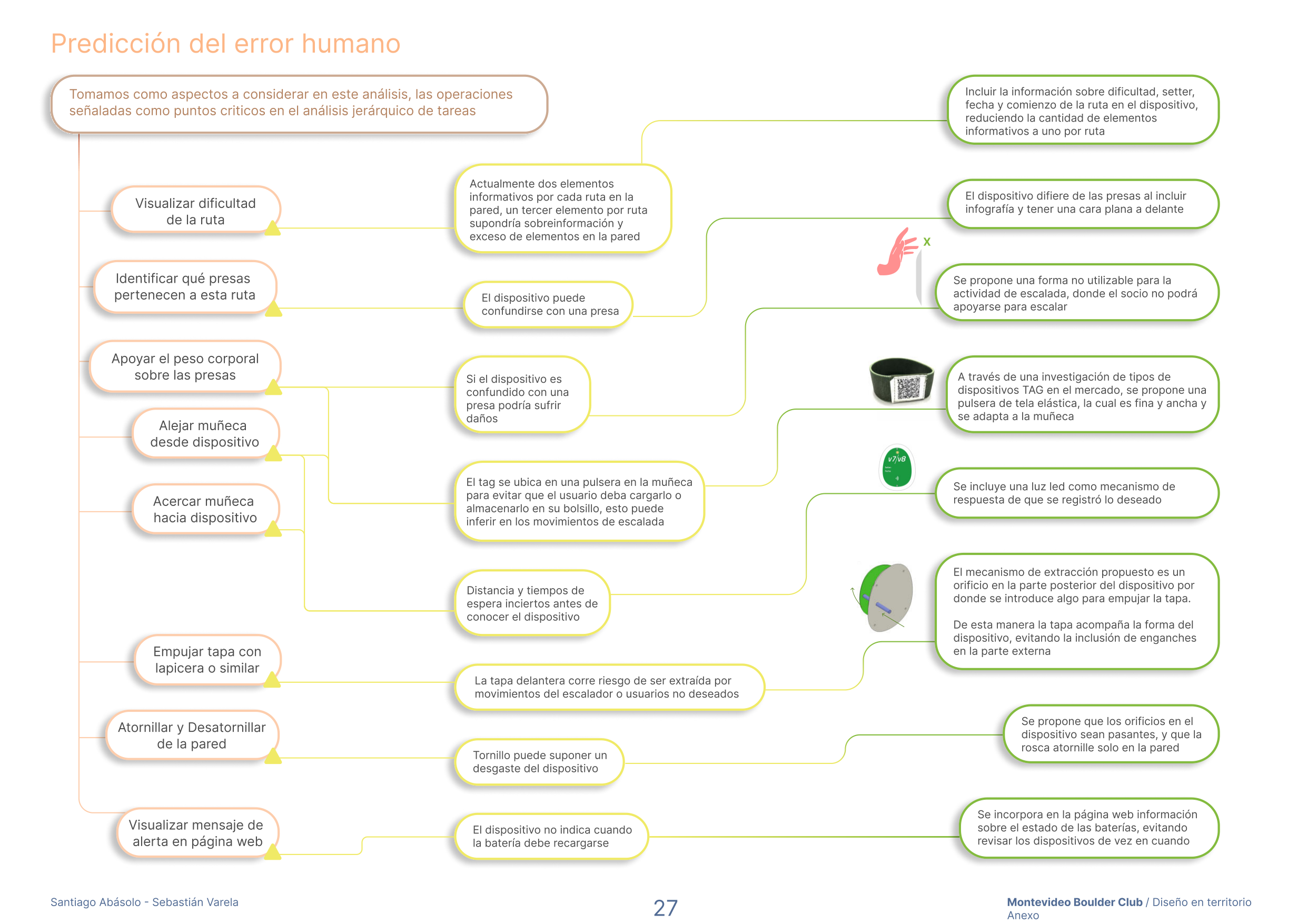
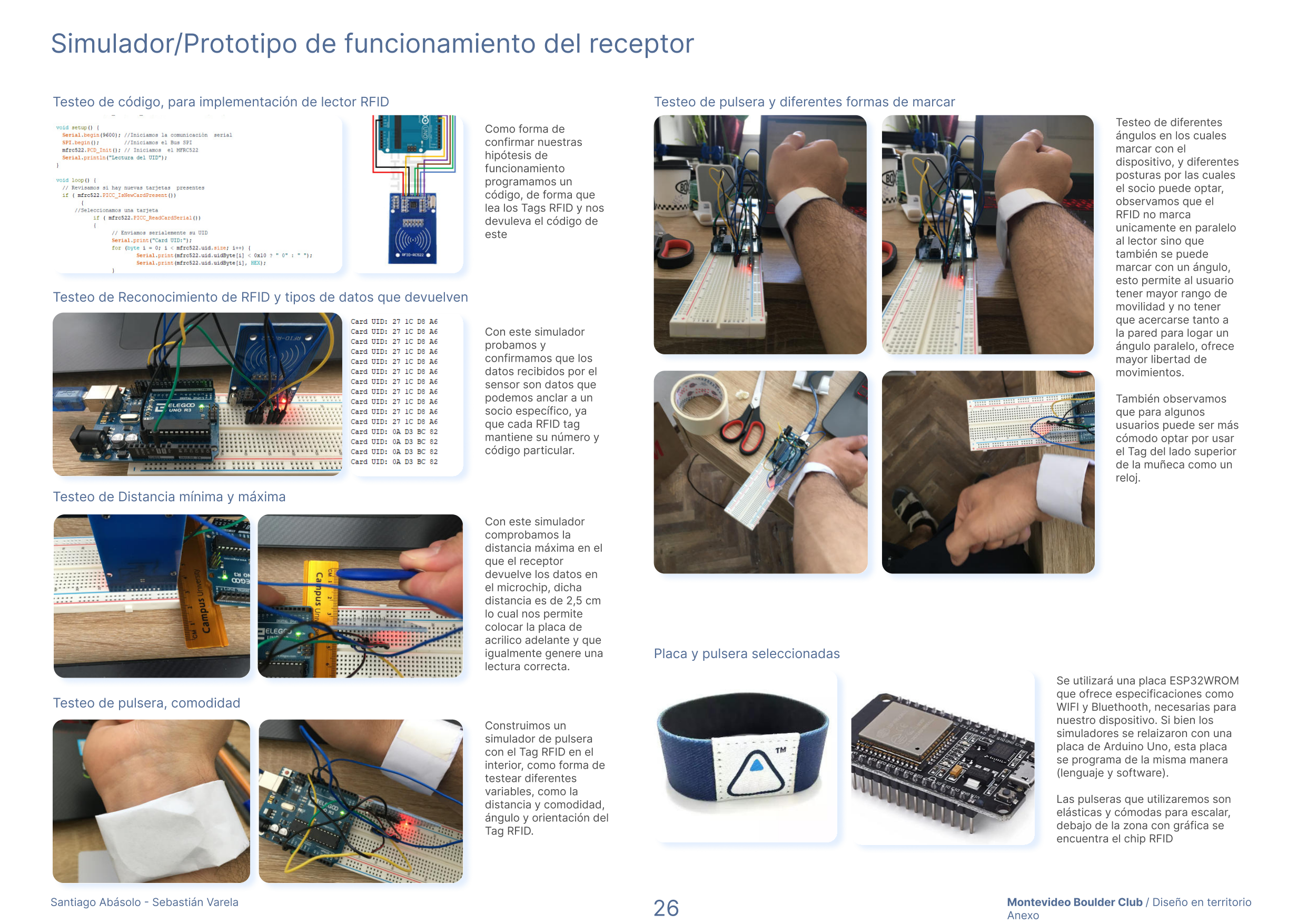
The proposed electronics use an ESP32-WROOM, RC522 reader, Li-Po battery, USB-C charging module and RGB LED. A breadboard prototype tested wristband reading, operating distance and light feedback before the enclosure was developed.
Platform and use of data
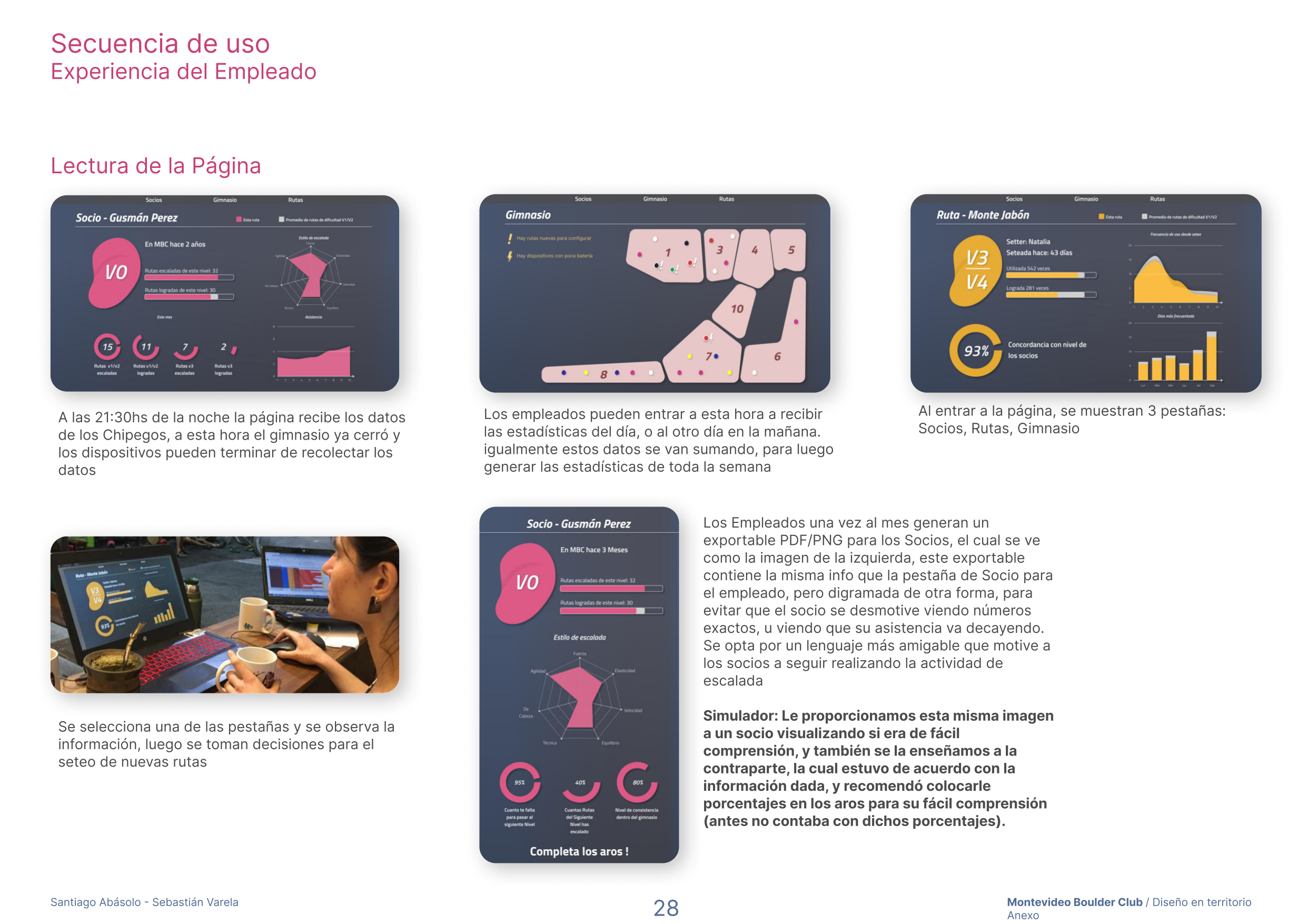
The interface was organised into three views:
- Gym: route location, grade and status across a representation of the climbing walls.
- Route: attempts, completions, frequency of use and comparison with other routes of the same grade.
- Member: attendance, attempted routes, completions and progression by grade.
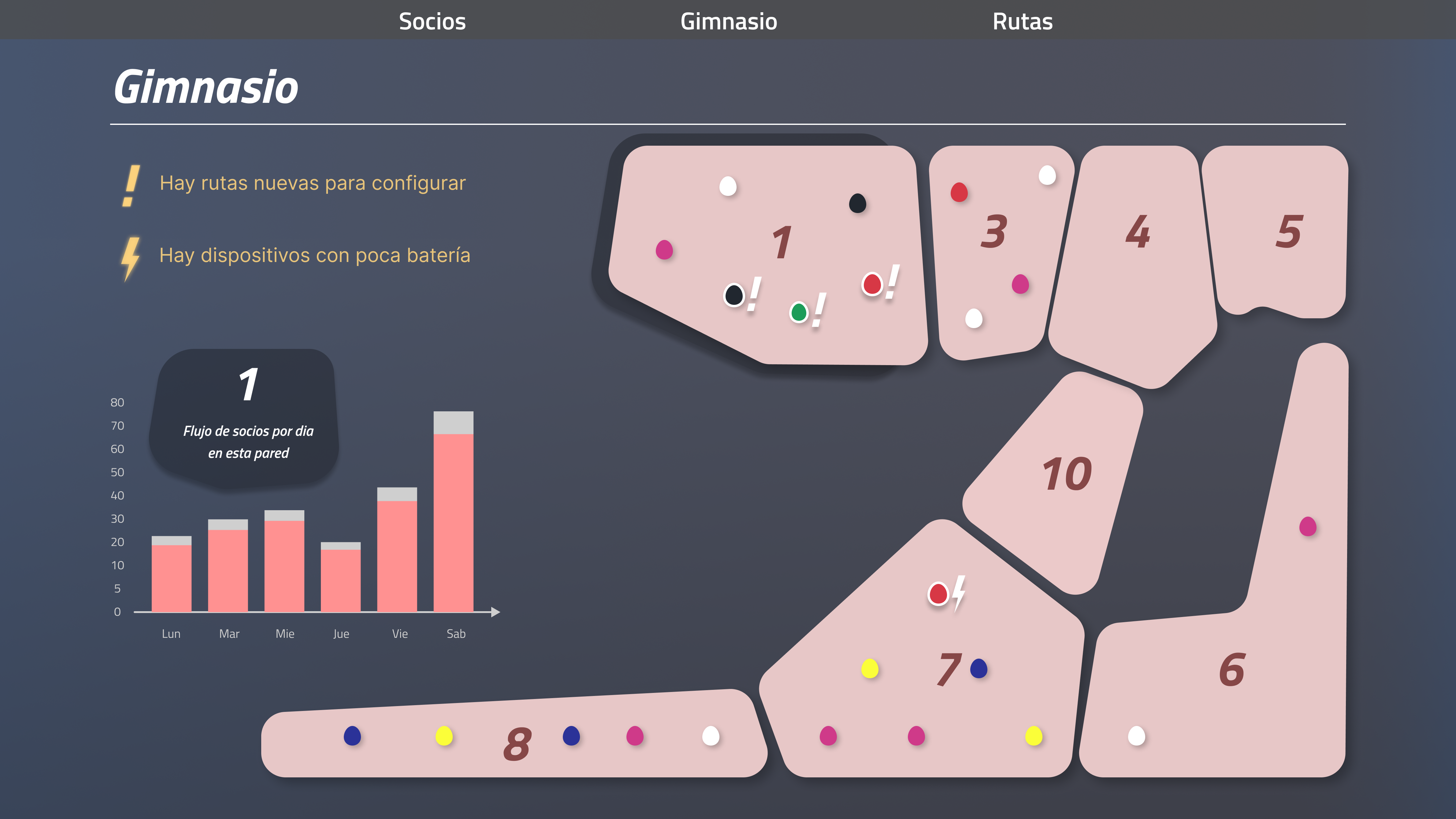
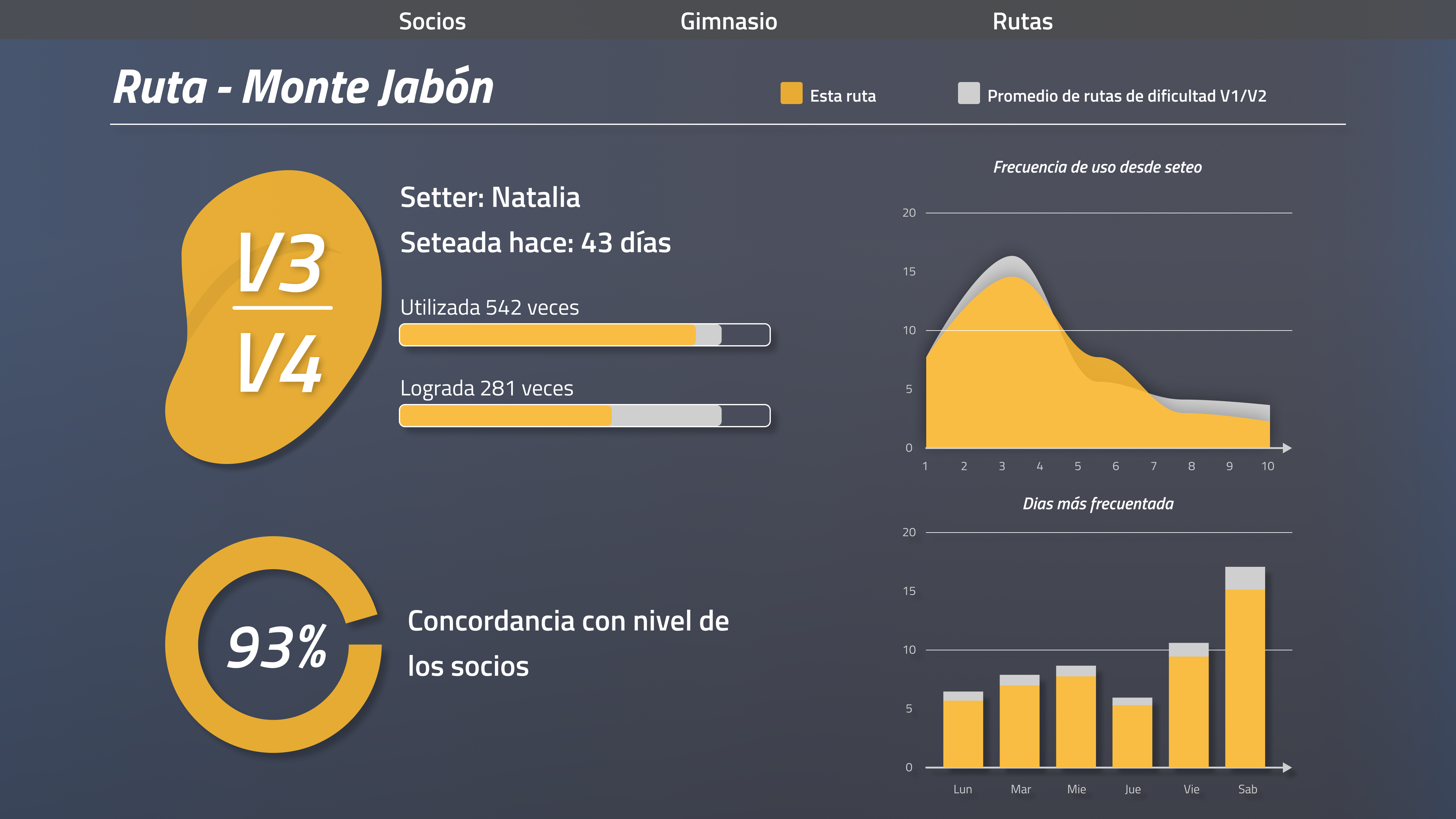
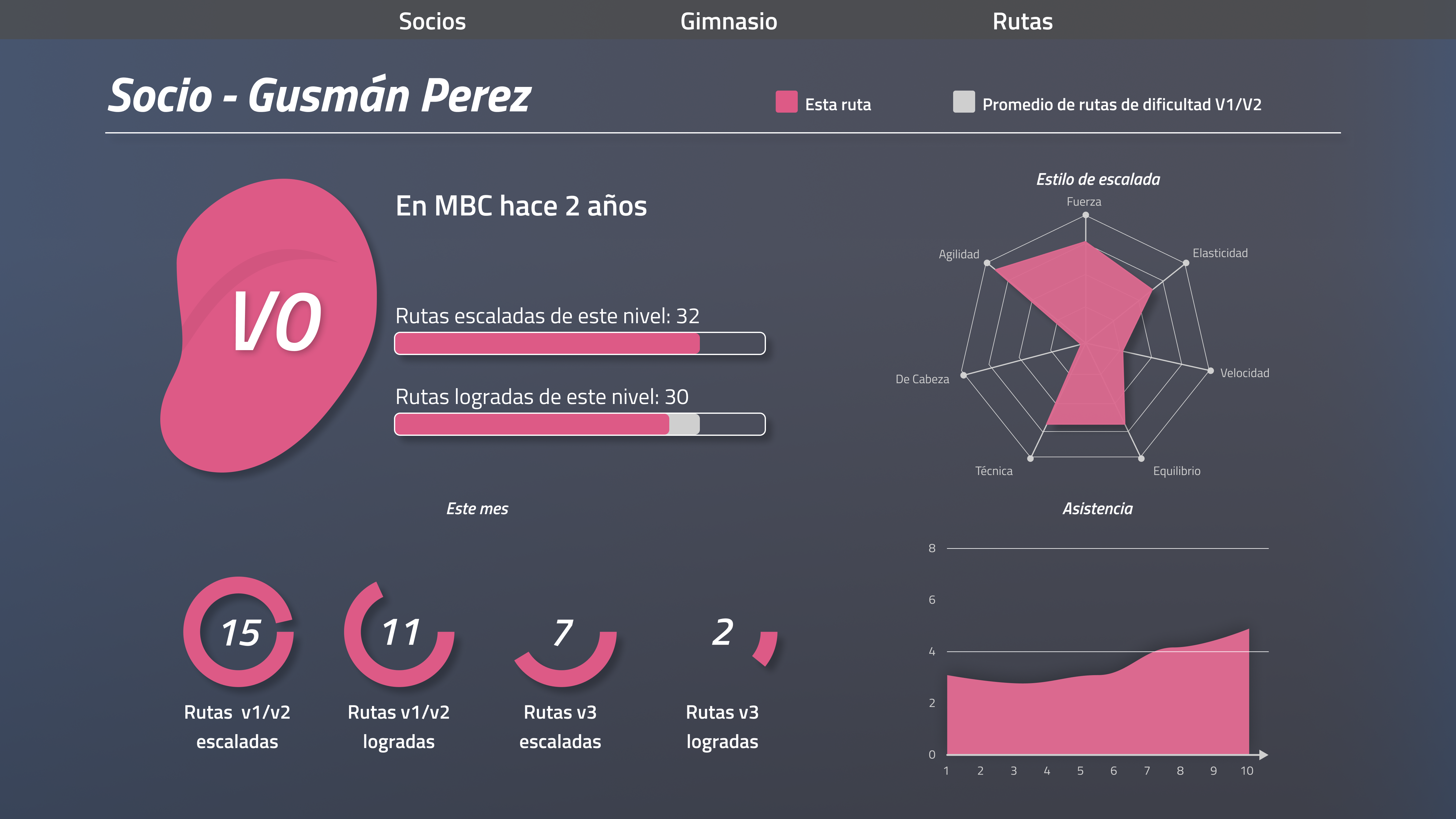
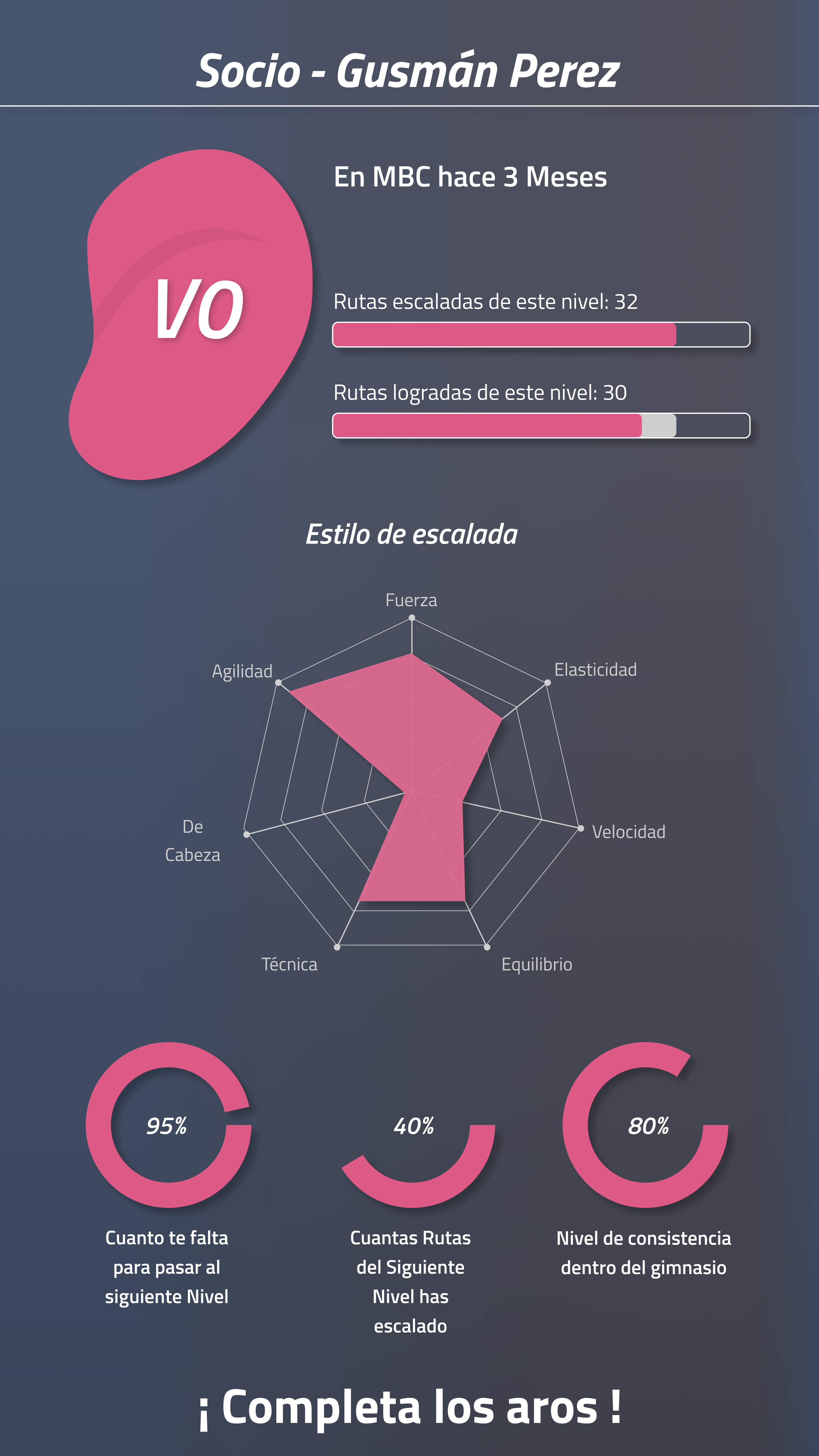
The meaning of the data depends on context. A low completion rate may suggest that a route is harder than its stated grade, but it may also reflect the profile of the climbers who attempted it. The platform was designed to support the setter's judgement rather than replace it.
Feasibility and risks
The documentation included estimates for electronics, enclosure production and software development calculated in 2022. The electronic components were estimated at USD 11.32 per device and enclosure production at USD 25.30. Full platform development was budgeted at USD 3,840.
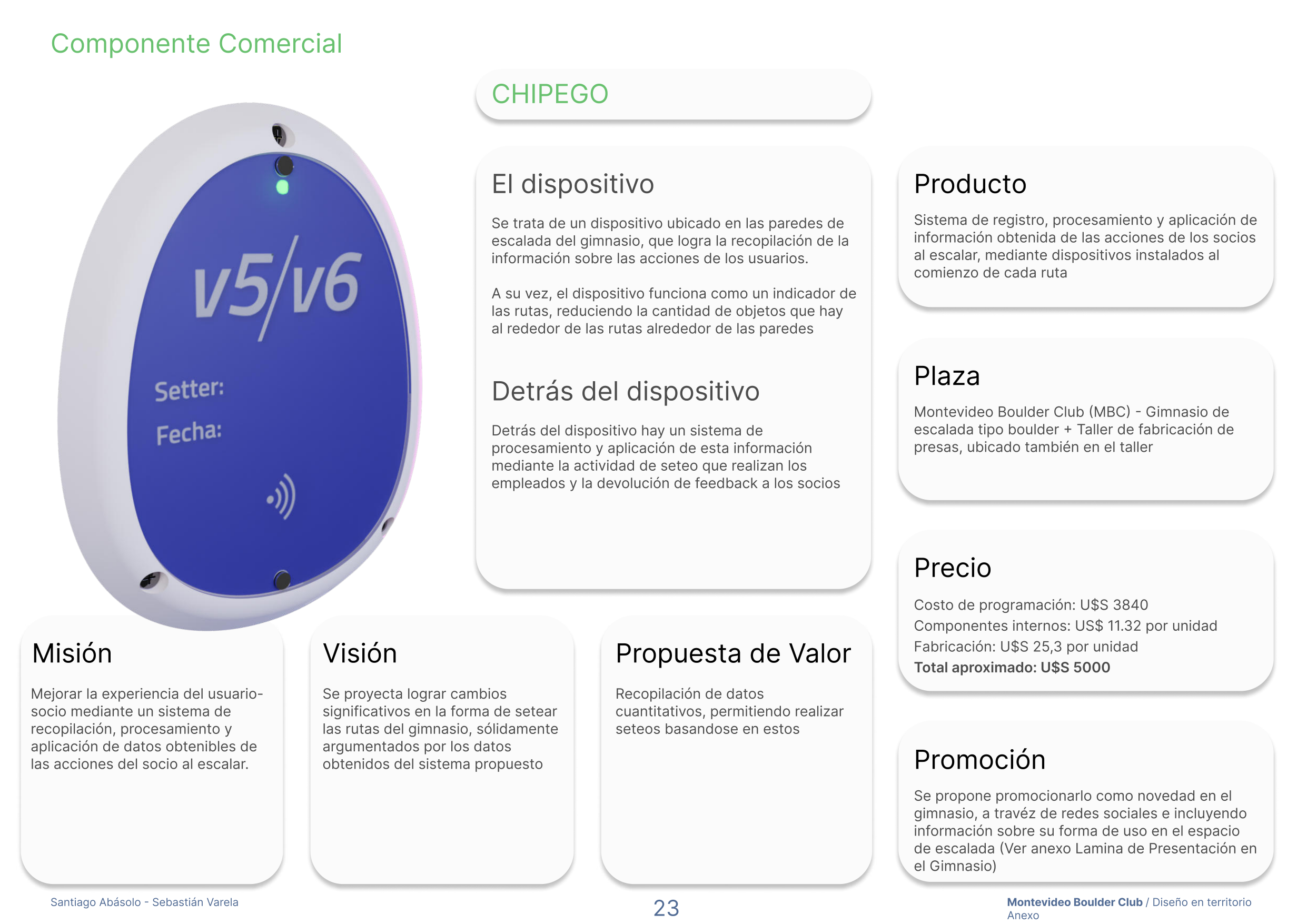
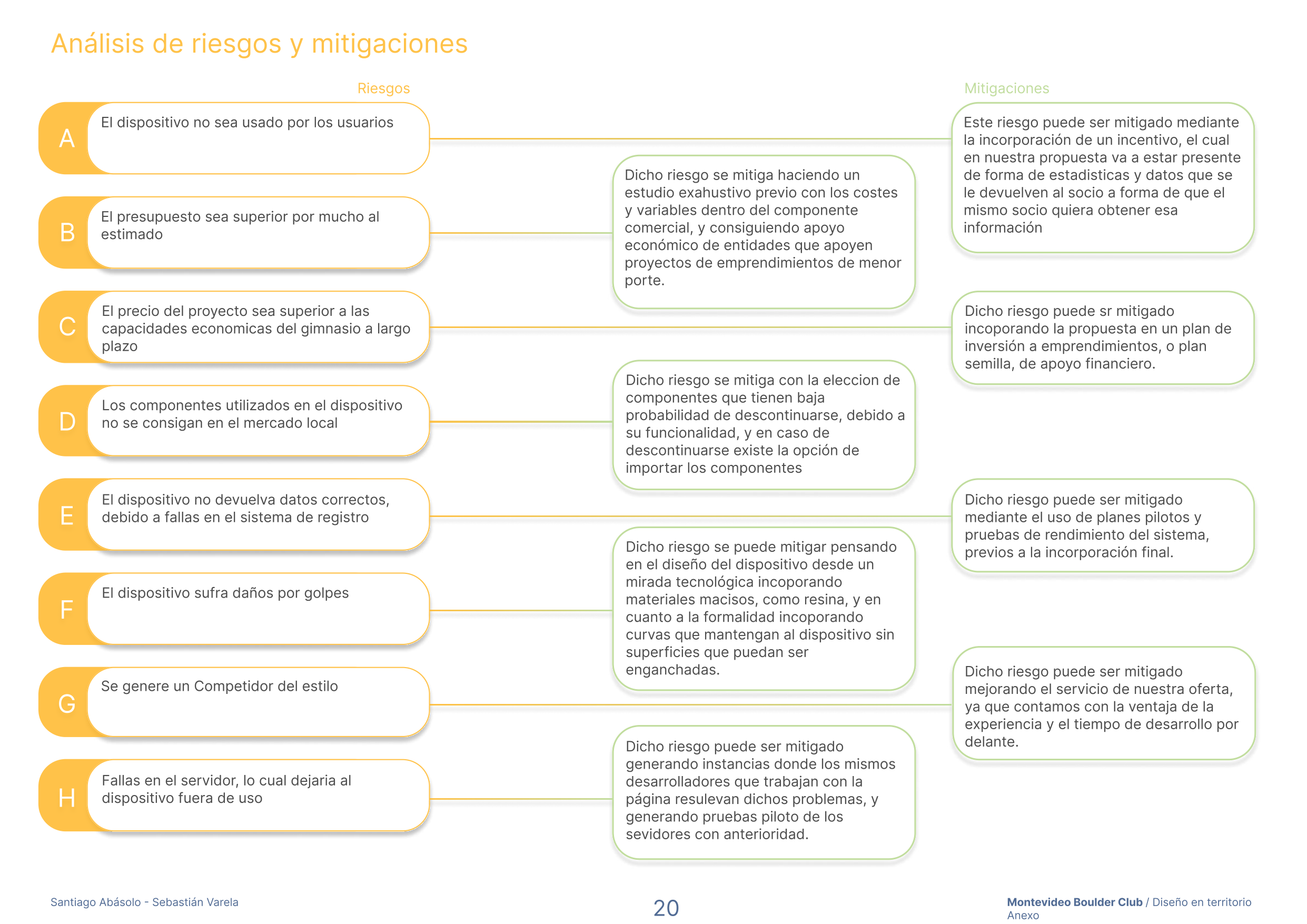
An initial pilot without a server was proposed: records would be downloaded through USB-C each day and analysed in a spreadsheet. This version would reduce the initial investment and allow adoption, data quality and operational workload to be assessed before developing the full platform.
Results and limitations
The project produced a system architecture, an electronic RFID-reading prototype, the industrial design of the device, the main interface views and a set of fourteen technical sheets.
The complete system was not deployed in the gym, and the pilot was not conducted. Battery life, enclosure impact resistance, recording reliability in actual use, member adoption and personal-data handling therefore remained untested.